Showing posts with label Dulce Nombre de María. Show all posts

Wednesday, February 22, 2023

ASH WEDNESDAY IN DULCE NOMBRE

What do you do on Ash Wednesday when you have more than 45 places where people gather for worship in a parish?

Padre German, our pastor, has five Masses in four different locations. But that leaves out more than forty communities.

I was going to go to a distant village, but I thought it best not to go at this time, since my body’s defenses are low, due to last Thursday’s chemotherapy.

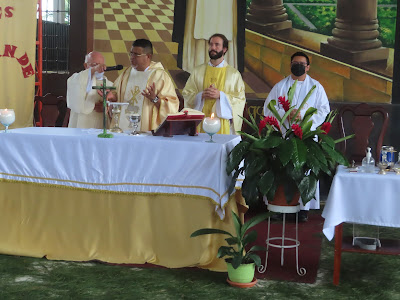
So almost all the villages sent a Delegate of the Word or someone else to the 10 am Mass in the main parish church. Ashes were blessed and distributed to those attending.
After Mass, little plastic cups of ashes were given to those who would distribute them at a Celebration of the Word in their communities. In some communities, where there is an extraordinary communion minister, they would have a Celebration of the Word with Communion.

I attended the 10:00 am Mass in the parish and served as deacon, in a limited way. I did preach but I decided not to distribute the ashes, nor communion, nor purify the vessels.

It was a blessing to be with the delegates and some others who came for Mass.

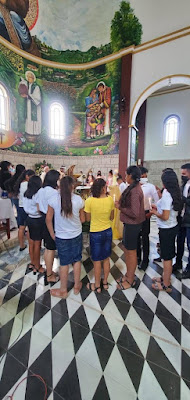
After Mass, I went back into the church to pray – and was awed by the beauty around us.

Tuesday, July 19, 2022

What's going on in Honduras.

In my visits to rural villages, I often ask people how they are doing and, especially, how are the crops.

The past week or so I’ve been hearing concern about the subsistence crops, especially the beans.

We’re in the middle of the rainy season and it has been raining a lot.

In some areas this has meant the ground is soaked - and there is concern about the harvest.

In other areas of the country there is concern about drought. There is a dry corridor, mostly in the south of the country which borders El Salvador. 

I have recently come across two articles on the crisis of food insecurity here. Honduras has about 10,225,526 inhabitants, 43% are children. According to the World Food Program, about 2.6 million are in a crisis situation. Another report suggests that this number could increase by half a million in the next three months.

One serious problem is the climate – too much rain in some areas, too little in others.

But there are other factors.

There have been significant price increases.

Fuel is up significantly.

The price of public transportation has almost gone up. Taxis in Santa Rosa de Copán used to be 20 lempiras; the most recent I paid was 35 lempiras. Bus fares have also risen.

The price of fertilizers has sky-rocketed; a few weeks ago, some one told me that one basic agricultural input had more than doubled in price.

The basic food basket is up to 60% of the minimum wage. 

Even the price of bottled water has gone up. A large water container used to be 20 or 22 lempiras. It’s now 25.

Inflation at the end of 2021 was 5.32%.

The extreme rains in our area have caused washouts of roads as well as landslides.

A few weeks ago, at least two villages in our parish were incommunicado – one for a landslide, the other for a washed out road. The municipality helped the first community; but the other community (in a different municipality) received no help and so they went out and cleared a “road” through a stream bed so that vehicles could come through.
The road into La Colonia was washed out in one place.
Las Pavas has suffered landslides.

And this is not the worst time for rains. We often get hurricanes in October and November. With a soaked earth, who knows what damage could result.

A year ago we had some workshops for forming emergency committees. I need to remind people to make sure they are organized in their villages and are on the watch for dangers and potential disasters.

In the midst of this, migration continues. I keep hearing about people I know who have left. Sunday, at Mass, people asked for prayers for some people on the journey north and for some who had arrived in the US.

The criminal deaths of migrants abandoned in a truck in El Paso don’t deter people. When things are desperate, people seek a way out.

A few days after the El Paso deaths, I was giving a ride to some folks for a parish meeting. One woman told of hearing the mother of one of those killed. Her son and several others from a town in the nearby department of Santa Barbara had left because they could find no employment. They had finished their education, but as they went around seeking jobs, they were often told they wouldn’t be hired because they had no experience.

In the midst of this, we go on, doing what we can.

The parish’s coffee field seems to be doing well and people keep on coming out to volunteer. Last week I went out to a distant community to pick up people early in the morning. They got done early and so I gave some of them a ride home (more than an hour away (in the early afternoon.
I keep on getting out to some villages.

Last Saturday I got to Debajiados for their feast day Mass. It’s a distant and very poor area – but the tiny church was filled with people from the community as well as from a nearby village in the neighboring parish. (Someone asked me if I could find some support for a new church since there is very small.)
Before Mass in Debajiados. Many more arrived latger.

Tomorrow, two sisters from a project near Tegucigalpa that provides five years of free education of poor kids will be in the parish to administer the entrance exams and interview the kids and their parents. A fair number of our parishioners have their kids in the program which goes from seventh grade to the end of high school. The kids also have opportunities to learn skills and the girls’ campus has a large pool where they learn how to swim! The programs also help some kids get into the university. It has been a good experience for many. I know of one young guy who got an internship with the mechanics section of Toyota in Tegucigalpa and who hopes to get a job with them.) 

We hope to start later this year or early next year some workshops on basic trades. Caritas Santa Rosa de Copán has been offering some in their installations in Santa Rosa but they are also willing to send instructors out to the parishes. I hope we can get this going.

But so much more is needed – not just small efforts, but real social and cultural changes.

I’ll try to keep you informed of what is happening – both in terms of the actual situations and also whatever local efforts we are able to initiate. 

One final note.

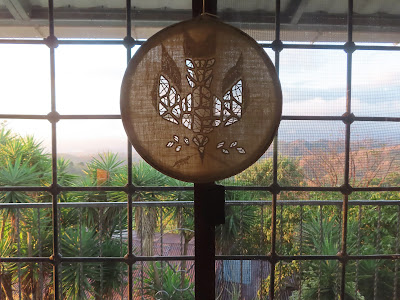
This week five stained glass windows were installed in the church in Dulce Nombre.


Monday, June 20, 2022

Corpus Christi 2022 in the Dulce Nombre parish

Here in Honduras the feast of Corpus Christi is celebrated on Sunday, but in our parish it has been celebrated for almost a week in several different ways - hours of adoration, processions, Celebrations of the Word with Communion, Masses.

Our parish has more than 40 different places for community worship, mostly churches in the widely scattered towns and villages. Almost all the villages have Delegates of the Word who lead Sunday celebrations; more than twenty Communion Ministers serve in the countryside.

Devotion to the Eucharist is strong – even though there are not many who receive Communion with regularity (though this is changing).

Where there is a communion minister there is usually a Holy Hour every Thursday – and, in some places, exposition and adoration for several hours. Before the pandemic, we had days of prayer with exposition of the Eucharist every other month in the ten rural sectors of the parish. We began the year of the pandemic, 2020, with a theme of peace and reconciliation.

Corpus Christi is therefore very special. 

As has been the case for several years, Corpus Christi has been preceded by Forty Hours of Adoration.

I remember this devotion from my youth, where the altar boys would be scheduled for at least an hour before the exposed Eucharist. Parishioners would come for an hour, some in the middle of the night. 

Here some communities have forty continuous hours of adoration. Other places, having found it difficult in the past to have people come in the middle of the night, scheduled forty hours over three days.
Oromilaca where they had forty continuous hours of Eucharistic adoration

In some areas where there are not communion ministers, the ministers arranged to be in communities for between three and ten hours during the day so that all communities would have the opportunity to spend time before the exposed Eucharist. In many of these the ministers visited the sick. In some there were processions. I was available to go to communities where there is no communion minister, but the communion ministers had arranged visits to almost all the villages in the parish. 

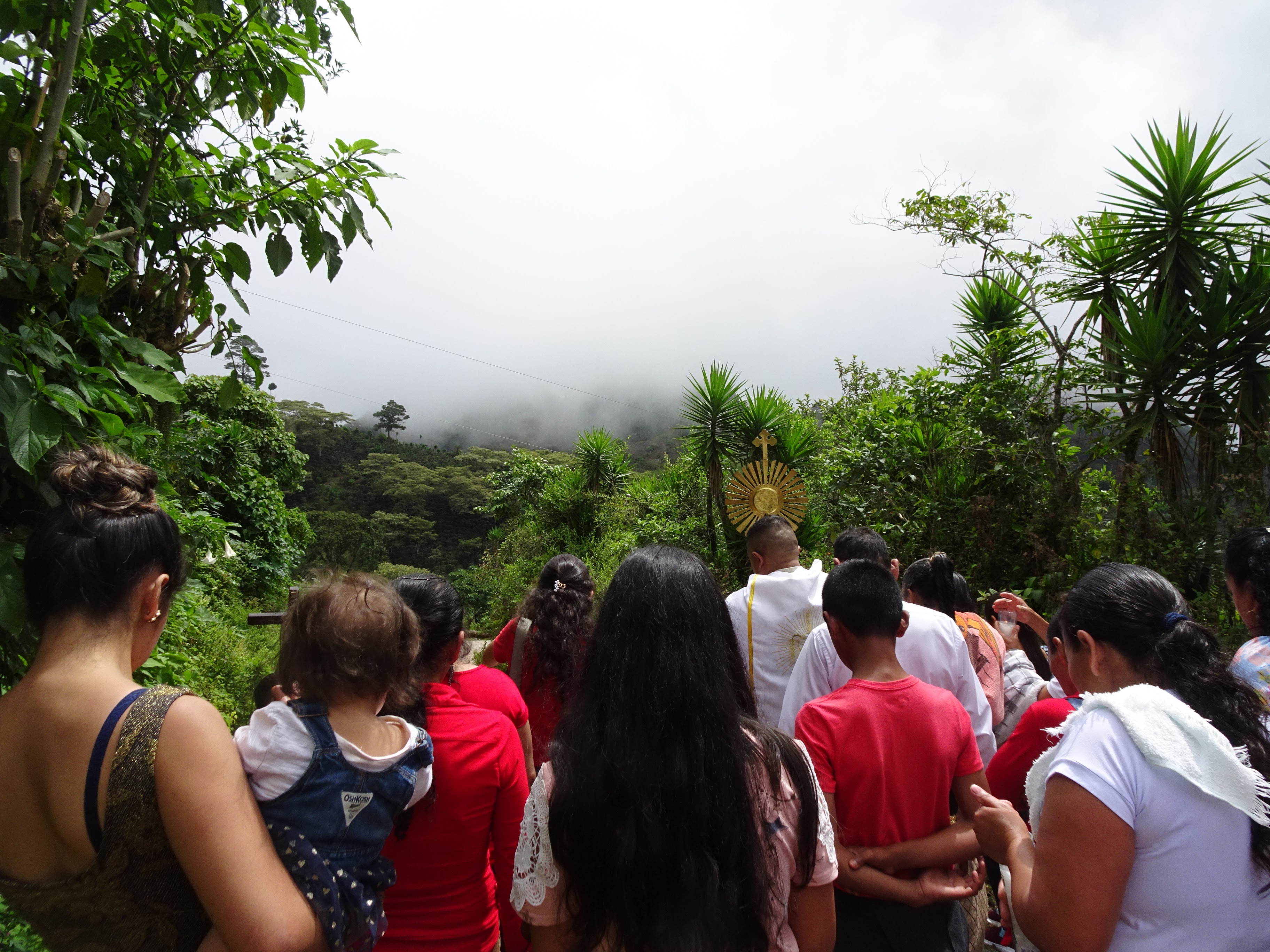
In a few sectors of the parish, the forty hours ended with Mass, preceded by a procession. We stopped at five altars for prayer and, where a priest or deacon was present, Benediction with the Blessed Sacrament.

On Friday I went to Delicias Concepcion where people from two sectors of the parish gathered.
Saturday evening, I was asked to preside at Benediction in Plan Grande, the village where I live. 

Sunday morning I went to Oromilaca where they ended forty continuous hours with a procession and a Celebration of the Word with Communion. 

Sunday afternoon, I went to Mass in San Agustín where Mass was preceded by a procession around the central square. At Mass, twenty-one children from eight to thirteen received their first communion. (Needless to say it was a long afternoon.)
Since the pastor had participated in several processions over the course of the week, he asked me to carry the monstrance for part of the processions in Delicias Concepción and in San Agustín.

In each place we had five altars with prayers related to the situation of migrants. I wrote about this in an earlier post.

Our pastor, a Guatemalan, rooted in the popular piety of his hometown, sees the importance of connecting liturgy and popular devotions with the lived reality of the people. Each year our parish stations of the cross connect pointedly with the reality of life here. So, this year he asked me to prepare the prayers at the altar with the reality of migration in mind.

The reflections are quite strong. (The Spanish text can be found here.) But I shared them with the communion ministers who would be leading the reflections in the processions in different parts of the parish during their monthly meeting. One woman noted that though they were pointed they revealed the reality of what people experience – why they leave, what they experience on the journey and when they arrive, what those who are left behind feel.

Pointedly, we prayed at one altar for four groups of refugees, inviting people to name those they knew: those who have died in the US, those who are on the road at this time; those who are living in other countries (most notably the US and Spain); and those who have returned (by their own will or deported).
Benediction at an altar in Dulce Nombre in front of a mural on refugees.

Sunday morning, in one village, they mentioned more than 30 persons who have migrated, several who have died, some who are now on the road, and a few who have returned. I thought of a good number of people whom I know who are in the US as well as some who have been returned. I remembered several distraught families whose family members have been kidnapped and held for ransom in Mexico. 

The reality is hard for all concerned. We pray that Christ will sustain migrants and their families – and that the nations of the world will open their hearts and their borders to those in need, with just, non-discriminatory migration laws.

We began the procession with the prayer of Pope Francis for the 2022 World Day of Prayer for Migrants and Refugees. This is a good way to end this post.
Lord, make us bearers of hope,so that where there is darkness, your light may shine, and where there is discouragement, confidence in the future may be reborn. Lord, make us instruments of your justice, so that where there is exclusion, fraternity may flourish, and where there is greed, a spirit of sharing may grow. Lord, make us builders of your Kingdom, together with migrants and refugees and with all who dwell on the peripheries. Lord, let us learn how beautiful it is to live together as brothers and sisters. Amen.

Mural of migrants, Dulce Nombre de Copán


Monday, January 31, 2022

The confirmation rush begins - and more news

Wednesday, January 26, I met with the catechists of confirmation to prepare for confirmations next month, from February 10 to 12. There were about thirty catechists from about 36 towns and villages in the parish who have been preparing about 425 for confirmation. We were preparing the Masses in five different places as well as confessions in six places. I’ll be accompanying them in the next two weeks.

Last Saturday, we had the first round of confessions in the main church in Dulce Nombre. There were about 56 confirmation candidates and some adult sponsors who came; even though there was only one priest, the confessions were finished in about three hours. Among those to be confirmed there were 28 who had not made their first communion. They received the Eucharist for the first time at the Mass at the end of confessions.
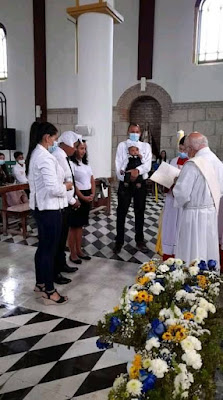
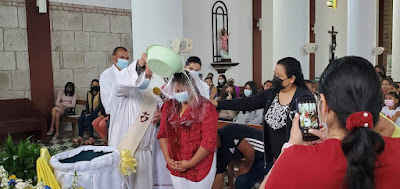
The pastor also asked me to baptize a couple and their child. I had recently done the final pre-marriage interview with them and I felt privileged to baptize them last Saturday, while the pastor was finishing up confessions. The couple also received their first communion at the Mass.
What a day for sacraments – baptisms, confessions, and first communions.

January has been a bit different this year. Father Kyle Digmann, the pastor of our sister parish, St. Thomas Aquinas in Ames, Iowa, came for a short visit. He had Mass in two communities, including one of the poorest and most distant, Debajiados. He concelebrated at two of the Sunday Masses and presided at the Mass to dedicate a new meeting space in the parish center, named after St. Thomas Aquinas (since much of the funding came from a donation from St. Thomas). We made a quick trip to the Mayan ruins in Copán Ruinas, about 80 minutes from my house. He had a chance to meet some members of the association that exports El Zapote Coffee to Ames. He even helped a short time with the harvest in the parish coffee field. It was all too short. I hope he and others from St. Thomas will visit in the near future.
Since November people have been harvesting coffee throughout the parish. This will continue until February in most places, though a few who have fields at higher elevations will be harvesting until March.

This year the coffee prices are better than I remember. That means that some harvesters are getting significantly more than last year. Last year they got 30 lempiras (about $1.22 for a five gallon bucket of coffee cherries)’ now some are getting between 40 and 50 lempiras.

But the costs have gone up. Some have told me that in some cases a bag of fertilizer costs about twice as much as a few months ago. We’ll see how this leaves the small coffee producers.

My pastoral work has been a little limited these past months. I try not to schedule many formation meetings in January, since the coffee harvest is one of the few ways people in the countryside can earn cash.

There was a parish assembly to do some planning for the year and there will be two small groups working on parish organization and evangelization in the next few days. 

For a number of reasons, exacerbated by the pandemic, the local community church councils have fallen apart in a good number of places; we hope to help revive them, but with an organization more participative than in the past. We also hope to revive the base communities and pastoral work in the towns and villages.

I have continued my custom to go on most Sunday mornings to various villages for Celebrations of the Word with Communion. Yesterday I went to Granadillal and next Sunday I hope to get to visit San Antonio El Alto; I plan to visit the sick after the celebration since they don’t have a communion minister to bring the eucharist to the sick.

One of the customs here is to have prayers in people’s homes on the night after a death, for nine days after the burial, and often for nine days a year after the burial. I was invited to two end of the nine days (novenario) here in Plan Grande. I also celebrated a funeral of an older woman here. 

Sunday a week ago, the pastor came for the funeral of a 97 year old man who is sort of the patriarch of the village, with many children (as well as grandchildren and great grandchildren) including two former mayors. I was also asked to be at the vigil on the night before the funeral. I had visited Don Máximo many times, once just before his death. But a local communion minister regularly brought him Communion, which sustained him. He will be missed.

I had two interviews of two couples who will be getting married. I have another one scheduled for February. I find it very hopeful that there are young people who are getting married in the church. Many have already been living together and have kids. They finally decide for one reason or another to get married. One of the more interesting cases is a couple who weren’t even baptized.

I hope there will be even more. The stability that may come from sacramental marriage can be a real blessing for families. this is important for these families, for our parish, and for Honduras.

Other more mundane concerns have taken up time.

I took the new parish truck for its 20,000 kilometer checkup. In less than 14 months I’ve driven more than 20,000 kilometers, mostly in the parish (though there were a few trips to San Pedro Sula). I also had to take another car to the mechanic in Santa Rosa and ended up buying a new battery.

I have reviewed scholarship applications for 159 young people for an alternative program for the equivalent of junior and high school. The students listen to radio programs, have home work in books, and get together with teachers about once a week. Help from St. Thomas Aquinas helps pay for half of the costs of books.

We had a clergy meeting which I attended. We have a deanery meeting in early February.

Such is life in the parish. I’ll try to offer a more reflective blog post after the confirmations are over.

I have not included any reflection at this time on the political situation in Honduras. The country's first woman president was sworn in at the National Stadium in Tegucigalpa in front of an enthusiastic crowd. Her inaugural speech was filled with hopeful signs of a new Honduras. Yet the National Congress is in disarray. Pray that this may be resolved in a way that furthers the good of the people and helps put an end to corruption and impunity.

I'll try to write more about this later.

---
Thanks to Elias for the photos of the baptism and first communion. They were published on the facebook page of the parish.


Sunday, November 21, 2021

Touching with hope

It has taken me some time to adapt to some aspects of the Catholic religious culture of Honduras. 

There are some things that I will probably never get used to – and a few with some good theological and pastoral reasons. But there is one that I first reacted to somewhat negatively but which I have begun to understand differently.
At times, after adoration of the Blessed Sacrament, the priest walks through the assembly with the monstrance, the fireburst metal vessel which bears the consecrated host in the center. As he passes many reach out to touch the monstrance. 

My first reaction years ago was very mixed. I recognized the devotion to the Eucharistic presence of Jesus in the host, but I wondered whether it was almost a substitute for communion or just a type of magical piety.

But two years ago, on the feast of Christ the King, the pastor asked me to carry the monstrance through the crowd, halfway through the crowd. I wrote about it two years ago here.


This year the pastor had me carry the monstrance through the whole crowd. Again I was filled with emotion as young and old, men and women, children and young people, reached out to touch the monstrance. Again, I thought of the pain and suffering of the people reaching out for some healing. Then I thought of the Gospel story of the woman who had been hemorrhaging for twelve years. She knew that there was something about this Jesus who was passing through. So, she reached out to touch the hem of His garment. And she was healed. (Mark 5: 25-34) The people who reached out are searching for the Presence of One in their midst who will take on their sufferings.
I could only respond humbly, aware of their great faith, looking around and stopping when I saw someone wishing to touch the monstrance, stooping when a little child reached out.
May Jesus heal us.

But the nation of Honduras needs to be healed and so we had someone read the recent statement on the coming elections by the Honduran Bishops. Here a short selection that I translated.
We ask the people to overcome sentiments of indifference, apathy, and skepticism, brought on by our deficient system of government and its institutions, and which result in absenteeism. 
We, the bishops of the Honduran Bishops Conference, make an urgent call for you to go and vote, with responsibility and liberty. Our country is living through momentous and significant times. Therefore, we urge you to give you vote to the best candidates, with the best personal, familiar, and social profile, who are honest candidates, responsible and sensitive to the needs of the people, who participate in good politics, in favor of life and the family. This is to say: elect those candidates who, like you, think in favor pf a better future for your children. 
If you discover that you have in your hands the potential to aid the good of our fatherland and change the ineffective and unproductive direction that we have as a nation, you will take into account that your vote is sacred and that you cannot give it to someone who does not deserve it. 
Honduras does not deserve you voting for those who want to destroy it and seek to gain the elections “as it happens” [a como dé lugar], including fraudulent and deceitful actions. Elect candidates who are not stained with corruption, organized crime, and drug trafficking which have damaged the population so much. Be careful with the call of some candidates to “vote a straight ticket” [votar en plancha], which means renouncing the capability to elect conscientiously, as a fruit of a profound reflection. 
The electors should not be part of a fraud, for no reason at all and in no circumstance whatever, nor should they approve or consent to abuses of power, like the ones that happened in the last electoral processes: you have to live the electoral process as a true civic festival, during and after the elections. 
As Bishops and pastors, we feel obligated to make a call to the consciences of all citizens to be objective observers of the electoral process, in order to avoid any irregularity, and, if there are any, to know how to denounce them.


Thursday, February 18, 2021

Summer, Lent and life in the parish

SUMMER 

Summer is here in our part of Honduras. Here we have two seasons – summer (the dry season) and winter (the wet season). 

In our part of the country, in the mountains in the south of the country but on the Atlantic side of the Continental Divide, we have a short dry season – usually from February to May. The rest of the year is the rainy season. The dry season is usually the hottest time of the year. The sun is strong and it seldom rains, which makes for dusty roads.

This year, after all the rain in the middle of the year and the heavy rains of the two hurricanes that hot Honduras, it is a welcome change to not have to worry about wet, muddy, slippery roads.
AFTER EFFECTS OF THE HURRICANES 

A few times in January, I thought I wouldn’t be able to get up a few hills that had become very slippery, with just a little rain. A few times I thought I wasn’t going to make it or would get too close to an embankment. But, with the help of God and a few friends, and the fancy tools of the new parish car, I got where I wanted to go. 

The other day, meeting with catechists in one sector of our parish, we were sharing how we felt about this past year. I realized that I was not really fearful of COVID-19, although I am extremely careful and share my concern with others. But I realized that I really am a bit afraid of getting stuck in the mud – again! 

One day I had to go to a distant village where I had gotten stuck trying to go up a small hill and, for a few moments, I hope the meeting was cancelled. I didn’t want to get stuck. But I went there with no problems. 

But going around to a few distant aldeas (villages), I noted the effects of the hurricanes, especially roads that are very narrow because of landslides, including some that may suffer more damage when the rains come again in late May. It’s been three months since the hurricanes and still there are roads that have not been repaired or have only had minimal repairs.
The after-effects of the hurricanes are still wreaking havoc in Honduras and people are still suffering.

In our parish we are working with one community which will probably have to relocate most of the houses. They have organized a committee to oversee the work and have prepared a report and a map of the situation. Out of the 131 houses in the village, 5 sere destroyed by the landslides and land settling and 40 more were slightly damaged or are at risk. We hope to help them as they rebuild or relocate.
Last Friday I took a friend, a Dubuque Franciscan sister, to San Pedro Sula to pick up their community’s car which had been in accident.

The traffic into and out of San Pedro Sula was terrible. But what really shocked me was what we saw at the entry into San Pedro. The roads from Santa Rosa de Copán and from Tegucigalpa come together just as one enters the city. Recently an overpass was built to ease traffic. 

Now, there are more than thirty tents with people displaced by the hurricanes – three months after these disasters. When will the government do something to respond to theses needs? Money has been promised and some has come in – but will it be siphoned off for enrich corrupt politicians and their allies? And, since this is an election year here in Honduras, will aid be politicized, going to party followers and not to those really in need? And will the aid be publicized as gifts from a politician or a political party, rather than the money which has been designated by donors or governments for the good of those affected? 

THE COFFEE HARVEST 

In our part of Honduras, coffee is harvested between November and March, depending on the local climatic conditions. For your information, coffee “berries” (which have the coffee beans inside) mature at different times on the same coffee bushes; thus, they have to be collected three or more times during the harvest season.

This year many people are reporting good harvests. There are some people whose harvests are poor because of coffee rust (la roya) or the loss of fields by landslides. 

We have had several good harvests of coffee in the parish coffee field. I help a little with the harvest but I cannot harvest even one-fourth as fast as many people who have been harvesting since they were four years old. But I do transport the volunteers who come in from distant villages and often help bring the lunch prepared for them by women here in Plan Grande. There should be at least one more harvest later this month.
PROJECTS

For at least eight years, the parish of St. Thomas Aquinas in Ames have been providing partial scholarships to high school and middle school students in a distance education project in four places in our parish. This year about 150 students were helped. The program, called Maestro en Casa (Teacher in the Home) or IHER (Honduran Institute of Education by Radio) meets a need, mostly for those who live in remote rural communities who would otherwise have little or no access to study past sixth grade. They listen to radio program, have workbooks, and meet once a week with a teacher. It may not be the best option, but it does help.

About seven years ago, after a visit from Fr. Jon Seda from St. Thomas Aquinas parish, a group of small coffee farmers began working together to improve the quality of their coffee and to export quality coffee to the US through St. Thomas Aquinas. Now a separate group, El Zapote Café, is importing coffee from this association which now includes twenty-one members, two of whom are women. 

Working with some foundations here and with the help of the Iowa group, the association is building a processing facility which will help them to cut costs, improve the quality of their coffee, and uses processes which do minimal damage to the environment. It has been a great joy to see their growth.
Moises, the president of the association, with his son

After the second hurricane hit our area, we began receiving assistance from other parts of the diocese – mostly in terms of food stuffs and clothing. We have been able to deliver these to rural communities. On Ash Wednesday, I combined taking 56 bags of provisions to a community with presiding at a Celebration of the Word with distribution of ashes and communion.
The work on murals in the church continues. The chapel with the Blessed Sacrament is being painted now with images of Saints Francis and Clare.
Work on the other chapel will probable begin in March and will include images of Saints Isidore and María, patrons of agricultural workers, and Saint Nunzio Sulprizio, a 19 year old who was recently canonized (on the same day as St. Oscar Romero and Pope Saint Paul VI); he was an orphan who was maltreated by an uncle and died about much suffering. He also was a blacksmith; in Dulce Nombre there are many blacksmiths, mostly making horseshoes and so his image will remind them of the dignity of their work.

PASTORAL WORK

We are slowly and cautiously opening up in our parish pastoral work.

We had our first Parish Council meeting in January. We have our second this Saturday.

The pastor, assisted by a recently ordained transitional deacon and a seminarian in his year of pastoral experience, have been visiting many communities for Mass as well as visits to the sick and the sacraments of baptism, confession, anointing of the sick, and a few weddings.

I have begun to visit communities on Sunday mornings several times a month to preside at Celebrations of the Word with Communion. Sometimes I will also visit the sick.

Last Sunday I visited, bringing communion to four persons in three homes in a community. It has no communion minister and so there are few occasions when they and a neighboring have communion. The pastor gets out there every two months for Mass, but I think I’ll try to get out there about once every two months or so. I was reminded of the importance of this when a catechist in the village told me that Don Efraín, who is partially blind, asked her when I was coming to bring him communion.

I have begun meeting with small groups of catechists in the rural sectors of the parish. It has been a very good experience because this has provided a space for me to hear how they are feeling, to help them think through what they might be able to do now and what they might be able to do in the future. I have come away from them with a sense of hope, since I see their enthusiasm but also the growing ability of some to make thoughtful decisions on their own, not referring every issue to the priest or deacon.

I’ve started the meetings sharing how we are feeling after all that has happened this year. I hear some fear of the pandemic as well as some depression because of the isolation, some sadness because of the suffering of people as well as some spirit of struggling to go forward as we can. I heard of efforts to help others in the community as well as efforts to pray in family groups. After I’ve visited all the areas, I need to plan how to go forward – with great care, but helping the catechists develop a strong pastoral sense and a capacity to carefully discern what can be done.

I’ve also had some meetings with people preparing for baptism or marriage. There will probably be more as Lent ends and people prepare for baptisms of children and for marriages after Easter. 

I had one last baptism before Lent last Sunday in Dulce Nombre.

THE PANDEMIC

The pandemic is still here and recently it seems to have affected our parish more than before. 

There is one community that has been severely affected and there have been cases even here in Plan Grande. Here, the families of those affected have mostly been very cautious and have avoided contact with those outside their households. 

There are also continuing cases in the town of Dulce Nombre. 

Santa Rosa de Copán has been affected quite a bit. This week a priest of the diocese died as a result of COVID-19.

When will the vaccine get here? The President had said that we could expect it n the second half of February but now the government is saying the first vaccines will get here in March. We shall see. But what will really be important is careful attention to how the vaccine is distributed. There is a great danger of politicization and favoritism. 
 
LENT

Lent will be different this year. 

We won’t have village-wide Stations of the Cross on Fridays or the large parish Stations on the Friday before Holy Week.

Ash Wednesday was much like it was in the past, since it is largely decentralized. In the morning, we had a Mass at 10 for the Delegates of the Word from more than half the villages. The blessed ashes were shared with them for distribution at a celebration in their communities.

In addition to that Mass, Padre German, the pastor, had at least four other Masses. Fernando, the transitional deacon, went to two villages and I presided at three Celebrations of the Word with Ashes and Communion. 

My last was here in Plan Grande. The surprise for me was the presence of at least twenty of those who had come here to Plan Grande to work in the coffee harvest. Most were young people from Esperanza, Intibucá. It was a joy to see them present for the celebration of Ash Wednesday with members of our Plan Grande community. 

DUST 

 “Remember that you are dust and to dust you have to return,” I said many times on Ash Wednesday as I traced a cross on the foreheads of many people.
As I prepared for preaching, I began to think about this.

According to Genesis, human beings were made from the dust of the earth. What a miracle. God transforms dust into a living being in God’s own image. 

Yes, we will die and return to dust. But God will transform this dust into the new creature, resurrected in and with Christ.

There is hope – though it looks as if evil and suffering will triumph. But our God is a God of miracles and transformation.

Last Friday, talking with Sister Pat in the car on the way to San Pedro Sula, she asked me for some references or ideas about the Cross and Resurrection, as she prepares a presentation for a congregation of sisters. I was inspired and said that that it is important to consider “the transformative power of suffering-with.” Note that I didn’t say “suffering,” but “suffering with.” 

As we talked, I realized that this is part of my understanding of the power of Jesus. He suffered with us; he suffers with us – and this is transformative. 

I need to develop this and will try to use this Lent as a time for reflecting on this, especially in light of the hymn in Ephesians 2 that reminds us that Christ Jesus humbled himself and took on our humanity, to the point of suffering with us. By this we are saved.

There is hope. There is resurrection.

Sunday, December 13, 2020

Another week in the parish in Advent

First, a unique phot of me - with botas de hule, rubber boots.
It's been a busy week - one of its highlights was the completion of the mural in the apse of the church, which I wrote about a few days ago.
Last week there were two ordinations of diocesan seminarians to the diaconate – as a transitional stage, since they hope to be ordained to the priesthood sometime next year. Although I am a permanent deacon, indeed, the only one in the diocesan, it was important to be present to welcome them to the order of deacons. The first one, of Alex Ayala, was in Santa Bárbara, Santa Bárbara. I was surprised when he quoted me in his remarks at the end of Mass. He specifically noted my remark on the Eucharist as thanksgiving.
One of the priests at the Mass approached me afterwards and told me of a remark I made in a homily I gave at the seminary in 2016, that the deacon is a minister of the Blood of Christ and has a special relation to the chalice. I had been asked to give a talk to the seminarians and preach at one of their Mass, a feast of martyrs. I cannot remember mentioning this, but it is part of my spirituality of the diaconate. I am grateful to be reminded. On Saturday, the church celebrated the ordination of another seminarian, Fernando Nuñez, who has been serving in the parish since early this year. It was a solemn occasion and his proud parents were very involved in the preparations and in the events of the day. What was striking is that the bishop was celebrating with the marvelous mural surrounding us.
On a personal level, it has been a week with many diverse activities. Last Sunday, I did the final pre-marriage interview for a couple in San Agustin. The young woman has been a catechist for many years; the young man was received into the church at the Easter vigil a few years ago. It was a privilege to interview them and their witnesses. Tomorrow, I’ll be going to a different community to interview two couples and their witnesses. Interviewing the couples and participating in some of their wedding Masses has been a joy – and there has, surprisingly, been a lot this year, despite the pandemic. On Monday there was work on the parish field and I went to a nearby community to bring workers. After going to Santa Rosa for some business, I returned and gave the volunteers a ride to their community. There’s another workday tomorrow and I’ll be up early to give a ride for some of the workers.
On Thursday I went to Vertientes, a community with much damage due to the hurricanes. I managed to get stuck in the mud at one point, but someone who has more experience rescued me, driving my truck up the muddy hill. I got to the church where we were going to distribute boxes of provisions paid for by donations of Hondurans in Madrid. The distribution was very well organized; the church committee had sought out those most in need and provided a list. What a relief to have some organization in the community. On Friday, I was at the church helping out in a few ways to prepare for the ordination. It was also the day the pastor gave me the keys to the new parish car, donated for my use, by an anonymous donor in the US. At one point the pastor asked a favor – to go to a distant community to bring a volunteer to help prepare corn and beans for the Saturday celebration. I said yes and went, for the first time, in the new pick up. I’m still trying to get used to it. Today, Sunday, I had planned to go to a community to meet with children, aged 7 to 12, who were prepared for baptism. I presided at the Celebration of the Word and brought Communjon. Afterwards, I spoke with the young people as well as their parents. We set a date for their baptism, next Tuesday. Saturday night I missed a call from the pastor and saw his WhatsApp audio message late, asking me to go to a village today. I didn’t hear the message well and he sent back a message with the time. I also missed that is was a funeral – so I arrived on Sunday morning about 11:30, thinking it was a Sunday Celebration, but learning it was a funeral. Thanks be to God I had a missal with the readings, but I had to improvise the rites. One of the delegates of the word met me by the church and we went to the house where we would have the celebration. He was one of the children of the ninety-five year old man. The man, Vidal, who died had been working in the fields until recently. His wife of 65 years, Alejandrina was there (only 83 years old!) I chose two readings and improvised a homily, recalling that the deceased man’s name, Vidal, is related to VIDA – life. Since I was unsure of the details I asked if the wife was still alive. When she stood up, the only thing I could do was go over and give her a hug. (Side note: I had brought masks and so most had masks. But I find it hard not to hug family members at funerals.) I also asked about the family. The couple had 12 children, 70 grandchildren, 20 great grandchildren, and a few great-great grandchildren. They have a legacy in the village and the world. After the funeral celebration, I left quickly for San Agustín for Mass. It would be the first Mass there in which Fernando would serve as a deacon. He has been in other communities, but I couldn’t make the other Masses. Tomorrow, will be another busy day. Not only will I bring some folks to work on the parish coffee field and do two sets of pre-marriage interviews. I’ve been asked to bring some donated provisions to a community. The needs which the hurricane exposed and made worse will need a lot of work – not just the immediate needs but the rebuilding of major parts of Honduras. We’re hoping to develop a project to help build homes for the most-needy who lost their houses or whose houses are in danger. But the problems of rebuilding the infrastructure will test the country. Sadly, I fear that aid will be politicized, especially since next year is an election year – for mayors, legislators, and the president. In addition, the levels of corruption are so intense that, unless there is serious oversight, funds will be diverted. I try to write more later, but I have to pray, read a bit, get some sleep, to wake up for a new busy day.

Friday, October 16, 2020

The times are difficult but hopeful


Before the pandemic shut down our lives here in Honduras (and in the world at large), my calendar was full. There were training sessions with catechists, parish meetings and formation meetings for delegates of the Word and Communion ministers, Sunday visits to communities to bring the Eucharist, visits to the sick, working with the social ministry coordinators in the aldeas, doing the last interviews with couples getting married, accompanying the pastor to villages for weekday Masses as well as one Mass on Sundays. And more. 

 For the first few months, mostly because of the government travel restrictions, I stayed at home. I did go our several times for funerals, to attend to a sick person, or to get supplies on the days we were allowed to travel (about once every two weeks). I twice accompanied the local municipal workers handing out basic foods and supplies. 

When the restrictions were relaxed and there were protocols for church meetings, I began to preside at the Sunday Celebrations here in Plan Grande, where I live. When I had a safe conduct pass, I went out a bit more for parish ministry, but I didn’t go out on weekends because no one was supposed to travel on those days. When this changed, I began to go to one Mass each Sunday. 

Now there are fewer restrictions, but I still consider it important to be prudent and careful, not trying to fill up my schedule, but going out when needed. I am probably a bit more cautious than I might be – but I am 73 years old and I’m finding my energy is less than even a year ago. 

So what have I been doing? 

For my mental and spiritual health I have been reading, praying, getting to Mass every Sunday. I've taken advantage of several educational opportunities and I'm participating regularly with a small group studying the social teaching of the church (in English) and also with a community organized by Maryknoll reflecting each week on the Gospel (in Spanish). I’ve had Skype sessions with my spiritual director (and should schedule another soon.) I also have had the chance to be with the Dubuque Franciscan Sisters twice; in fact, I spent the evening of the feast of Saint Francis with them. 

In terms of pastoral ministry, I have, as mentioned above, served as deacon at Mass once each Sunday, usually at an afternoon Mass in San Agustín or one of the larger aldeas. Often the pastor has me preach. Several times I have gone out on Sunday mornings to preside at a Celebration of the Word in a community and bring them the Eucharist. Other Sundays, I preside here in the aldea where I live. 
I also served as deacon at the diocesan Chrism Mass at the end of September.

The weekend of October 3 and 4, the pastor took off – a well-deserved vacation. Since the fourth is the feast of St. Francis, the patron of three villages in the parish, as well as a Sunday, the seminarian with us and I had to cover seven celebrations. I covered three on the feast of St. Francis. What a joy to be able to preach on his feast day in communities that I know and cherish. 


I have also made occasional visits to communities to visit the sick, being careful for their health (and mine.) 

I am probably stricter than many in terms of safety and security measures. I also try to take a supply of masks for people when I go anywhere. After an initial error when I castigated someone harshly for not wearing a mask, I realized that if I am really concerned about the people I should not make demands that cannot be met, but rather I need to provide ways for people to respond. So I'm buying and giving out masks.

Catechesis has been curtailed since March but there have been several places where people were prepared for sacraments before the pandemic struck and so we’ve had a few celebrations of the sacraments in various places. 

In San Agustín there were five young people in the catechumenate who would have been baptized at the Easter Vigil. I met with them as well as with an adolescent in a nearby village to do the last Scrutiny and the final preparations for their baptism and first communion. The pastor was going to baptize them at a Mass on October 10 but couldn’t make it and so delegated me for their baptism. It was a time of great joy, which was enhanced by the desire of the young people to be baptized with lots of water! The five from San Agustín received their first communion the next day at Mass in San Agustín and the one from the village waited until Wednesday when the pastor celebrated Mass there. 


This year we’ve had a record number of couples preparing for the sacrament of Matrimony. The pastor has me do the final interview with the couple and two witnesses. Before we did them in Dulce Nombre but, because of the difficulties of travel from the villages, I have done most in the villages. 

It is great to see these couples serious about their faith lives. Some of them have been living together for a time and have children, but there are a number who have not. There also have been three who had not been baptized. I did a special session with them (to supplement what they had received in their villages) and baptized them. There are also couples in two villages who have not followed up. Some of this is due to the difficulties imposed by the curfews and the closure of government offices. (In Honduras, couples have to be married civilly before they can receive the sacrament of matrimony.) But I’m hoping that we can facilitate their marriages in the next few months. 


A few times I have helped respond to the physical needs of people in the parish. The parish car to take the sick to clinics or hospitals in Santa Rosa (between 45 and 90 minutes) or San Pedro Sula (3 hours away) has been busy, taking two or more trips a week. We have a very attentive driver and so I don’t need to worry about this aspect. 

I have taken supplies once to a family at the suggestion of someone in the aldea, but often the people are finding ways to help others. A family lost their home in a landslide (but escaped safely); the local community has responded and they are constructing a new house in a safer place. 

There have been at least two very serious cases of medical need of two children for medical procedures. The costs are beyond the capability of the families – one was for close to $1000. The people often have been able to get some support from the municipal authorities as well as from the local village church community; thanks to a parish Solidarity Fund, we have been able to provide what was lacking and the children have been attended to. 

 Violence continues in the villages, often due to alcohol or substance abuse or mental illness. I don’t know all the cases and I am almost sure that there has been an increase of domestic violence and sexual abuse. 

We have attended to the needs of one extended family. A woman was brutally killed and left the family with various degrees of trauma. I went and talked with them and then arranged to bring two psychologists from the diocesan office of Caritas to meet with them. The situation worsened with the sudden death of the mother of the woman who was killed. Four adults, three adolescents, and five children have been affected. The psychologists have been able to meet three times with the adults and one of the adolescents. They also met briefly with some of the children. This has been good for the people involved, though some follow up will be needed. 

But this is only the tip of the iceberg of the trauma caused by violence and domestic abuse. We really need to find ways to support people as well as to work for the prevention of violence and abuse. We really need psychological attention at least once a week in the parish as well as formation in dealing with conflict and violence and the prevention of domestic violence and sexual abuse.

Work continues in the parish center with the re-modeling of the center to make it a better place for our many meetings for formation of pastoral workers. Thanks to a donation from someone at St. Thomas Aquinas, we are able to continue this work. 

There has also been continuing work on repairing and repainting the church, much of this financed by fund-raising activities in the parish, including the sale of food on Sunday evenings. This was going strong before the pandemic struck, but in the past few weeks the sale of food continues, but mostly as "carry-out". 


There is one other project, which I wrote about recently – murals for the apse of the church. An artist has been working for almost four weeks and the work is astounding. At the center of the apse will be an image of Mary, based on a Russian icon. 


Beside here will be a few houses and scenes from daily life to show how Mary is with the people and was rooted in the daily life of the poor where she lived. 


We also plan to have four images in the area below the apse. In the center we will have images of two Latin American saints – Saint Rose of Lima (the patroness of our diocese) and Saint Oscar Romero (the martyred archbishop of San Salvador). On the left, we plan an image of the pastor who built the church in Dulce Nombre, Padre Juan Genarro, an Italian missionary. On the left, we plan an image of Saint Lawrence, the martyred deacon who served the poor. The pastor wants this because we are the first parish in our diocese with a permanent deacon (me). I have received offers of assistance from three persons in the US whom I know – without asking for help. 

In the meantime, we need to think about how we can slowly expand our ministry in the parish. It will need to be done carefully, with concern for health. I think that our ministry must be more personal and relational, not focused on large events with lots of people. The pastor and I have spoken about a different way of doing mission – having pastoral work reach out to people where they live, visiting them in their homes. I also think we need to find ways to encourage a spirituality within the families, where the parents have a role in the religious formation of their children. Even catechesis may need to be re-thought – not gathering lots of children together in one place, but having smaller groupings of children in neighborhoods. (This seems to be happening in at least one village.) In addition, this may be an opportune time to renew the base communities, some of which had become large (30 people or more) and were more like celebrations than meetings of a community which could share faith and concerns about daily life. I hope we can promote smaller communities of four or five families.

Thus, we go forward, in the midst of many difficulties, but with hope – and with the determination to be signs of life and love.