Showing posts with label sacraments. Show all posts

Monday, November 22, 2021

Hope in times of trouble

“Hope is always just about to turn into despair, but never does so; for at the moment of supreme crisis, God’s power is suddenly made perfect in our weakness. So we learn to expect His mercy most calmly when all is most dangerous, to seek Him quietly in the face of danger, certain that He cannot fail us....”
 Thomas Merton, No Man Is an Island 

In the midst of the pain, the suffering, the violence, the neglect of the poor, the corruption and governmental incompetence, I have seen signs of hope. I want to share a few of them. 

CHRIST THE KING

Though I have concerns about the possible health consequences of a large gathering, I could not help but rejoice at the more than 800 people who showed up for the parish’s Christ the King celebration yesterday – even though we did not do as much promotion as in previous before the pandemic.
What struck me was the hidden work of preparation of the place where we gathered (a new auditorium where we used to have a poorly used soccer field). Some women got up at 5 am to get to the parish to make tortillas and freshly squeezed orange juice. There were also the women (from Plan Grande) who prepared enough rice with chicken and brought it.
PARISH COFFEE FIELD
On November 1, parishioners from several parts of the parish came out to do the first harvest of coffee, as well as to do some weeding. They worked really efficiently and had everything done by early afternoon. (In contrast, last year it took almost three days.)
BAPTISMS

The day before the celebration, after the parish council meeting, I told the pastor that I was available if he needed anything. 

He had scheduled nine baptisms in a rural village, El Limón, but had many responsibilities to prepare for the feast day Mass. So he sent me – for nine baptisms of children under seven years. The small church was packed. 

As I began the baptisms (which were celebrated within a Celebration of the Word with Communion), I noticed that the parents and godparents were very responsive. At times I can hardly hear the godparents and parents, but here they were responding loud and clear. There were are few kids about five years old who were very responsive – when we have the parents and sponsors raise their right hands during the profession of faith, the kids also raised theirs.

There are 18 baptisms next Saturday in Plan Grande where I live. I hope they are as responsive.

HONDURAS AMIGAS 

Amigas is a Missouri-based medical group that has been coming to our area for many years. Because of the pandemic they haven’t been here for two years but decided to make a short trip here. Before they came here, they attended people in La Lima, Cortes, which had been devastated a year ago by Hurricanes Eta and Iota. They visited two places during this visit but almost 1000 people were seen. They also left medicines for a local public health center. 


REBUILDING

People are still doing some rebuilding after last year’s hurricanes and for other reasons. 

The parish has a solidarity fund to help. The money comes from various sources, including some donations from our sister parish, St. Thomas Aquinas in Ames, Iowa.

Perhaps I am a little too first-world, but our policy is to supplement what the family and the community can do. I ask that each community helps in some way with the needs of their own members; in this way I think the fund can help foster a sense of solidarity. Some communities are very good in this; some have established their own village or sector solidarity funds; others help by collections or fund-raising events; others help by volunteer labor on the houses.

This month we have helped two families – with cement, tin roofing, and other details.
ASAMBLEA ECLESIAL

Today the Latin American Church opens the Church Assembly in Mexico. There are about 1000 participants – only 100 in person, the rest by Zoom.

The Assembly was preceded by consultations – hearings – in dioceses throughout Latin America. In our diocese we had hearings in the parishes.

In our parish we held hearings in the sectors of the parish as well as with some other groups. They were analyzed and summarized. 

I had a role in compiling both the parish and diocesan summaries. It was fascinating to read what the people had said. I also tried to assure that the parish and diocesan summaries reflected what the people had said and were not “interpreted” by those compiling the results. It was good to hear in the diocesan assembly one of the priests saying that the summary reflected what he had heard in his parish!

DIOCESAN ASSEMBLY

Last week we had a three day diocesan assembly with clergy and representatives from the parishes of the diocese as well as from some movements. It went fairly well. Today, the diocesan pastoral council is meeting to produce a final document.

ELECTIONS

Next Sunday Hondurans will go to the polls to elect the president, the members of the national congress, and the mayors. It’s been a very conflictive campaign, including persons killed and wounded. There are also real concerns about possible irregularities and fraud. The last week or so, especially the last weekend, there have been noisy party assemblies and car caravans as a way to close the campaign. (There should be no public campaigning this week.)

I saw one mayoral candidate at the Christ the King Mass. I have known him for several years. I asked him if he was going to have an event to close the campaign. He said no – because of his concern that it might be dangerous. I think he may have even been offered funding for an event. I’m impressed.


UPCOMING

This Friday we’ll have another meeting of the catechists who are preparing people for confirmation, hopefully in February. We will have close to 500 confirmed. Because of health concerns, we will have the Masses in 6 or 7 places; the bishop also has asked that only parents and godparents be present. 

We will have the rite of entry into the catechumenate on Sunday, December 5, in the main church. There are about 44 preparing to be baptized at next year’s Easter Vigil. We usually have the rite on the first Sunday of Advent but. We’ve changed the date because of elections on that day.

PERSONAL

On a personal note, I’ll be having a Thanksgiving meal on Wednesday with the Dubuque Franciscan Sisters at their Gracias house. It will be a great joy to be with them. I still don’t know what I’ll bring – probably bread and/or cinnamon rolls.

We have had a good number of people migrate from our parish – and almost every Sunday we pray for people on the road. The pastor and I are very concerned, especially since we hear of kidnappings and other dangers the people face. Also, neither of us have really good information on what exactly is the US policy and what happens at the border.

I read about a border immersion in December organized by Maryknoll. I decided to go, in order to get a first-hand look at what is happening at the border. I’ll be with them in El Paso and Ciudad Juarez from December 8 to 15.

I’ll get back just in time for our parish assembly – and planning meeting on December 17-18.

The other news is that the pastor of our sister-parish, St. Thomas Aquinas in Ames, is planning to visit us in early January. 

Please keep us in your prayers.

I’ll be posting on these events as they happen.

Wednesday, September 22, 2021

Death, life, and hope


Yesterday I presided at my third funeral in two weeks. Monday, I had interviews with two couples who will soon be married. Sunday morning, I visited a nearby village, brought communion to a 90 some year old woman and, in the afternoon, I baptized nine young children here in Plan Grande. Yesterday was the first of six workshops I’m facilitating in different parts of the parish to help the communities organize and prepare for any natural disasters. 

But yesterday’s funeral touched me in a different way. 

The woman died after a year of suffering. She had lived with her husband for 46 years and had six daughters. Last Thursday, Padre German married the couple in their home, On Sunday, I dropped off a communion minister to give her communion. Monday, she died.

One person noted that, after the marriage, she was in the grace of God after living in “union libre” for so many years. 

It is not uncommon for couple to live together for decades without getting married, either civilly or in the church. The causes are many – the costs of civil marriage, the expectations that a marriage involves a costly celebration, the lack of a culture of marriage, the lack of attention to remote villages by priests (except for those, who like our pastor, make an effort to visit them), unrealistic expectations of what marriage involves, overly strict church requirements (which are slowly changing), fear of commitment, machismo (why only one woman?), and more that I am not aware of.

But very often I come across people who have lived together for years and even for decades and are raising or have raised children with love and with a concern for their spiritual growth. So I have a very different approach.

At the funeral, I noted the 46 years of life together of the couple and the love they had shared with each other and with their children and grandchildren. I noted, with joy, that they had sanctified this love, explicitly inviting God into their life together, in the sacrament of matrimony which they had just shared.

I really need to do a little more study and reflection on this, since this happens so often.

Love between a couple and with their children is affirmed and brought into the life of God and the Church community through the sacrament of marriage. It’s God filling in what is lacking in our love and the community of faith present to witness this commitment and, hopefully, help them live their love together.

This becomes clear to me any number of times when I do pre-marriage interviews. There are some couples who have not lived together, but most often the couples preparing for marriage have lived together and have children. A good number of them have had their children baptized before their sacramental marriage.

Some of them I’ve known for a few years and I’ve encouraged them to consider sacramental marriage. I sometimes ask, with a mischievous gleam in my eye, when are you getting married in the church. It is a real joy when that happens.

And it is a joy when I baptize children, especially ones I know. This Sunday it was nine children under seven in Plan Grande. This is but part of my ministry here. 

In about half an hour I have another workshop to help different communities organize in the face of possible natural disasters - another part of my diaconal ministry. Yesterday’s workshop went very well.


Now, off to ministry.

Monday, October 26, 2020

COVID, Pastoral work, the Apse Mural, and Coffee

Life goes on - and every once in a while I come across a picture opportunity - as I did one day last week driving through a neighboring village.


A few days ago, the pastor told me to be more careful and to be sure to wear my mask in Dulce Nombre. 

I have been very cautious, even since things have opened up. I wear my mask outside the house, except when I’m in the parish center and talking with the pastor and others there. I avoid large concentrations of people and try to keep a distance. 

The pastor was going to ask me to preside at a funeral of someone who had been killed but then decided that it might be best for me not to go. He went instead. 

The cases of COVID-19 have increased in certain parts of the parish and there have been a number of deaths. Some of this has been due to the carelessness of people. There was a family who had a vigilia, a wake, for someone who had died – six of those in attendance tested positive for the virus. In addition, there have been political meetings with little concern for safety. The internal elections of candidates will take place in March and so the candidates want to go out and find supporters. Health concerns are not really addressed. 

In the midst of all this, I try to be careful and prudent. One thing I have done is buy a large number of masks and give them out to people whom I am meeting with. I have had almost no rejections, especially when I explain why. 

But I still have done some pastoral work. 

Most Sundays I preside at a Celebration of the Word with Communion, often here in Plan Grande where care is taken for health concerns. In the afternoon I usually go to one of the places where there is Mass where I preside and often preach. 

I don’t go out to communities as much as I used to – and miss the opportunity to visit the sick. But last week Padre German asked me to visit a thirty-one-year-old young man who is bed-ridden because of a cerebral blood clot (or something like this.) He has already had three operations. He and his wife want to get married. And so the pastor asked me to see what can be done for the young man and if the couple was ready for marriage. They’ve been together for more than 12 years and have two kids. They also signed up for the marriage preparation in their village, but the pandemic ensued – as did the health of the husband. 

The husband had three operations in the Santa Rosa hospital. His wife accompanied him; but, since there was no room at the shelter for family of those in the hospital, she slept in the streets for nine nights. The doctors recommended another operation in a hospital in San Pedro Sula (about three hours away), but they didn’t go – partly, I believe, for not having $150 for an ambulance and perhaps partly because of the young man’s fear of death. He wasn’t eating much but was taking ENSURE about three times a day. When Padre German saw him two weeks ago, he couldn’t talk since the family had run out of ENSURE. He gave them money to buy a can (about $40). That seemed to help since I was able to talk with him. They had little of the ENSURE left and so I left some money to help them buy what they need. 

The wife has been caring for him and her two children (ages 11 and 8) since he got sick in March. At times she has to carry him to get him in a wheelchair and she often has to feed him. I talked with them about marriage – and I hope that they can soon get married. I also tried to encourage him to proceed with the operation. I hope to talk with them in a day or two. 

Interestingly, I mentioned the case on my Facebook page and someone volunteered to help with the transportation costs. I just pray that he decides to go ahead with the operation. I’ll work with the local church community to raise funds and see what we have in our parish Solidarity Fund. 

I also ended up working with people in another village to help them raise the funds for a family that lost their home in a landslide. They were in the house when the earth came over the house but they escaped without danger. The local church community has raised some funds and also got some help from the municipal government. We were able to help them with some of the tin roofing with our parish Solidarity Fund.

The sacraments continue. 

In the next two weeks, I will be having interviews with two couples before their marriage. One of the couples I’ve known for a few years – she’s a catechist and he went through the catechumenate.

There are a few places that have been preparing for baptisms – with concern for health and safety. I’ll be baptizing four little kids in two weeks. 

The one big project in the last few weeks is helping the work of the artist who is painting the apse and sanctuary area of the main church. I’ve been conferring with him, going to Santa Rosa for supplies, and providing him with some pictures of the area. We want to have a mural that is rooted in the lives of the people here – while calling them to live their faith.

This weekend the apse mural was finished.


Today they moved the scaffolding and the artist began to work on the lower part of the sanctuary.

The upper part is an image of Mary, based on an icon. It is striking. On both sides of Mary you can see scenes from the countryside, reminding us that Mary is a woman of the people.


In the lower section we will have four figures. On the far left we will have a painting of Father Juan Gennaro, an Italian missionary, who built the church and was for many years a beloved pastor. Between the three windows we will have images of two Latin American saints – Saint Rose of Lima who is also the patron of our diocese and Saint Óscar Romero, who was martyred in El Salvador in 1980. At the far right we will have an image of Saint Lawrence the deacon. The pastor wants Saint Lawrence because we are the first parish in our diocese with a permanent deacon.

The artist is using some images and photos as inspirations for the murals. Today he began working on Saint Lawrence, using a woodcut from Ade Bethune as his inspiration, but using features of the people around the saint that reflect people here.


We do not know what the future holds in store – especially since the pandemic still continues to afflict us. The pastor goes out almost every day to one or two villages. There is no religious formation as before though there are a few efforts with small groups. There have been some baptisms of infants and there are marriages.

We will probably have more marriages this year than any recent year. One woman to be married, with a unique sense of humor, which some might call twisted, suggested that they want to be marriage before dying.

Next week will have some celebrations for All Souls Day. They will be scaled back from previous years because of health concerns. For example, we won’t have the usual Mass in the Dulce Nombre Cemetery though there will be a Mass in church in the evening. 

At the end of November, we have celebrated a parish-wide celebration of the Feast of Christ the King. We won’t have one this year, though there will be Masses and Celebrations in several places.

One of the joys of living in the countryside is that at this time of the year there are oranges, mandarin oranges,  and passionfruit. The trees int he neighboring villages of El Zapote and Candelaria are full.


The coffee harvesting has started. It will be interesting to see how it goes this year – whether there will be enough harvesters and if there will be sufficient care for their health and safety.

The parish coffee field looks good. Last week a small group came and cut down the weeds between the rows while other harvested a few of the coffee berries that were ripe or over-ripe. These usually are not good coffee. But the coffee bushes are well-laden. The real harvesting will be, for the most part, from late November till early February.


I'll try to keep you attuned to what goes one. Please continue to pray for us and thank you fro your support. 


Friday, October 16, 2020

The times are difficult but hopeful


Before the pandemic shut down our lives here in Honduras (and in the world at large), my calendar was full. There were training sessions with catechists, parish meetings and formation meetings for delegates of the Word and Communion ministers, Sunday visits to communities to bring the Eucharist, visits to the sick, working with the social ministry coordinators in the aldeas, doing the last interviews with couples getting married, accompanying the pastor to villages for weekday Masses as well as one Mass on Sundays. And more. 

 For the first few months, mostly because of the government travel restrictions, I stayed at home. I did go our several times for funerals, to attend to a sick person, or to get supplies on the days we were allowed to travel (about once every two weeks). I twice accompanied the local municipal workers handing out basic foods and supplies. 

When the restrictions were relaxed and there were protocols for church meetings, I began to preside at the Sunday Celebrations here in Plan Grande, where I live. When I had a safe conduct pass, I went out a bit more for parish ministry, but I didn’t go out on weekends because no one was supposed to travel on those days. When this changed, I began to go to one Mass each Sunday. 

Now there are fewer restrictions, but I still consider it important to be prudent and careful, not trying to fill up my schedule, but going out when needed. I am probably a bit more cautious than I might be – but I am 73 years old and I’m finding my energy is less than even a year ago. 

So what have I been doing? 

For my mental and spiritual health I have been reading, praying, getting to Mass every Sunday. I've taken advantage of several educational opportunities and I'm participating regularly with a small group studying the social teaching of the church (in English) and also with a community organized by Maryknoll reflecting each week on the Gospel (in Spanish). I’ve had Skype sessions with my spiritual director (and should schedule another soon.) I also have had the chance to be with the Dubuque Franciscan Sisters twice; in fact, I spent the evening of the feast of Saint Francis with them. 

In terms of pastoral ministry, I have, as mentioned above, served as deacon at Mass once each Sunday, usually at an afternoon Mass in San Agustín or one of the larger aldeas. Often the pastor has me preach. Several times I have gone out on Sunday mornings to preside at a Celebration of the Word in a community and bring them the Eucharist. Other Sundays, I preside here in the aldea where I live. 
I also served as deacon at the diocesan Chrism Mass at the end of September.

The weekend of October 3 and 4, the pastor took off – a well-deserved vacation. Since the fourth is the feast of St. Francis, the patron of three villages in the parish, as well as a Sunday, the seminarian with us and I had to cover seven celebrations. I covered three on the feast of St. Francis. What a joy to be able to preach on his feast day in communities that I know and cherish. 


I have also made occasional visits to communities to visit the sick, being careful for their health (and mine.) 

I am probably stricter than many in terms of safety and security measures. I also try to take a supply of masks for people when I go anywhere. After an initial error when I castigated someone harshly for not wearing a mask, I realized that if I am really concerned about the people I should not make demands that cannot be met, but rather I need to provide ways for people to respond. So I'm buying and giving out masks.

Catechesis has been curtailed since March but there have been several places where people were prepared for sacraments before the pandemic struck and so we’ve had a few celebrations of the sacraments in various places. 

In San Agustín there were five young people in the catechumenate who would have been baptized at the Easter Vigil. I met with them as well as with an adolescent in a nearby village to do the last Scrutiny and the final preparations for their baptism and first communion. The pastor was going to baptize them at a Mass on October 10 but couldn’t make it and so delegated me for their baptism. It was a time of great joy, which was enhanced by the desire of the young people to be baptized with lots of water! The five from San Agustín received their first communion the next day at Mass in San Agustín and the one from the village waited until Wednesday when the pastor celebrated Mass there. 


This year we’ve had a record number of couples preparing for the sacrament of Matrimony. The pastor has me do the final interview with the couple and two witnesses. Before we did them in Dulce Nombre but, because of the difficulties of travel from the villages, I have done most in the villages. 

It is great to see these couples serious about their faith lives. Some of them have been living together for a time and have children, but there are a number who have not. There also have been three who had not been baptized. I did a special session with them (to supplement what they had received in their villages) and baptized them. There are also couples in two villages who have not followed up. Some of this is due to the difficulties imposed by the curfews and the closure of government offices. (In Honduras, couples have to be married civilly before they can receive the sacrament of matrimony.) But I’m hoping that we can facilitate their marriages in the next few months. 


A few times I have helped respond to the physical needs of people in the parish. The parish car to take the sick to clinics or hospitals in Santa Rosa (between 45 and 90 minutes) or San Pedro Sula (3 hours away) has been busy, taking two or more trips a week. We have a very attentive driver and so I don’t need to worry about this aspect. 

I have taken supplies once to a family at the suggestion of someone in the aldea, but often the people are finding ways to help others. A family lost their home in a landslide (but escaped safely); the local community has responded and they are constructing a new house in a safer place. 

There have been at least two very serious cases of medical need of two children for medical procedures. The costs are beyond the capability of the families – one was for close to $1000. The people often have been able to get some support from the municipal authorities as well as from the local village church community; thanks to a parish Solidarity Fund, we have been able to provide what was lacking and the children have been attended to. 

 Violence continues in the villages, often due to alcohol or substance abuse or mental illness. I don’t know all the cases and I am almost sure that there has been an increase of domestic violence and sexual abuse. 

We have attended to the needs of one extended family. A woman was brutally killed and left the family with various degrees of trauma. I went and talked with them and then arranged to bring two psychologists from the diocesan office of Caritas to meet with them. The situation worsened with the sudden death of the mother of the woman who was killed. Four adults, three adolescents, and five children have been affected. The psychologists have been able to meet three times with the adults and one of the adolescents. They also met briefly with some of the children. This has been good for the people involved, though some follow up will be needed. 

But this is only the tip of the iceberg of the trauma caused by violence and domestic abuse. We really need to find ways to support people as well as to work for the prevention of violence and abuse. We really need psychological attention at least once a week in the parish as well as formation in dealing with conflict and violence and the prevention of domestic violence and sexual abuse.

Work continues in the parish center with the re-modeling of the center to make it a better place for our many meetings for formation of pastoral workers. Thanks to a donation from someone at St. Thomas Aquinas, we are able to continue this work. 

There has also been continuing work on repairing and repainting the church, much of this financed by fund-raising activities in the parish, including the sale of food on Sunday evenings. This was going strong before the pandemic struck, but in the past few weeks the sale of food continues, but mostly as "carry-out". 


There is one other project, which I wrote about recently – murals for the apse of the church. An artist has been working for almost four weeks and the work is astounding. At the center of the apse will be an image of Mary, based on a Russian icon. 


Beside here will be a few houses and scenes from daily life to show how Mary is with the people and was rooted in the daily life of the poor where she lived. 


We also plan to have four images in the area below the apse. In the center we will have images of two Latin American saints – Saint Rose of Lima (the patroness of our diocese) and Saint Oscar Romero (the martyred archbishop of San Salvador). On the left, we plan an image of the pastor who built the church in Dulce Nombre, Padre Juan Genarro, an Italian missionary. On the left, we plan an image of Saint Lawrence, the martyred deacon who served the poor. The pastor wants this because we are the first parish in our diocese with a permanent deacon (me). I have received offers of assistance from three persons in the US whom I know – without asking for help. 

In the meantime, we need to think about how we can slowly expand our ministry in the parish. It will need to be done carefully, with concern for health. I think that our ministry must be more personal and relational, not focused on large events with lots of people. The pastor and I have spoken about a different way of doing mission – having pastoral work reach out to people where they live, visiting them in their homes. I also think we need to find ways to encourage a spirituality within the families, where the parents have a role in the religious formation of their children. Even catechesis may need to be re-thought – not gathering lots of children together in one place, but having smaller groupings of children in neighborhoods. (This seems to be happening in at least one village.) In addition, this may be an opportune time to renew the base communities, some of which had become large (30 people or more) and were more like celebrations than meetings of a community which could share faith and concerns about daily life. I hope we can promote smaller communities of four or five families.

Thus, we go forward, in the midst of many difficulties, but with hope – and with the determination to be signs of life and love.


Thursday, September 12, 2019

Celebrating Dulce Nombre ... and more


Today, our parish celebrated its feast day, the Sweet Name of Mary – or, for more Anglo-Saxon sensitivities, the Holy Name of Mary.

Here celebrations of feast days of parishes, as well of patron saints of villages, are often preceded by nine days of prayers, a novena. Here different communities came to the main church to pray the rosary, followed by Mass.

Today, the celebration began with songs and fireworks at dawn. I slept in and stayed at home in Plan Grande and so didn’t participate, as I have in some precious years.

Before the Mass we had a procession, with a prominent place for the image of Mary from the Church.


People came from different villages in the parish, several with their images. I drove my car with bags of water for the people and so I had little chance to take photos. But I did take too of a new ritual. In the past a teacher from Dulce Nombre was responsible for the fireworks during the procession, but he is seriously ill. So one of the altar servers took over the responsibility. I guess there is a new ministry for acolytes: shooting off fireworks!


This was followed by a Mass in which six children from Dulce Nombre were baptized. Padre German asked me to baptize them. For me this is always a privilege, bringing new members into the Body of Christ. There were a few fidgety and crying kids, when I poured the baptismal waters over their heads.

Two weeks ago, we had confirmations int he parish. The bishop came and confirmed about 180 mostly young people in three places in our parish. Since I was responsible for coordinating the liturgies as well as serving as deacon at the Masses, I didn't take many photos. But here' are two from the Mass in Dulce Nombre. The first is of the bishop speaking to those who were to be confirmed.


The other is, if I may say so, awesome. As our pastor spoke to the confirmed after communion, I captured a moment when the sun came through the church door and was reflected on the new floor int he sanctuary. 

The past weeks have been hard on me. I’ve had two major repairs on the car – the axle casing (camisa) and one of the axle shafts (flecha), as well as the motor for one of the windows. 


I also had some continuing dental work (due to not going to the dentist for a few years). But the worst was serious stomach problems – including vomiting, acid reflux, and hiccups that had me worried one night. The next day I went to a private clinic and am recovering. Thanks be to God – and modern medicine.

One day last week two young priests came and we worked on the material for base communities for next year. This is the fourth year we’ve worked together. They are a delight to work with, though I think in a few things they defer to me (and suffer my poor Spanish.) This year I didn’t make lentil soup as I have other years. They had rice, broccoli, with gado gado sauce. (Gado gado is an Indonesian sauce with a peanut base, that I love. Though I often make my own recipe, this time I used a prepared block that an Indonesian friend who works at Villanova university gave me when I visited the east coast in March.)

This past Monday I had a training session for twenty-eight new catechists, mostly young people. They were good to work with and I hope they’ll persevere since many of the villages need more catechists and we need to welcome new young people into this ministry.

Last week I had two pre-marriage interviews back to back. The pastor does the initial interview; the couples receive their pre-marriage talks in their villages; I just do the interview with the couple and their witnesses – to try to avoid any problems. I am very happy that  we are experiencing more young people seeking marriage – some of them before living together!

I also had a funeral last Sunday. I had planned to visit the village of Agua Buena Dolores for a Sunday Celebration of the Word with Communion. I got a call Saturday evening telling me that a member of the community would be buried and so the celebration might be delayed. I mentioned that I’d be willing to do the funeral rites at the celebration early. At about 7 am on Sunday I got a call asking me to come as soon as possible to do the celebration and funeral rites. No problem.

For me, it seems rather strange that we sometimes have funerals on Sunday. But here there is almost no embalming and so the bodies have to be buried within 24 or 36 hours. But, in one sense, it makes sense that we have a funeral on a Sunday when needed, remembering that we are remembering the sharing of the deceased in the death and resurrection of the Lord and praying for the acceptance of the deceased in the Kingdom.

I was moved, as I often am at funerals, and make a special effort to connect with the family members – often just mentioning their names in the celebration. This time the challenge was to integrate some remarks on the passing of the deceased in the homily. I think it worked.

Next week we have a meeting of the social ministry. This time the director of the diocesan office of Caritas will be with us. We will also do some follow-up on our concerns about water and deforestation. Our idea is to do a major reforestation campaign for the first two weeks of October (connecting this with the feast of Saint Francis of Assisi on October 4). Some have told me that they have gotten saplings from various governmental bodies and are planning events. We’ll see how this goes. Another concern is the contamination of water. There are two major problems. The first is the water sources, usually springs. They often need to be protected and the reforestation will help this. The other problem is the contamination of streams by the run-off from the initial stages of the coffee production process. The de-pulped beans are soaked in water, but sometimes this water (called aguas mieles) flows into the streams. Some groups said they were going to evaluate the situation, talk with mayors, and try to generate projects to lessen the contamination.

Speaking of coffee production and contamination. Coffee has been sent to the US from the coffee association in El Zapote Santa Rosa. But I found out that, with the help of several international aid groups, they are finding ways to decrease the use of chemicals in production as well as to utilize the pulp and the aguas mieles for fertilizer.

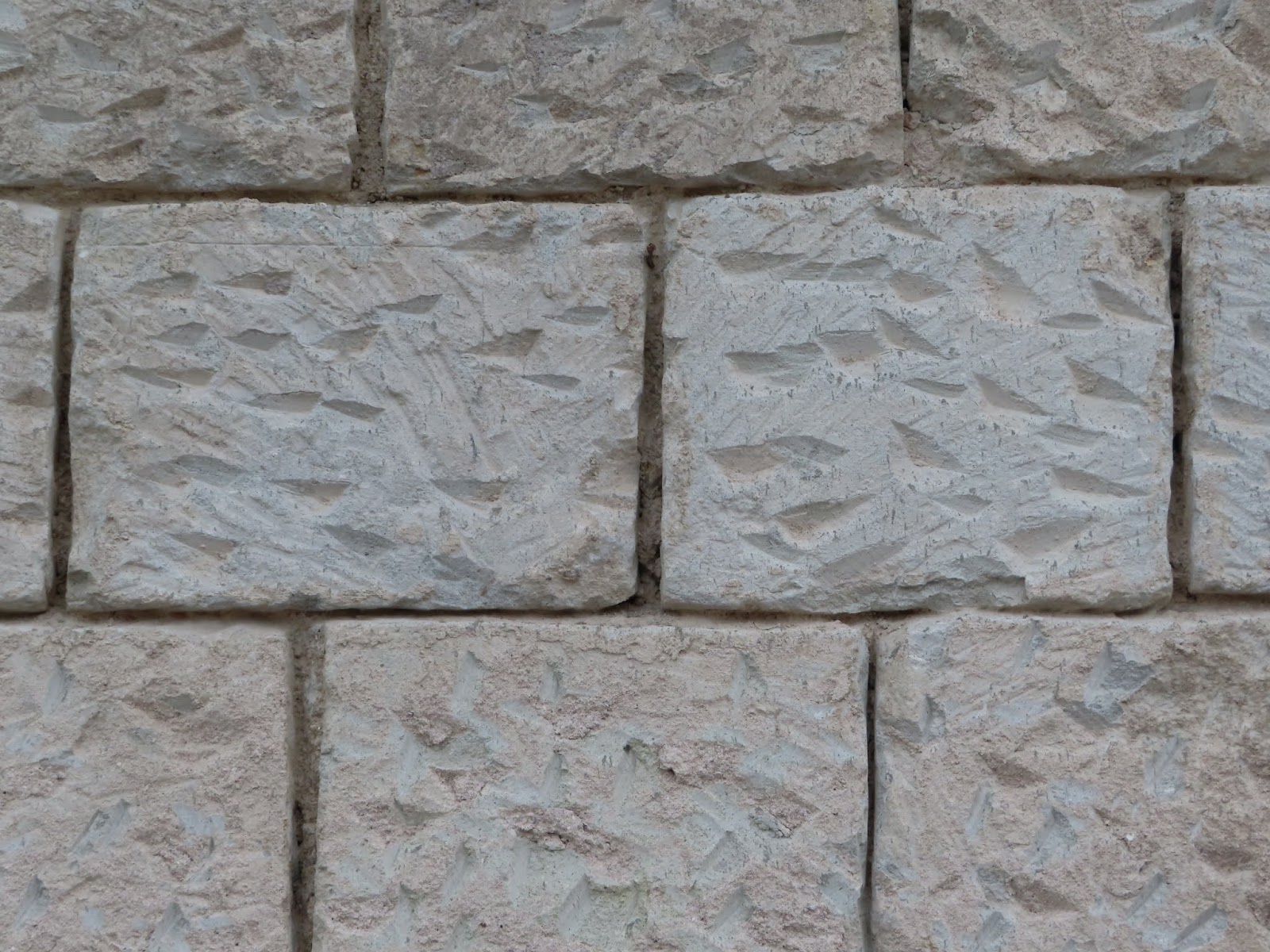
The church in Dulce Nombre is being renovated. It needed to be painted but in the process of removing the stucco, we discovered that the two towers have some beautiful hand-hewn stones. The idea is to preserve them and treat them so that they can be seen – partly because these stones were gathered and hewn by members of Dulce Nombre fifty years ago.


We are also renovating the interior of the church, removing a large retablo and simplifying the sanctuary. I had an idea that I shared with the pastor to have a mural painted on the apse. Next week we will be speaking to a prospective artist.


One big event coming up, that I’ll write about later, is our sending of missionaries to another parish in October. For the last few years, parishioners have gone on mission to different communities in the parish, but this will be different. We’ve had some trainings and we’ll have another next week.

There is much more to write about – especially in terms of the continuing poverty and challenges that our people face, in the light of massive corruption, possible links between political leaders and drug trafficking, and incompetence in judicial affairs and in the infrastructure. Just a few days ago a major portion of the international highway between Santa Rosa de Copán and Cucuyagua caved in. That means that travel between the Guatemalan and Salvadoran borders and the major city of San Pedro Sula and the Caribbean port of Puerto Cortez was stopped and is greatly restricted, or had to be diverted through Guatemala.

More on this later. 

But, for now, a few more images of what I experience.

The kids at the school in Plan Grande celebrated the Day of the Child with a carrera de cintas.


The morning often brings incredible vistas:


And the flowers in the garden continue to amaze me, like this hibiscus: