Thursday, March 25, 2021

Lent, where did it go?

Holy Week – Semana Santa – is upon us. 

For some here in Honduras this is a week of vacations. In past years, many people went to the beaches or rivers to escape the heat. Others took part in the great processions and religious services in their cities and towns. This year it will be different, though we will be having limited celebrations. But life goes on – with its joys and sorrows.
A lot is happening in Honduras and in the world and I’m trying to make sense of it. For me, this means paying attention to the people I encounter. This doesn’t always offer concrete “solutions,” but it may help me and others understand what is going on and begin to work together with the people for ways to envision and create societies that are more just. 

And so, I’m writing this to help me articulate what I’m seeing and to help others see the human side of what is happening. 

A VILLAGE IN TRANSITION AFTER THE HURRICANES

Last Sunday I went to a distant village to preside at a Celebration of the Word with Communion and meet with a committee which is leading to effort to help them recuperate from the effects of last year’s hurricanes.
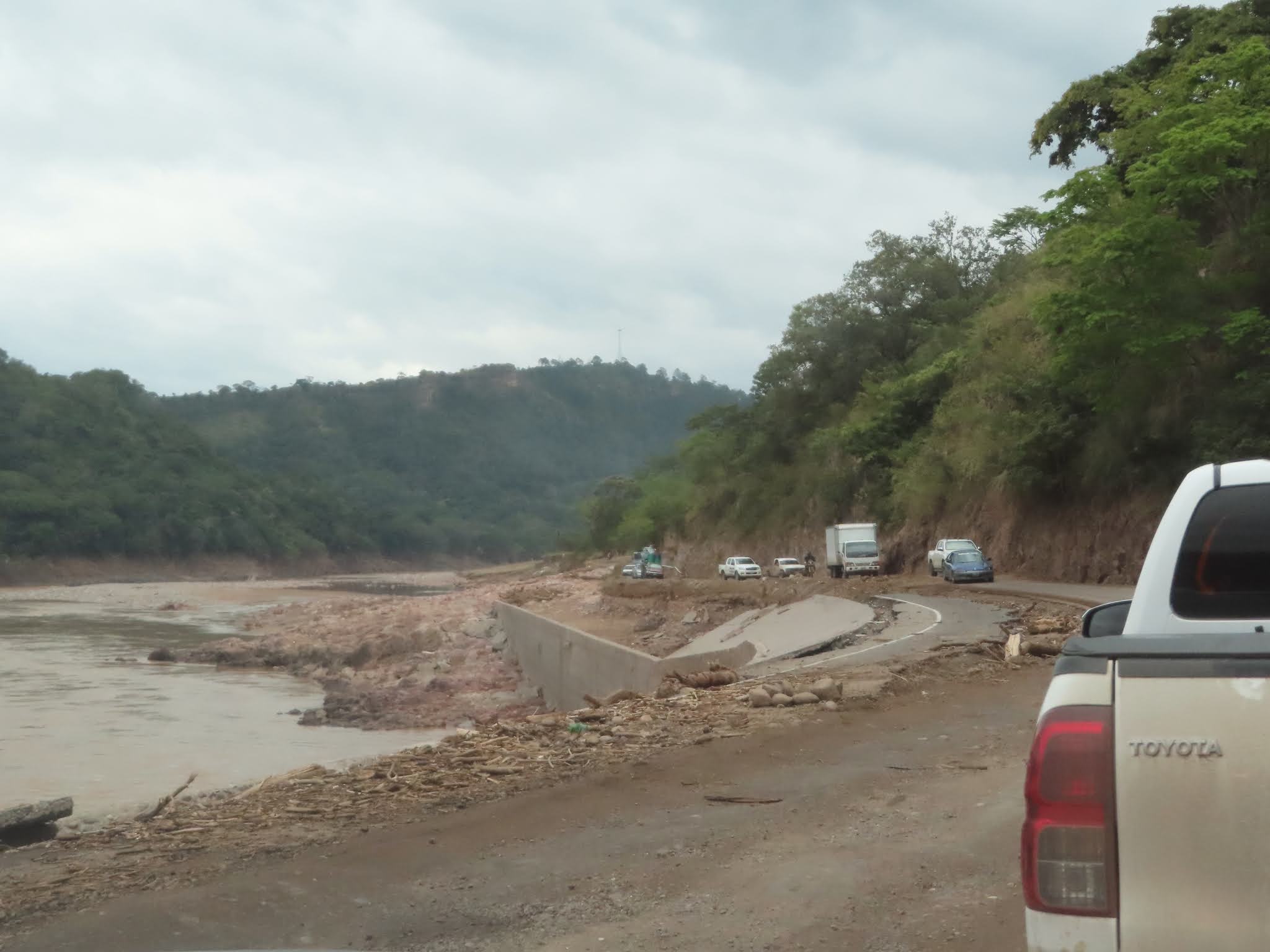
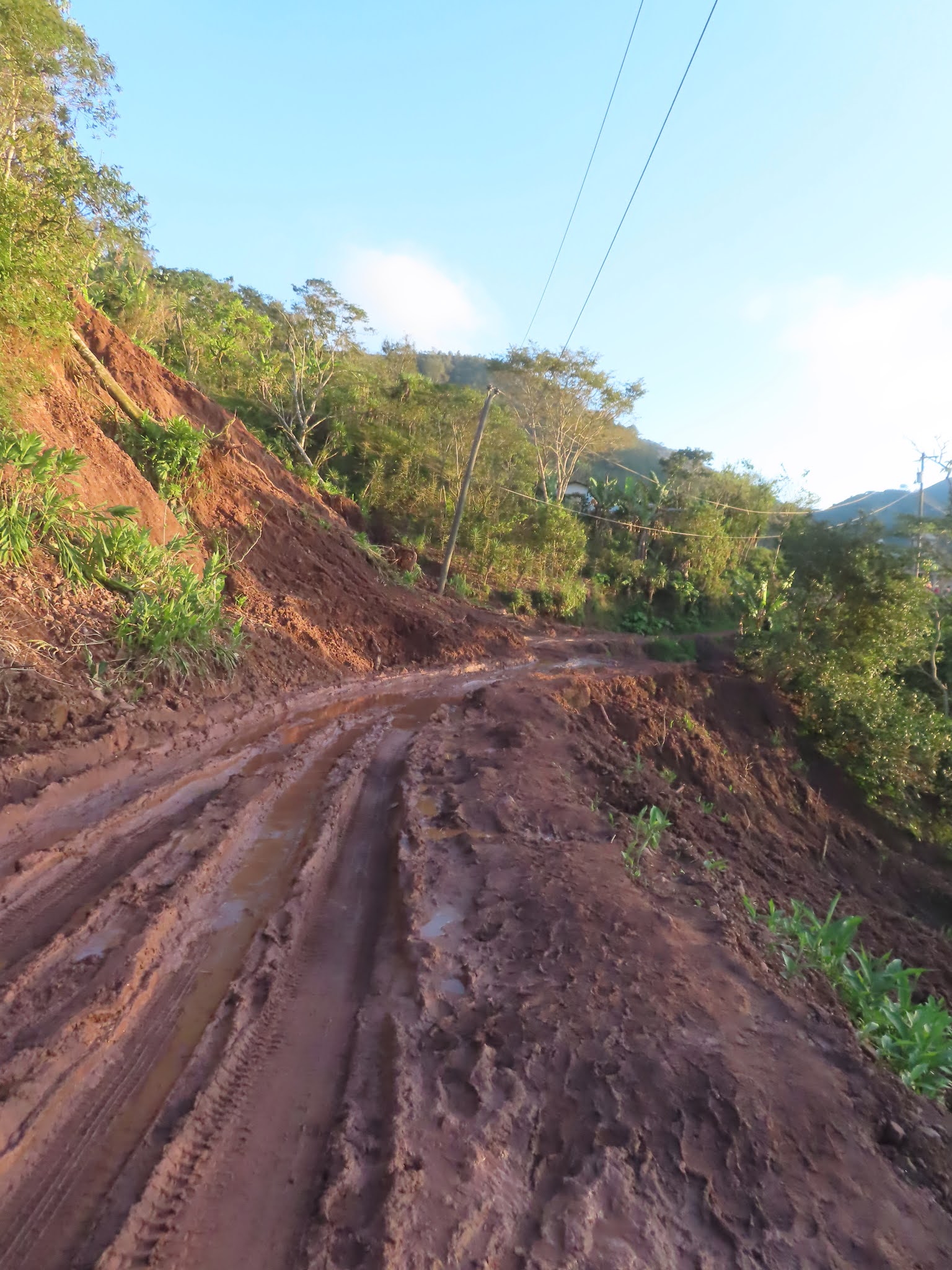
The village was cut off from other places for several days during and after both hurricanes. The road into the community was seriously affected with several landslides that took out parts of the road. It was still slippery last Sunday.

After the Celebration I spoke with the committee. They have asked for a study of the situation and, with the help of a friend, a geologist will be coming this coming Saturday. I wanted to help them prepare for the visit and think of what questions they had for him.

I was rather impressed with their thoughtfulness as well as their intent to be helping all in the community, regardless of religion or political allegiance.

I have tried to be very careful, avoiding taking over but helping them develop their skills, praising their initiative. I look forward to Saturday.

Before I left several of the women on the committee brought me to the sacristy where there were bags of cement, cyclone fencing, and a few bags of fertilizer. They told me that this had been brought to the community the week before the March 14 primary elections by the supporters of one of the candidates. One supporter had the keys of the church and put the “bribes” there. The pastor wants the material out as soon as possible.
For me, this reveals some of what is wrong in the Honduran political scene.

Some candidates use gifts like cement and fertilizer, to try to influence people to vote for them. For me, this comes very close to bribery. They also try to manipulate the church and other institutions. 

These actions also exacerbate the divisions and even violence that permeate the political process here – even at the level of municipal elections. Families are divided over candidates, threats have been made against candidates, and more. A concept of politics as working together for the common good is largely unknown or, if it is acknowledged, policies outweigh their pious words.

POLITICS

Honduras had primary elections on Sunday March 14. The three major political parties were to choose their candidates for national and local offices – president, members of congress, and mayors. The candidates chosen will compete in the national elections in November. As of Tuesday, this week the national electoral commission had not released the results. 

The lines were long here in Plan Grande and there was even a car supporting a major opposition party, LIBRE, even though one of the candidates for the National Party is from our village.
Before the elections there was the usual electioneering – signs on buildings and on cars, caravans of cars going through the streets in towns and even venturing into the countryside with their supporters – waving flags, shouting slogans. There were even cases of candidates handing out provisions, bags of cement or fertilizer.

The ruling political party, the National Party, had two major candidates – one of whom is rumored to be involved in corruption. Both candidates are closely tied to the current president. (The president’s brother has been convicted of drug trafficking in the US and the president has been mentioned in a press release on the conviction of another drug trafficker in the US.) In the Liberal Party, the family of one candidate has been implicated in drug trafficking. The opposition party, Libre, will probably choose the wife of the president who was thrown out in a coup in 2009.

During the campaigns, at least in our municipality, the competition between two candidates proved extremely divisive. Families and communities are divided over the candidates. There was one incident that I’ve heard of in which a vehicle of partisans of one candidate ran into the vehicles of the other. There are also rumors of threats against one candidate.

Politics, which has been filled with corruption for many years and which has been largely a contest between two parties until 2009, has been even more polarizing. 

Is there a way out? I don’t know.

At the national level I have my doubts, largely because of the influence of the two major political parties and their access to money for campaigns as well as their reliance on a system that awards members of the party.

At the local level, there may be some opportunities. I know two young men (in different parties) who were candidates for mayor in their respective municipalities.

But I believe that the real efforts need to be made to help people at the local level organize, assume responsibilities for their lives, and go forward to pursue the good of their communities, without being involved with political parties. In the meantime, many people feel powerless and this, I believe, often leads some to look for a way out, by going to the US.

COFFEE

The coffee harvest is almost completely finished in our area. There seems to have been a good harvest, except for those areas affected by landslides and for those coffee farms that have not been severely affected by roya, the disease that devastated almost all of Honduras about five years ago. In addition, many of the coffee bushes are beginning to flower.
While I’ve lived here in the countryside, I’ve noticed an influx of Guatemalan workers for the coffee harvest, with whole families coming here to work.

Because of COVID-19 and the difficulty to cross the borders, there are not many Guatemalans, at least in our area. But there have been a good number of people coming from Intibucá as well as from around Copán Ruinas. These are most often Lenca or Maya Chorti.

This came home to me last Sunday when I was driving to a community. It was about 8:30 am when I noticed three young guys walking up a hill and offered them a ride. They were grateful and I left them off near the international highway between La Entrada and Copán Ruinas.

I asked them where they had come from and when they had left to start walking. They had started in San Agustín about 5:00 am. They had been working in the coffee harvest and were going back to their villages. In order to get some work they had left home and lived for months away from home.

These guys at least were close to home; many of the people I met in Plan Grande had come from Intibucá – many hours away from here.

This is part of the desperation and the lack of local work that feeds the desire to look for a way out, often seeking to go to the US.

COVID 19

COVID 19 is still present and is most forceful in the large cities and on the north coast. There have been a few cases in parts of our parish with a few deaths, but – thanks be to God – the situation seems manageable in our area, though the major hospitals are experiencing difficulties, due to a broken public health system that really has not responded to people health needs for ages.

I have three major concerns. 

First of all, the public health system needs major overhaul which must include decent wages that are paid on time, sufficient medicine for the needs of the poor populations, and preventive measures.

Secondly, there is a great laity in terms of issues of medical security measures in the face of the pandemic. Pickups and cattle trucks were packed solid with people during the coffee harvest, with few people wearing masks. The political car caravans also had pickups filled with people, often without masks. In the church we try to have the people wear masks and use gel, but it is extremely difficult for many reasons. Some don’t see the need for these measures – some think that it won’t affect them since there haven’t been cases nearby; a few have an almost magical notion of religion, saving God will protect them; others just don’t have the money to buy gel and masks. A teacher in a rural community told me that the government has not provided masks or gel for the children in here school.

Thirdly, we have no idea when vaccines will arrive for the general population. Some have arrived and medical personnel have been vaccinated, which I perfectly justified. There are reports from the government that several million doses will be coming – but they have been saying this since early February. It does appear, though, that Russia will be donating several million doses of the Sputnik vaccine. But the question is who will get these vaccines. Will they be doled out as political favors or as ways to “buy” votes before the November national elections?

All this leads to great uncertainty.

MIGRATION

It is hard for me to get a good handle on the numbers of people who have migrated from our area of Honduras.

A few weeks ago I went to a community for a Sunday Celebration of the Word with Communion. I asked about a catechist from there whom I had seen a few weeks before but he wasn’t answering my phone calls. He left for the US, I was told. But then a few days ago, he showed up at the parish council meeting. He had gone but was deported and flown back to Honduras. He was a very committed and capable person and so I was surprised that he had left.

A little before that I heard from someone on Facebook who was from the area but had been living in another part of the country. He was a real leader in his parish and with youth in his diocese. But he had left and found a job in the US.

Two Sundays ago I came across someone who had left from here about 18 months ago with his son. He had decided to return home.

Twice, in the past three weeks the pastor has asked me to talk with couples who wanted their child baptized before the husband left for the US with the child.

I knew the first couple and spoke with them. I began by saying that I was opposed to parents going with their children, mostly because of the insecurity and danger. The husband told me that the coyote (as they call the one arranging the transit, for a price) had told them that at the border they were letting in parents with children. I tried to tell him that this was probably not true and was a misunderstanding of what was really happening. But he still was planning to go. 

I went ahead with the process of baptismal preparation and the baptism. But shortly after he wrote me to tell me that the trip was put off by the coyote, who said the situation had changed at the border.

I don’t trust coyotes. I don’t know if this coyote had misunderstood what was happening at the border or was manipulating the information to obtain clients. 

I talked with another couple and we were going to meet again but they called me to say that the husband and child weren’t going together and so they could wait for baptism afterwards.

These are not isolated cases. I keep hearing of people leaving, trying to go to the US. I have also heard of a friend who is going to Spain - with papers.

What is happening?

My guess is that people are desperate and are grasping at straws, trying to find a way out of the abyss they perceive around them here in Honduras. I can only try to encourage people to stay, try to find ways to help them stay, and pray.

At least two things really need to change.

First of all, Honduras needs and deserves a government that is honest, transparent, just, and concerned about the good of all its people, especially the poor. 

Secondly, US immigration policy needs to change so that it is more open to the needs of the people here who can offer a lot to the US. How much of the meat packing and the agriculture work is being done by migrant labor? At least, the US could look at programs that offer short-term work for people from poor nations. 

I know of a fair number of people who have taken advantage of a Canadian program (all too limited) to spend several months in agricultural work – mostly in Québec. 

I know the US has or had recently a very limited form of this, but my guess is that it hardly responds to the needs of US agriculture and the number of people here who would profit from it. 

I will leave policy planning to others who have more knowledge and experience in this. I only demand that it be a policy that respects the rights of the poor and is otherwise consistent with Catholic social teaching. For more on Catholic social thought on the issue confer the statement of the Catholic Bishops of Mexico and the United States, Strangers No Longer: Together on the Journey of Hope: A pastoral letter concerning migration

In the meantime, we work to help the people live in dignity and find ways to live their faith. It’s the least we can do. 

THE PARISH

The murals of Saints Francis and Clare in the Blessed Sacrament chapel have been finished. They are astounding.
The artist has been working on the other side chapel, which will feature murals of Saints Isidore and María, patrons of agriculture workers, and Saint Nunzio Sulprizio, a young blacksmith who died of cancer. He is gone for two weeks but will return after Easter and probably finish before the end of April.
Lent has been subdued. 

We won’t have our parish-wide Stations of the Cross tomorrow, but people in many of the villages have had small groups praying the stations on Fridays.

The pastor has gone out and celebrated Mass and heard confessions in most of the villages. Today he’ll be in a nearby community and so I’ll be able to go to Mass to celebrate the feast of the Annunciation.

Yesterday was the commemoration of the martyrdom of Saint Óscar Romero, archbishop of San Salvador. Padre German celebrated a special Mass in the main church at 6:00 pm. I went, assisted at the altar, and preached. It was a great honor to be able to speak of San Romero.
Holy Week will be different this year. 

We are encouraging small celebrations in the communities and had about 55 people in a training session. 

We often have had Lenten retreats in the sectors of the parish, often led by the Oblate sisters who are in Dulce Nombre; but this year the pastor decided to have the retreats in each village, led by people who came to a training session last week.

In addition, the parish is sending out about a few people in mission to the communities. 

My week will be busy. 

Palm Sunday I’ll be in the main parish Mass in Dulce Nombre and will help send out the missionaries who will spend several days visiting people in various villages.

Tuesday and Wednesday I will be going to two villages to visit the sick and also to facilitate a Lenten retreat.

Thursday we will have the Chrism Mass in Santa Rosa de Copán for this part of the diocese. In the afternoon, I’ll be presiding at a Celebration of the Word with Communion in Concepción, with Washing of the Feet.

Friday, if all goes well, I’ll be going to a distant village for the Celebration of the Passion with Communion. 

Saturday, for the Easter Vigil, we are obviously not having one big celebration. The pastor will be in Dulce Nombre; Fernando, the transitional deacon, will be in San Agustín. I’ll be in Vertientes, and we will be joined by people from nearby San José El Bosque. We will have it in the new church that they are building in Vertientes, which is quite large. I am looking forward to this.

Sunday, I’ll be at the morning Mass in Dulce Nombre where we’ll welcome back some of the missionaries who spent Holy Week in several villages. After that, if all goes well, I will have Easter lunch with some of the Dubuque Franciscan sisters.

As you can note, we are not as restricted in our celebrations as in some parts of the world (and even some parts of Honduras), but I will be taking biosecurity measures very seriously.

LAST FRIDAY - Sorrow and Hope

Last Saturday we got word after the Parish Council meeting that a young woman, about 15 with special needs and epilepsy, from Debajiados, had died. The young woman was always at Masses and Celebrations with her mother. She was almost always full of energy and joy. 

Padre German decided to have the funeral Mass in Delicias Concepción where here body was to be buried. I went to Debajiados to see if I could help bring people to the Mass. Four cars were filled with people.

Marcelita's casket in the back of a pickup

Padre German preached but I read the Gospel - Matthew 11: 25 - 30. I was close to tears as I read: "I thank you, Father, Lord of heaven and earth, that you have hidden these things from the wise and learned and revealed them to the simple people." Marcelita was one of these.

I also led the prayers of commendation around the casket at the end of Mass. I again found myself close to tears. 

Marcelita was a moment of grace for many, in her weakness and infirmities. Celebrating her funeral Mass, was, as father mentioned in his homily, a moment of experiencing Easter. 

TODAY - Hope

I am off in about an hour to the nearby village of El Zapote Santa Rosa for Mass. The pastor will have arrived there earlier for confessions. 

I don’t know if he’ll want me to preach but I find today’s feast – the Annunciation – is a feast of hope.

In the midst of darkness, there is light. In the midst of darkness, a young woman learns that she is going to give birth – to the Son of God. God is with us, sharing our joys and sorrows, our hopes and disappointments. And she says yes. And, though this is the work of God, the responsorial psalm reminds us that God invites us to say yes: “Here I am, Lord, I come to do your will.” 

 In Spanish, we have a beautiful way to speak of childbirth: “ella da a luz”; she brings to light. We need that light – and we need people willing to risk themselves, as Mary did, to bring that light to the world.

Saturday, March 06, 2021

March is upon us

I wrote about two weeks ago but I wanted to share more information. If there is some repetition, please excuse me.
COFFEE 

There is still a lot of coffee in the fields and I guess that people will be harvesting coffee for a week or two. We’ll probably be spending a day or two soon in the parish coffee fields next week.

But I have also come across coffee bushes in flower. The fragrance of the coffee flowers is one of God’s gifts and you can smell them from a distance. The closest fragrance in the US is honeysuckle.
I have been involved for several years with an association of small coffee growers in the nearby community of El Zapote Dulce Nombre. There are twenty-one members, two of them women. They’ve been exporting some coffee to the US, first through the parish of Saint Thomas Aquinas in Ames and now through a non-profit, El Zapote Coffee. Click for their facebook page. I have independent testimony on the quality. 

The association has had some help from veracious non-governmental organizations to help them develop their work. Most recently, a foundation has given them some seed money for setting up their own beneficio, a processing plant. This will enable them to cut costs as well as to lessen the environmental effects of the coffee production process. EL Zapote Coffee is doing some fund-raising to help them. The association already has some funding and they have worked to prepare the site for the processing and to set up a solar dryer and a one-sided shed. But much more is needed. It is great to see them working taking and taking the initiative, with very competent leadership. 

TOMATOES

Last year, shortly before the pandemic began, a neighbor and his cousin began a tomato project, producing beefsteak tomatoes in a large greenhouse.
Since he could deliver the tomatoes to my house, I enjoyed fresh tomatoes until about October, when the plants needed to be uprooted and new ones planted. I had to endure other tomatoes until the beginning of this year when the new harvest began. 

 I have been ordering for myself, but several women at the church in Dulce Nombre have been asking me to get some for them. I’m so happy to be able to share them and to support a local farmer. 

Friday I had a chance to visit Alex and the tomato greenhouse. It was amazing to see what they are doing. His cousin had learned how to do this in the department of Ocotepeque and the two of them had put together their resources to start the project.

But I was also pleased to see that Alex and his cousin were also cultivating other vegetables in their gardens – garlic, onions, green peppers, mustard, cilantro, squash, cucumber, and more. I hope I can buy some of their produce. 

SOLIDARITY

I’ve been connecting a lot these days with a community that was severely affected by Hurricanes Eta and Iota last year. Many homes were destroyed or severely damaged, About a third of the houses in the community are in precarious situations and could be severely affected when the rainy season arrives.

They’ve formed a board to help consider how to go forward. They hope to have a study made of the geological situation to help determine if they need to relocate the village. 

The parish has brought aid to the community several times. This past Wednesday night, a woman from the community called and told me that there had been a fire in the home of an elderly woman and that she had lost clothing, a mattress, and more. The fire came from a defective light fixture. Since the roof was of tin with metal beams, the house itself had not caught fire and so she could continue living there. 

I brought a mattress, clothing, and supplies from the parish. 

I got another call just before I left the parish asking me to bring a mattress, clothing, and supplies for an older man who had showed up in the village a few weeks ago.

One of the women helped him get washed up and set him up in a room be the church. She told me how the stench was overpowering but she went forward and washed him. He is also rather ill with inflamed stomach and legs. And so the woman and others are raising money to take him to a clinic to have him examined. In their poverty, they have reached out to one who is suffering even more. They put me to shame. 

Providentially, the Gospel for the day I went there was the parable of the rich man and Lazarus, in Luke 16, 19-31.

POLITICS

March 14 the country’s parties will hold internal elections, choosing the candidates for November’s elections for the presidency, congress, and municipal mayors. I have seen some signs for candidates and once almost got stuck in a caravan of cars in support of one candidate.

One of the most interesting things I’ve seen is a sign for one candidate for the mayor of Concepción about a block away from the house of the other candidate.

It’s also interesting that I know a number of the candidates for various positions and parties. There are even two young men I know who are running for office. Whether these elections will make any difference remains to be seen. (Excuse the cliché.) 

Corruption runs deep in the country and there are rumors of corruption of one presidential candidate. But above all are the continuing stories about the involvement of the current president in drug trafficking. It just so happens that his brother is waiting sentencing in the US. 

COVID-19

COVID still afflicts the country. In our rural area, there have not been a lot of cases, though one village seems to have had a serious outbreak. In the aldea where I live, five persons were tested positive but have recuperated. 

There were stories from the government that the vaccine would begin to arrive in the second half of February, but the date was changed to March. According to some news reports about 2000 vaccines have arrived from Israel and have been given to medical personnel. There is some controversy about the protocols but something has begun.

There are also reports that the government is purchasing 4,200,000 Sputnik V vaccines from Russia. My concerns are that the poorest will be ignored in this. 

AND MORE…

The artist is continuing with the murals in the church in Dulce Nombre, most notably in the chapel of the Blessed Sacrament. Our hopes are that he will be able to finish in April. 

Holy Week is almost upon us. We are planning to have a session for parish leaders to help them prepare for Holy Week. It will be different from last year, when we were in lockdown, but we will be trying to be responsible as we help communities offer some small gatherings to celebrate the death and resurrection of the Lord – offering hope in the midst of all the suffering the country has suffered in the last twelve months.

Thursday, February 18, 2021

Summer, Lent and life in the parish

SUMMER 

Summer is here in our part of Honduras. Here we have two seasons – summer (the dry season) and winter (the wet season). 

In our part of the country, in the mountains in the south of the country but on the Atlantic side of the Continental Divide, we have a short dry season – usually from February to May. The rest of the year is the rainy season. The dry season is usually the hottest time of the year. The sun is strong and it seldom rains, which makes for dusty roads.

This year, after all the rain in the middle of the year and the heavy rains of the two hurricanes that hot Honduras, it is a welcome change to not have to worry about wet, muddy, slippery roads.
AFTER EFFECTS OF THE HURRICANES 

A few times in January, I thought I wouldn’t be able to get up a few hills that had become very slippery, with just a little rain. A few times I thought I wasn’t going to make it or would get too close to an embankment. But, with the help of God and a few friends, and the fancy tools of the new parish car, I got where I wanted to go. 

The other day, meeting with catechists in one sector of our parish, we were sharing how we felt about this past year. I realized that I was not really fearful of COVID-19, although I am extremely careful and share my concern with others. But I realized that I really am a bit afraid of getting stuck in the mud – again! 

One day I had to go to a distant village where I had gotten stuck trying to go up a small hill and, for a few moments, I hope the meeting was cancelled. I didn’t want to get stuck. But I went there with no problems. 

But going around to a few distant aldeas (villages), I noted the effects of the hurricanes, especially roads that are very narrow because of landslides, including some that may suffer more damage when the rains come again in late May. It’s been three months since the hurricanes and still there are roads that have not been repaired or have only had minimal repairs.
The after-effects of the hurricanes are still wreaking havoc in Honduras and people are still suffering.

In our parish we are working with one community which will probably have to relocate most of the houses. They have organized a committee to oversee the work and have prepared a report and a map of the situation. Out of the 131 houses in the village, 5 sere destroyed by the landslides and land settling and 40 more were slightly damaged or are at risk. We hope to help them as they rebuild or relocate.
Last Friday I took a friend, a Dubuque Franciscan sister, to San Pedro Sula to pick up their community’s car which had been in accident.

The traffic into and out of San Pedro Sula was terrible. But what really shocked me was what we saw at the entry into San Pedro. The roads from Santa Rosa de Copán and from Tegucigalpa come together just as one enters the city. Recently an overpass was built to ease traffic. 

Now, there are more than thirty tents with people displaced by the hurricanes – three months after these disasters. When will the government do something to respond to theses needs? Money has been promised and some has come in – but will it be siphoned off for enrich corrupt politicians and their allies? And, since this is an election year here in Honduras, will aid be politicized, going to party followers and not to those really in need? And will the aid be publicized as gifts from a politician or a political party, rather than the money which has been designated by donors or governments for the good of those affected? 

THE COFFEE HARVEST 

In our part of Honduras, coffee is harvested between November and March, depending on the local climatic conditions. For your information, coffee “berries” (which have the coffee beans inside) mature at different times on the same coffee bushes; thus, they have to be collected three or more times during the harvest season.

This year many people are reporting good harvests. There are some people whose harvests are poor because of coffee rust (la roya) or the loss of fields by landslides. 

We have had several good harvests of coffee in the parish coffee field. I help a little with the harvest but I cannot harvest even one-fourth as fast as many people who have been harvesting since they were four years old. But I do transport the volunteers who come in from distant villages and often help bring the lunch prepared for them by women here in Plan Grande. There should be at least one more harvest later this month.
PROJECTS

For at least eight years, the parish of St. Thomas Aquinas in Ames have been providing partial scholarships to high school and middle school students in a distance education project in four places in our parish. This year about 150 students were helped. The program, called Maestro en Casa (Teacher in the Home) or IHER (Honduran Institute of Education by Radio) meets a need, mostly for those who live in remote rural communities who would otherwise have little or no access to study past sixth grade. They listen to radio program, have workbooks, and meet once a week with a teacher. It may not be the best option, but it does help.

About seven years ago, after a visit from Fr. Jon Seda from St. Thomas Aquinas parish, a group of small coffee farmers began working together to improve the quality of their coffee and to export quality coffee to the US through St. Thomas Aquinas. Now a separate group, El Zapote Café, is importing coffee from this association which now includes twenty-one members, two of whom are women. 

Working with some foundations here and with the help of the Iowa group, the association is building a processing facility which will help them to cut costs, improve the quality of their coffee, and uses processes which do minimal damage to the environment. It has been a great joy to see their growth.
Moises, the president of the association, with his son

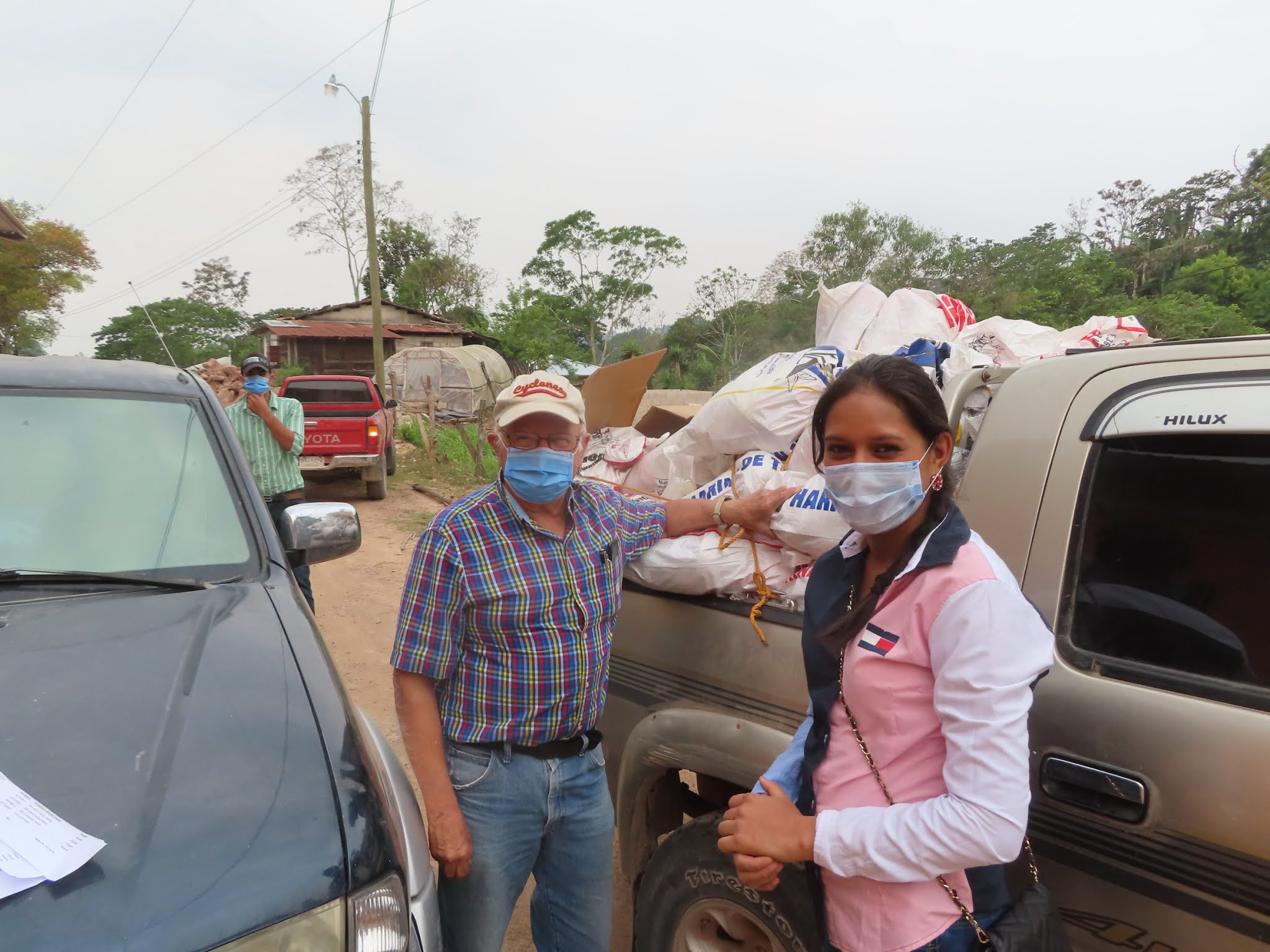
After the second hurricane hit our area, we began receiving assistance from other parts of the diocese – mostly in terms of food stuffs and clothing. We have been able to deliver these to rural communities. On Ash Wednesday, I combined taking 56 bags of provisions to a community with presiding at a Celebration of the Word with distribution of ashes and communion.
The work on murals in the church continues. The chapel with the Blessed Sacrament is being painted now with images of Saints Francis and Clare.
Work on the other chapel will probable begin in March and will include images of Saints Isidore and María, patrons of agricultural workers, and Saint Nunzio Sulprizio, a 19 year old who was recently canonized (on the same day as St. Oscar Romero and Pope Saint Paul VI); he was an orphan who was maltreated by an uncle and died about much suffering. He also was a blacksmith; in Dulce Nombre there are many blacksmiths, mostly making horseshoes and so his image will remind them of the dignity of their work.

PASTORAL WORK

We are slowly and cautiously opening up in our parish pastoral work.

We had our first Parish Council meeting in January. We have our second this Saturday.

The pastor, assisted by a recently ordained transitional deacon and a seminarian in his year of pastoral experience, have been visiting many communities for Mass as well as visits to the sick and the sacraments of baptism, confession, anointing of the sick, and a few weddings.

I have begun to visit communities on Sunday mornings several times a month to preside at Celebrations of the Word with Communion. Sometimes I will also visit the sick.

Last Sunday I visited, bringing communion to four persons in three homes in a community. It has no communion minister and so there are few occasions when they and a neighboring have communion. The pastor gets out there every two months for Mass, but I think I’ll try to get out there about once every two months or so. I was reminded of the importance of this when a catechist in the village told me that Don Efraín, who is partially blind, asked her when I was coming to bring him communion.

I have begun meeting with small groups of catechists in the rural sectors of the parish. It has been a very good experience because this has provided a space for me to hear how they are feeling, to help them think through what they might be able to do now and what they might be able to do in the future. I have come away from them with a sense of hope, since I see their enthusiasm but also the growing ability of some to make thoughtful decisions on their own, not referring every issue to the priest or deacon.

I’ve started the meetings sharing how we are feeling after all that has happened this year. I hear some fear of the pandemic as well as some depression because of the isolation, some sadness because of the suffering of people as well as some spirit of struggling to go forward as we can. I heard of efforts to help others in the community as well as efforts to pray in family groups. After I’ve visited all the areas, I need to plan how to go forward – with great care, but helping the catechists develop a strong pastoral sense and a capacity to carefully discern what can be done.

I’ve also had some meetings with people preparing for baptism or marriage. There will probably be more as Lent ends and people prepare for baptisms of children and for marriages after Easter. 

I had one last baptism before Lent last Sunday in Dulce Nombre.

THE PANDEMIC

The pandemic is still here and recently it seems to have affected our parish more than before. 

There is one community that has been severely affected and there have been cases even here in Plan Grande. Here, the families of those affected have mostly been very cautious and have avoided contact with those outside their households. 

There are also continuing cases in the town of Dulce Nombre. 

Santa Rosa de Copán has been affected quite a bit. This week a priest of the diocese died as a result of COVID-19.

When will the vaccine get here? The President had said that we could expect it n the second half of February but now the government is saying the first vaccines will get here in March. We shall see. But what will really be important is careful attention to how the vaccine is distributed. There is a great danger of politicization and favoritism. 
 
LENT

Lent will be different this year. 

We won’t have village-wide Stations of the Cross on Fridays or the large parish Stations on the Friday before Holy Week.

Ash Wednesday was much like it was in the past, since it is largely decentralized. In the morning, we had a Mass at 10 for the Delegates of the Word from more than half the villages. The blessed ashes were shared with them for distribution at a celebration in their communities.

In addition to that Mass, Padre German, the pastor, had at least four other Masses. Fernando, the transitional deacon, went to two villages and I presided at three Celebrations of the Word with Ashes and Communion. 

My last was here in Plan Grande. The surprise for me was the presence of at least twenty of those who had come here to Plan Grande to work in the coffee harvest. Most were young people from Esperanza, Intibucá. It was a joy to see them present for the celebration of Ash Wednesday with members of our Plan Grande community. 

DUST 

 “Remember that you are dust and to dust you have to return,” I said many times on Ash Wednesday as I traced a cross on the foreheads of many people.
As I prepared for preaching, I began to think about this.

According to Genesis, human beings were made from the dust of the earth. What a miracle. God transforms dust into a living being in God’s own image. 

Yes, we will die and return to dust. But God will transform this dust into the new creature, resurrected in and with Christ.

There is hope – though it looks as if evil and suffering will triumph. But our God is a God of miracles and transformation.

Last Friday, talking with Sister Pat in the car on the way to San Pedro Sula, she asked me for some references or ideas about the Cross and Resurrection, as she prepares a presentation for a congregation of sisters. I was inspired and said that that it is important to consider “the transformative power of suffering-with.” Note that I didn’t say “suffering,” but “suffering with.” 

As we talked, I realized that this is part of my understanding of the power of Jesus. He suffered with us; he suffers with us – and this is transformative. 

I need to develop this and will try to use this Lent as a time for reflecting on this, especially in light of the hymn in Ephesians 2 that reminds us that Christ Jesus humbled himself and took on our humanity, to the point of suffering with us. By this we are saved.

There is hope. There is resurrection.

Wednesday, February 03, 2021

Que viva la virgen campesina - Suyapa

Hoy Honduras celebra a su patrona, María, bajo el título de la Virgen de Suyapa. La imagen de la virgen de Suyapap fue encontrada en 1747 por dos campesinos - una estatua de aproximadamente 2.5 pulgadas (6.5 cm).


Hace tres años vi por primera vez una foto de la estatua sin vestido. María es un poco fea, y aparentemente no blanca. Me gusta mucho la imagen.

Me han desanimado un poco las imágenes de la Virgen de Suyapa, a menudo de diez a veinte veces más grandes que la original, adornadas con un hermoso vestido galán. 


María ha sido secuestrada. 

No como las dos veces que robaron la imagen: una vez fue encontrada en el baño de hombres en un restaurante en Tegucigalpa. 

No, ella se ha sido robada de su identidad; ya no es una campesina pobre.

Además, es la patrona de las fuerzas armadas hondureñas, su “capitana”. Y la misa del festival en la basílica de Tegucigalpa a menudo se ha convertido en un festival de amor para el gobierno, con el presidente y otros en los primeros bancos. 

Pero ella es la María que dijo "sí" a la improbable propuesta de convertirse en madre de Dios.

Ella es la María que dio a luz a su hijo y lo acostó en un pesebre.

Ella es la María que estuvo al pie de la Cruz de su hijo.

Ella es la María que, al enterarse de que su pariente Isabel estaba embarazada, la visitó, mientras ella misma se encontraba en los primeros meses de embarazo.

Ella es la María que, reflejando las palabras de Ana en 1 Samuel, cantó un canto revolucionario de alabanza a Dios que derriba a los soberbios, despide a los ricos vacíos, derriba a los poderosos de sus tronos.

Ella es la María que lleva a un Dios que ensalza a los humildes, llena a los hambrientos, despide a los ricos con las manos vacías. 

Me pregunto si su cántico Magnificat será prohibido en Honduras por ser tan revolucionario.

Sin embargo, amo a la Virgencita de Suyapa.

Esta María, la virgen pequeñita de Suyapa, campesina un poco fea, morena, es la sierva del Señor que lleva a Dios hecho carne y me muestra el Dios verdadero. 

Esta María, la virgen pequeñita de Suyapa, campesina un poco fea, morena, es la sierva del Señor que lleva a Dios hecho carne y me muestra cómo es Dios realmente. 

Ella es la Virgen cuya estatua fue encontrada cuando el campesino Alejandro Colindres, durmiendo en el campo, sintió un dolor agudo en la espalda, por tratar de dormir donde fue la imagen. ¡Que todavía sea un dolor agudo, una espina, en la espalda de todos los que oprimen a los pobres, que confían en el poder y la riqueza, que no se dan cuenta de que son siervos del Señor y a su pueblo! 

Gracias, Virgen de Suyapa. Ruega por nosotros. Ruega por Honduras. 

Virgen, fea y revolucionaria, te amo. Ayúdanos y a todo Honduras a convertirnos.

---

Una traducción (por Google, pero corregida) de un blog en inglés de 2018.

Saturday, January 30, 2021

The year at Dulce Nombre de Maria: challenges and signs of hope.

I began to write this post on January 28, the feast of St. Thomas Aquinas to thank the parish of St. Thomas Aquinas in Ames, Iowa, for their continued support of our parish, Dulce Nombre de María. The day before our pastor had told me to send them his profound thanks for all that they have shared with us. This post is an expanded version, with photos, of a letter I sent to St. Thomas Aquinas parish.


On the morning of January 28, at 7:05 am, I got a phone call from a communion minister in a nearby village. He greeted me on the feast of St. Thomas Aquinas and expressed his gratitude for STA’s support of the parish. He was going to the exposition of the Blessed Sacrament in the church in his village (which they do every Thursday for several hours) and told me that they would be praying for St. Thomas Aquinas Church during the day. I was moved by his call which showed me how much the people here appreciate the solidarity of St. Thomas.

That afternoon I went out to Mass in a remote village, getting there with no trouble. During the Mass, Padre German prayed for St. Thomas. Mass started late and rains began. The trip back home was hazardous; there were a few slippery hills where I wondered if I would get out. But I got home with no scrapes on me or the new truck; going over this narrow road by a landslide was one of the easier parts of the trip.


Today I want to take remembering the feast of St. Thomas Aquinas as an opportunity to review the past year. 

It has been a difficult year throughout the world and especially here. Honduras has been plagued in recent years by poverty, corruption, and a broken infrastructure, especially in the areas of health and education.

Then the pandemic hit. Honduras went on almost complete lockdown, which actually may have helped prevent the spread of the virus. But the medical system was overwhelmed and the efforts to bring in temporary hospitals and treatment equipment have been plagued by corruption and inefficiency.

For me, an introvert, this has been a time for reading, praying, and almost a retreat. I have also taken advantage of several on-line education programs, including a course on Intrafamiliar Abuse offered by CEPROME, which works on abuse prevention, especially in the church. CEPROME also provided a virtual study week on abuse for all the clergy of Honduras. Thank God for a fairly decent internet connection.


I also used the time for a lot of reading and a fair amount of baking bread. 


I am also blessed because a friend here in Plan Grande has a tomato project and even delivers the beef-steak sized tomatoes. This makes cooking and shopping much easier.


Our parish has not suffered from COVID-19 as much as the major metropolitan areas. There have been cases in several of the municipal centers and some villages – with several deaths. But the pandemic has disrupted life – and made life more difficult for many of the poorest.

During the pandemic, the pastor and I helped one municipality distribute supplies to the needy on two occasions. We went along to help assure that the aid was distributed to those most in need and was not used for political purposes (which is a great danger here, especially since elections are being held this year.)


In regard to pastoral work, we have tried to minister to the parish within the limits of the restrictions as well as in light of the need to adhere to health safeguards.

The pastor and a seminarian (ordained a deacon in December) went around to a number of places. I restricted my travels a bit more (now that I’m 73 years old), but found myself involved in pre-marriage interviews, baptisms, funerals, and more. I have presided at a good number of funerals, five here in Plan Grande. I also did pre-marriage interviews and helped in the baptismal preparation of three persons who were going to be married. There also have been a number of baptisms, not only of children but also of several adults preparing for baptism.


When the bishops conference released guidelines for public worship, I presided at Sunday morning Celebrations of the Word with Communion in the church here in Plan Grande and went out a bit more, though I adhered to travel restrictions which limited use of vehicles to certain days. When I got a safe-conduct pass, I went out a bit more and have visited a number of villages for Sunday morning celebrations.

I haven't traveled much outside of the department of Copán where I live, but the pastor and I did go to the ordination of three transitional deacons fore our diocese. 

Deacon Fernando's ordination in Dulce Nombre

Enroute to one ordination in Santa Bárbara we saw how Hurricane Iota devastated parts of that department, especially along the river Ulua.


In the midst of this, with the help of donations from St. Thomas as well as fund-raising efforts of parishioners, the parish was able to avoid laying off any of its few employees, notably the secretary and cooks. The parish was also able to continue the rehabilitation of the church in Dulce Nombre, mostly from donations of parishioners and the fund-raising efforts of some women in Dulce Nombre, selling pupusas, pasteles, and other food.


Thanks to a few other independent donations, the parish was also able to contract an artist to paint an impressive mural in the apse of the church. He will begin painting murals in the side chapels this month. 


This month the parish will start a major effort to prepare spaces in the parish center in Dulce Nombre for parish-wide meetings for formation of parish leaders, thanks to a very generous donation in the past.

The St. Thomas Aquinas parish support of the distance learning education program of Maestro en Casa has enabled many junior high and high school students to study, even during the pandemic. I remember visiting a home while we distributed provision and seeing a young man working on his homework. This year the scholarships will help about 160 young people to continue their education.


In the midst of all this, we had to attend to the parish coffee fields. We have had volunteers come out and do pruning and weeding. We have had several days when parishioners came out to harvest the coffee. A few weeks ago, more than 160 came out on a Monday and 60 more the next day and harvested more than 800 five gallon containers of coffee beans. 


As if the pandemic wasn’t enough, Honduras was buffeted by two hurricanes in October and November. Much of the devastation, especially from the first hurricane, affected the north coast, especially around the industrial center of the country in San Pedro Sula.

The parish was also affected somewhat by the first hurricane, Eta. Yet we experienced the brutal force of the second hurricane, Iota, with landslides, collapse of soils, and fallen trees. The ground was already saturated because of more rain than usual this year. The heavy rains and winds led to the isolation of many villages because of impassible roads and fallen bridges, some for almost two weeks. The rains, fallen trees, and mudslides also contributed to the breakdown of water systems in some areas as well as lack of access to electricity. Some roads are still hazardous when it rains.


But the worst damages from Hurricane Iota were to houses in several villages of the parish, as well as to the loss of farmland and coffee fields. More than 180 families in the parish were affected. Some have had to abandon their homes; others are living in hazardous areas where major storms could provoke more  landslides and destruction of houses.

At least one village will probably need to be relocated and some people in other areas will have to move to more secure places in or near their villages.

some of the destruction in San Marcos Pavas

Yet in the midst of this we have seen many persons respond to the needs of others, even though they are themselves poor. People have collected food stuffs, shared beans and corn with the parish to distribute, and even gone out to take provisions and clothing to villages. Migrants from here in the US and Spain have sent money to help respond to the needs of those affected by the hurricanes. We have also received aid from other parts of the diocese and even from some people in Tegucigalpa.


This coming year presents us with many challenges. How will we safely resume formation of pastoral workers in the villages? How will we help restructure the local faith communities, including a revival of base communities? How will we help communities that need to rebuild? How will we accompany the people as they deal with loss of houses and farmland, with seriously damaged water systems, with roads in terrible condition? How will we be present in the major health crisis of COVID-19, with hospitals overwhelmed.? How can we help assure that the vaccines, when they arrive, are distributed to those most in need and not used by politicians to garner votes in this year’s elections? How will we serve those people who are so desperate that they are thinking of migrating? 

We have received some financial assistance to help people rebuild, some from St. Thomas and some from my personal friends. 

We are doing some planning to work on restructuring the base communities in the parish as well as the work of the catechists. This coming week I’ll begin visiting catechists in the ten rural sectors of the parish.

We have work to do. But with the help of God, of the members of the parish, and of the generous friends of the parish, especially the parish of St. Thomas Aquinas in Ames, Iowa, we are encouraged in our efforts.

This year we also have the help of a seminarian, Melvin, in his year of pastoral practice as well as the transitional deacon, Fernando, for at least a few months - if not more.

On behalf of the parish, I want thank all whose who support us. We are grateful and I want to assure you that we pray for you.

May God continue to bless you. Let us pray for each other and support each other in loving solidarity.