Showing posts with label hurricane ETA. Show all posts

Saturday, January 30, 2021

The year at Dulce Nombre de Maria: challenges and signs of hope.

I began to write this post on January 28, the feast of St. Thomas Aquinas to thank the parish of St. Thomas Aquinas in Ames, Iowa, for their continued support of our parish, Dulce Nombre de María. The day before our pastor had told me to send them his profound thanks for all that they have shared with us. This post is an expanded version, with photos, of a letter I sent to St. Thomas Aquinas parish.


On the morning of January 28, at 7:05 am, I got a phone call from a communion minister in a nearby village. He greeted me on the feast of St. Thomas Aquinas and expressed his gratitude for STA’s support of the parish. He was going to the exposition of the Blessed Sacrament in the church in his village (which they do every Thursday for several hours) and told me that they would be praying for St. Thomas Aquinas Church during the day. I was moved by his call which showed me how much the people here appreciate the solidarity of St. Thomas.

That afternoon I went out to Mass in a remote village, getting there with no trouble. During the Mass, Padre German prayed for St. Thomas. Mass started late and rains began. The trip back home was hazardous; there were a few slippery hills where I wondered if I would get out. But I got home with no scrapes on me or the new truck; going over this narrow road by a landslide was one of the easier parts of the trip.


Today I want to take remembering the feast of St. Thomas Aquinas as an opportunity to review the past year. 

It has been a difficult year throughout the world and especially here. Honduras has been plagued in recent years by poverty, corruption, and a broken infrastructure, especially in the areas of health and education.

Then the pandemic hit. Honduras went on almost complete lockdown, which actually may have helped prevent the spread of the virus. But the medical system was overwhelmed and the efforts to bring in temporary hospitals and treatment equipment have been plagued by corruption and inefficiency.

For me, an introvert, this has been a time for reading, praying, and almost a retreat. I have also taken advantage of several on-line education programs, including a course on Intrafamiliar Abuse offered by CEPROME, which works on abuse prevention, especially in the church. CEPROME also provided a virtual study week on abuse for all the clergy of Honduras. Thank God for a fairly decent internet connection.


I also used the time for a lot of reading and a fair amount of baking bread. 


I am also blessed because a friend here in Plan Grande has a tomato project and even delivers the beef-steak sized tomatoes. This makes cooking and shopping much easier.


Our parish has not suffered from COVID-19 as much as the major metropolitan areas. There have been cases in several of the municipal centers and some villages – with several deaths. But the pandemic has disrupted life – and made life more difficult for many of the poorest.

During the pandemic, the pastor and I helped one municipality distribute supplies to the needy on two occasions. We went along to help assure that the aid was distributed to those most in need and was not used for political purposes (which is a great danger here, especially since elections are being held this year.)
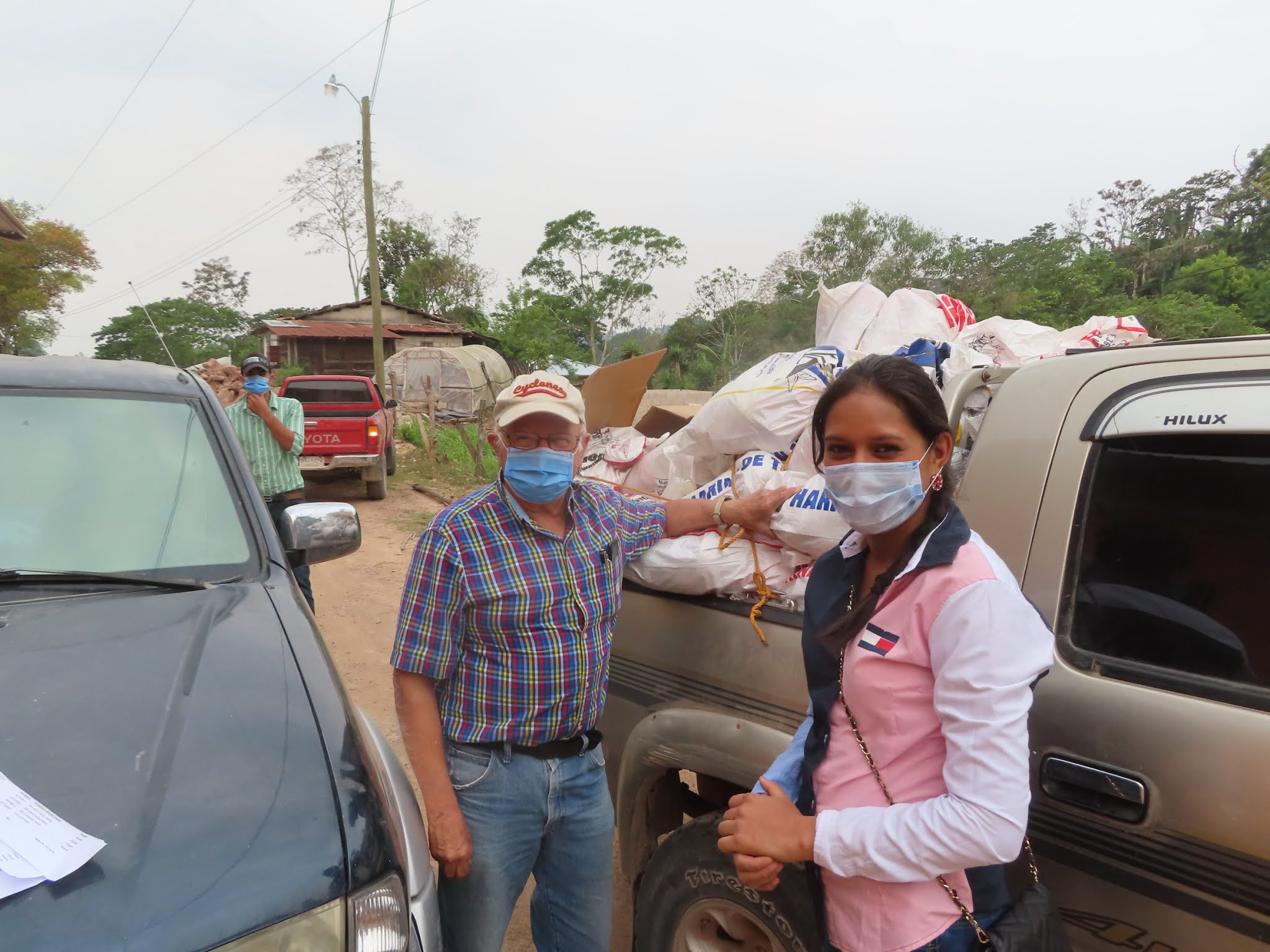

In regard to pastoral work, we have tried to minister to the parish within the limits of the restrictions as well as in light of the need to adhere to health safeguards.

The pastor and a seminarian (ordained a deacon in December) went around to a number of places. I restricted my travels a bit more (now that I’m 73 years old), but found myself involved in pre-marriage interviews, baptisms, funerals, and more. I have presided at a good number of funerals, five here in Plan Grande. I also did pre-marriage interviews and helped in the baptismal preparation of three persons who were going to be married. There also have been a number of baptisms, not only of children but also of several adults preparing for baptism.


When the bishops conference released guidelines for public worship, I presided at Sunday morning Celebrations of the Word with Communion in the church here in Plan Grande and went out a bit more, though I adhered to travel restrictions which limited use of vehicles to certain days. When I got a safe-conduct pass, I went out a bit more and have visited a number of villages for Sunday morning celebrations.

I haven't traveled much outside of the department of Copán where I live, but the pastor and I did go to the ordination of three transitional deacons fore our diocese. 

Deacon Fernando's ordination in Dulce Nombre

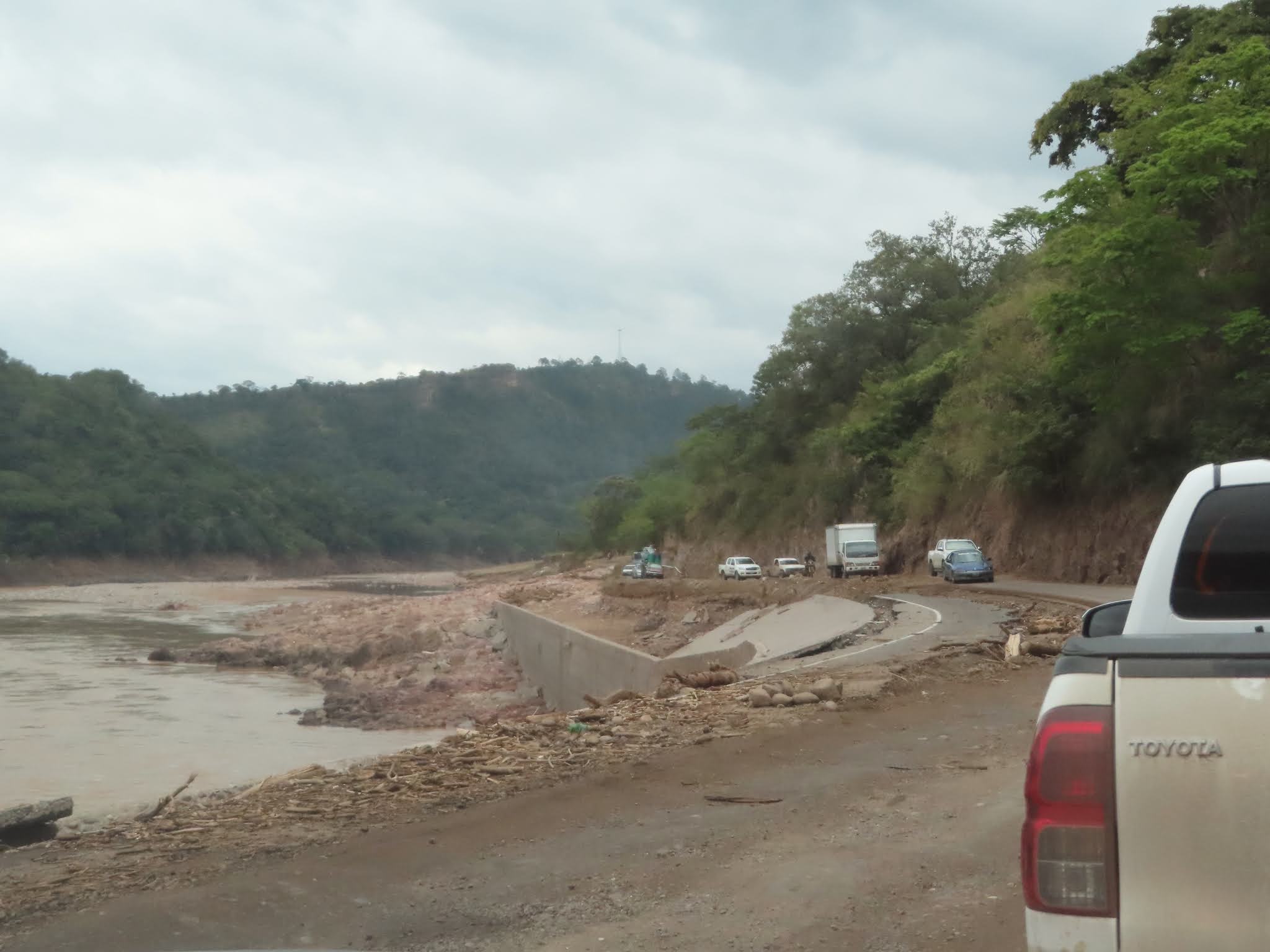
Enroute to one ordination in Santa Bárbara we saw how Hurricane Iota devastated parts of that department, especially along the river Ulua.

In the midst of this, with the help of donations from St. Thomas as well as fund-raising efforts of parishioners, the parish was able to avoid laying off any of its few employees, notably the secretary and cooks. The parish was also able to continue the rehabilitation of the church in Dulce Nombre, mostly from donations of parishioners and the fund-raising efforts of some women in Dulce Nombre, selling pupusas, pasteles, and other food.


Thanks to a few other independent donations, the parish was also able to contract an artist to paint an impressive mural in the apse of the church. He will begin painting murals in the side chapels this month. 


This month the parish will start a major effort to prepare spaces in the parish center in Dulce Nombre for parish-wide meetings for formation of parish leaders, thanks to a very generous donation in the past.

The St. Thomas Aquinas parish support of the distance learning education program of Maestro en Casa has enabled many junior high and high school students to study, even during the pandemic. I remember visiting a home while we distributed provision and seeing a young man working on his homework. This year the scholarships will help about 160 young people to continue their education.


In the midst of all this, we had to attend to the parish coffee fields. We have had volunteers come out and do pruning and weeding. We have had several days when parishioners came out to harvest the coffee. A few weeks ago, more than 160 came out on a Monday and 60 more the next day and harvested more than 800 five gallon containers of coffee beans. 


As if the pandemic wasn’t enough, Honduras was buffeted by two hurricanes in October and November. Much of the devastation, especially from the first hurricane, affected the north coast, especially around the industrial center of the country in San Pedro Sula.

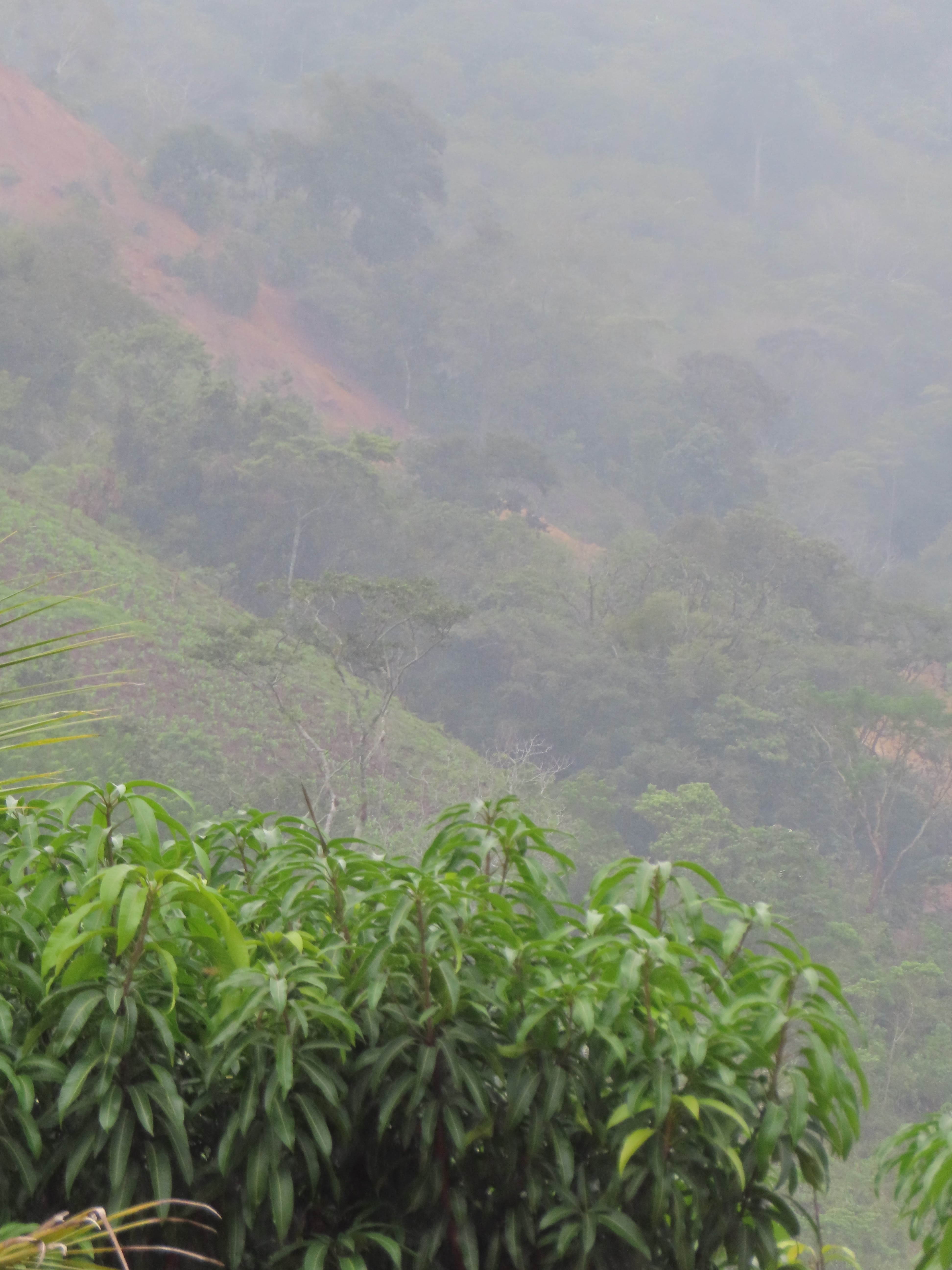
The parish was also affected somewhat by the first hurricane, Eta. Yet we experienced the brutal force of the second hurricane, Iota, with landslides, collapse of soils, and fallen trees. The ground was already saturated because of more rain than usual this year. The heavy rains and winds led to the isolation of many villages because of impassible roads and fallen bridges, some for almost two weeks. The rains, fallen trees, and mudslides also contributed to the breakdown of water systems in some areas as well as lack of access to electricity. Some roads are still hazardous when it rains.
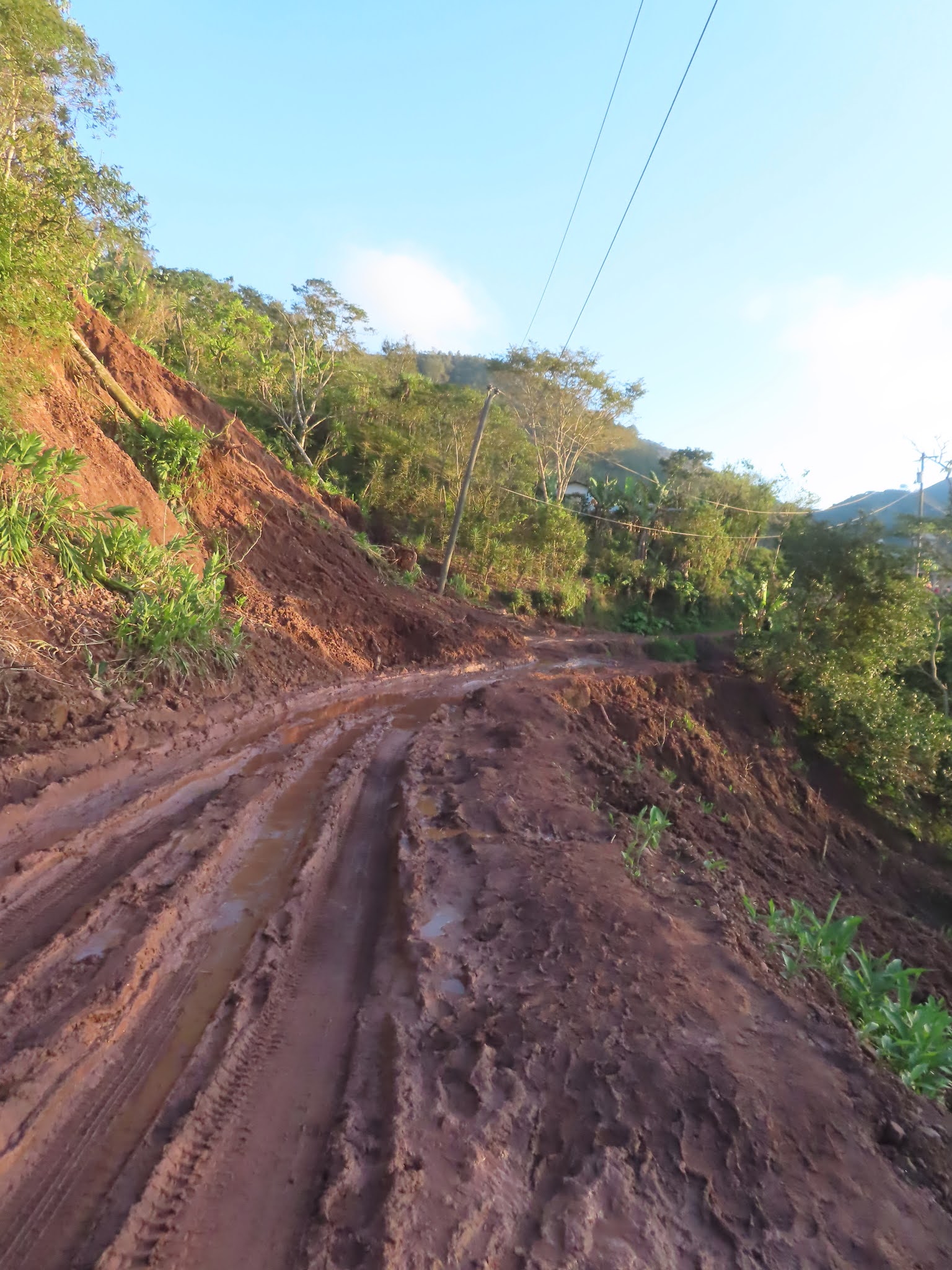

But the worst damages from Hurricane Iota were to houses in several villages of the parish, as well as to the loss of farmland and coffee fields. More than 180 families in the parish were affected. Some have had to abandon their homes; others are living in hazardous areas where major storms could provoke more  landslides and destruction of houses.

At least one village will probably need to be relocated and some people in other areas will have to move to more secure places in or near their villages.

some of the destruction in San Marcos Pavas

Yet in the midst of this we have seen many persons respond to the needs of others, even though they are themselves poor. People have collected food stuffs, shared beans and corn with the parish to distribute, and even gone out to take provisions and clothing to villages. Migrants from here in the US and Spain have sent money to help respond to the needs of those affected by the hurricanes. We have also received aid from other parts of the diocese and even from some people in Tegucigalpa.


This coming year presents us with many challenges. How will we safely resume formation of pastoral workers in the villages? How will we help restructure the local faith communities, including a revival of base communities? How will we help communities that need to rebuild? How will we accompany the people as they deal with loss of houses and farmland, with seriously damaged water systems, with roads in terrible condition? How will we be present in the major health crisis of COVID-19, with hospitals overwhelmed.? How can we help assure that the vaccines, when they arrive, are distributed to those most in need and not used by politicians to garner votes in this year’s elections? How will we serve those people who are so desperate that they are thinking of migrating? 

We have received some financial assistance to help people rebuild, some from St. Thomas and some from my personal friends. 

We are doing some planning to work on restructuring the base communities in the parish as well as the work of the catechists. This coming week I’ll begin visiting catechists in the ten rural sectors of the parish.

We have work to do. But with the help of God, of the members of the parish, and of the generous friends of the parish, especially the parish of St. Thomas Aquinas in Ames, Iowa, we are encouraged in our efforts.

This year we also have the help of a seminarian, Melvin, in his year of pastoral practice as well as the transitional deacon, Fernando, for at least a few months - if not more.

On behalf of the parish, I want thank all whose who support us. We are grateful and I want to assure you that we pray for you.

May God continue to bless you. Let us pray for each other and support each other in loving solidarity.


Wednesday, December 02, 2020

Hurricanes, rains, and life - an unpdate

When I started this post on December 1, 2020, it was raining again. Today, the sun is out – at least for a short time. 

This year we have seen more rain than usual here in Honduras – and this was even before the two hurricanes that hit. We have had a few days of sun and heat after Hurrican Iota, but now forecast is for more rain. This, I believe, will provoke more problems for the people, especially in our area. In the wake of the first hurricane, ETA, there were landslides in several aldeas, with a number of people losing the houses. One community, San Marcos Las Pavas, has been cut off since the first hurricane.
When Hurricane IOTA struck, there were more landslides with tens of houses destroyed and scores severely damaged. In a few places, houses were washed down the side of a hill. In one case. A family escaped their house when a huge boulder fell and rushed their house and buried. Their possessions, even some stored grains. In at least five communities there are parts of the aldea that are in extreme danger. The people will probably have to relocate and build in safer places. 

The first hurricane produced several landslides that prevented passage in a few places, but Hurricane ETA’s rains made some parts of the parish almost completely inaccessible. Many communities were cut off when roads collapsed due to landslides or the rain-soaked soil. The roads were in bad condition before hurricane ETA due to heavier rains than usual and the lack of maintenance. The soil here is very slippery when it rains and if gravel has not been put down it’s treacherous. In addition, the ruts in the roads have only gotten worse. In addition, in at least one place, the river washed away half the road.


In one part of the parish, a road was collapsing and, even though some work was done on it after Eta, it was impassible in the wake of Iota. 


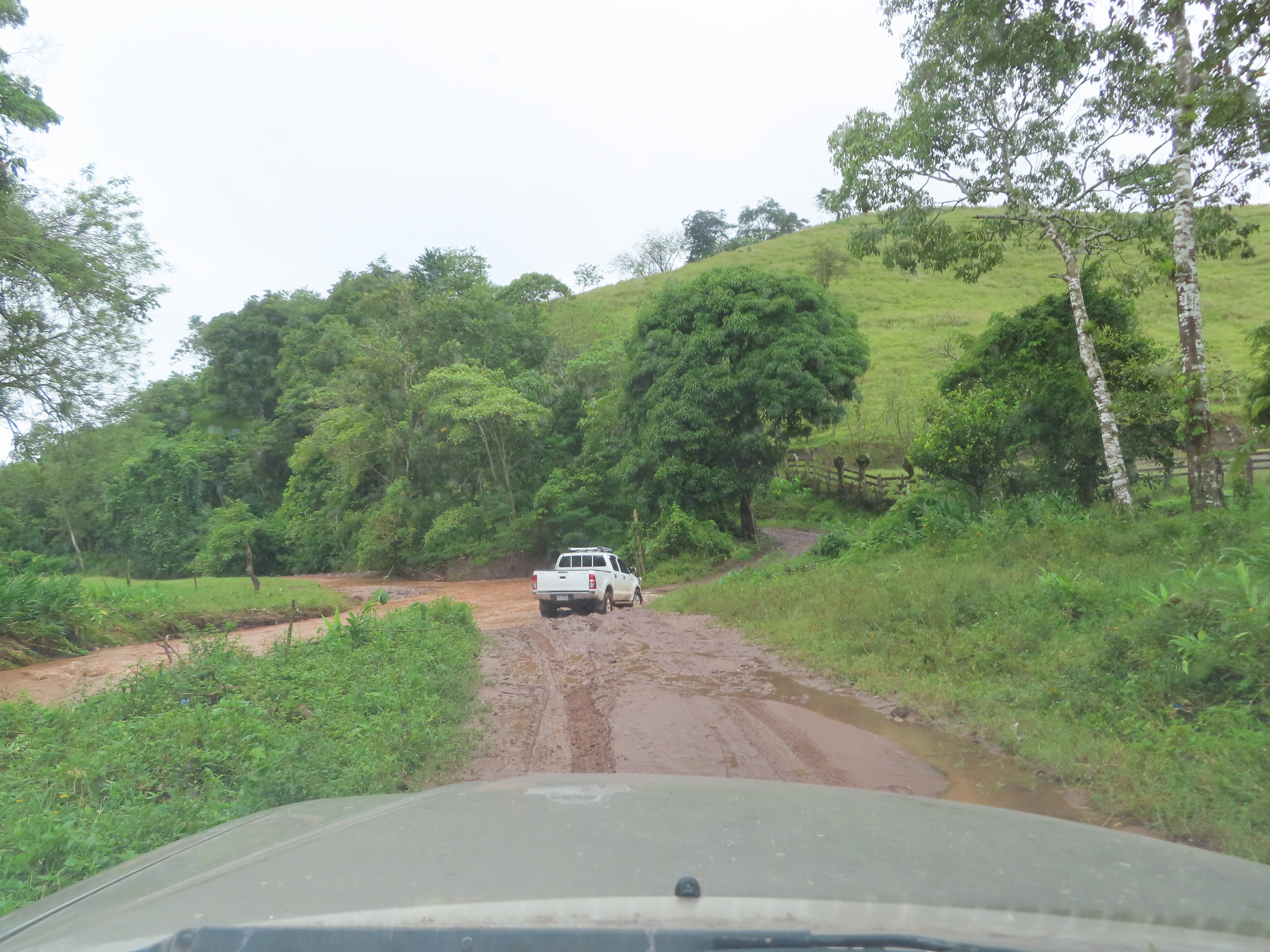
To get to some areas, you had to go on a roundabout route which at one time meant passing three times through a stream and navigating a slippery incline. 


In another part of the parish, which includes about 16 aldeas, landslides prevented access for several days. One aldea was cut off from Hurricane Eta until yesterday. 

In another place there was no access even from the major road on the other side of the parish that goes between La Entrada and Copán Ruinas. A bridge which had fallen about three years ago and had never really been repaired or rebuilt, collapsed; but even more, the road the led from the bridge, with access to two villages, was washed away by the river. 

 Two days in a row I was stopped at the same point on the road into Dulce Nombre. The first day a large dump truck had gotten stuck in one of these ruts and had to be pulled out by a bus. The bus was a former US school bus, perhaps the one that has Minnesota plates. The next day a bus got stuck in the same place. Finally, some work was done yesterday to make the spot more passible. 
Many of the roads have been repaired, but access to some aldeas is still precarious. I also think that the repairs area only stop-gap measures.

Electricity was off in many communities for days. In addition, service for one of the cell phone companies was unavailable for days, leaving people isolated and without communication.

Many communities which had water systems were affected by the hurricanes. Some of them were able to restore water service in a few days. Some didn’t have water for long periods. Some still don’t. Here in Plan Grande, water was restored yesterday, after almost two weeks without water. I have a tank for water and collect rainwater in four barrels (which are now full). But I conserved water – using rainwater as well as dirty water from washing clothes (by hand) to flush toilets. But there are still at least three fairly large communities who still have not been able to restore their water systems. A few smaller villages still don’t have water. 

An aside: much of the water for the water systems in rural villages comes from springs in the mountains. The source is often miles from the village, brought in by tubing to tanks in the communities. Tubes, even metal tubing, were moved by the landslides and the settling of the soil and so had to be replaced or reconnected. It’s a difficult job, not only because of the distances but because of the mud. 

One of our first priorities in the parish has been making sure people re safe and providing them with food and other necessities. Many people here in Honduras have been generous and provided help – food, clothing, blankets, and donations. Some people in Dulce Nombre have provided aid and donations have arrived from family members of people from the parish who are now in the US and Spain. A few days ago, 30 some boxes of supplies arrived from Santa Rosa, a gift from the Association of Hondurans in Madrid, Spain. 


Sunday, we picked up 180 bags of goods plus clothing and blankets donated by a group in Tegucigalpa.


But getting to the communities has been difficult. I got out to Vega Redonda November 19. People were afraid that a landslide which stopped at one point would come down and bury much of the town. Several had lost their houses; others left their houses fearful that they be destroyed by a landslide or be inundated by the rains and mud. Some people left and found refuge with relatives in Dulce Nombre and Concepción.
November 19, we went to Vertientes, on the side of a mountain. The town is split into two parts, by a huge landslide that destroyed three houses and left at least three in danger. Padre German and Fernando, a seminarian with us this year, went to see a distant part of the village where another landslide had buried houses and even a car.
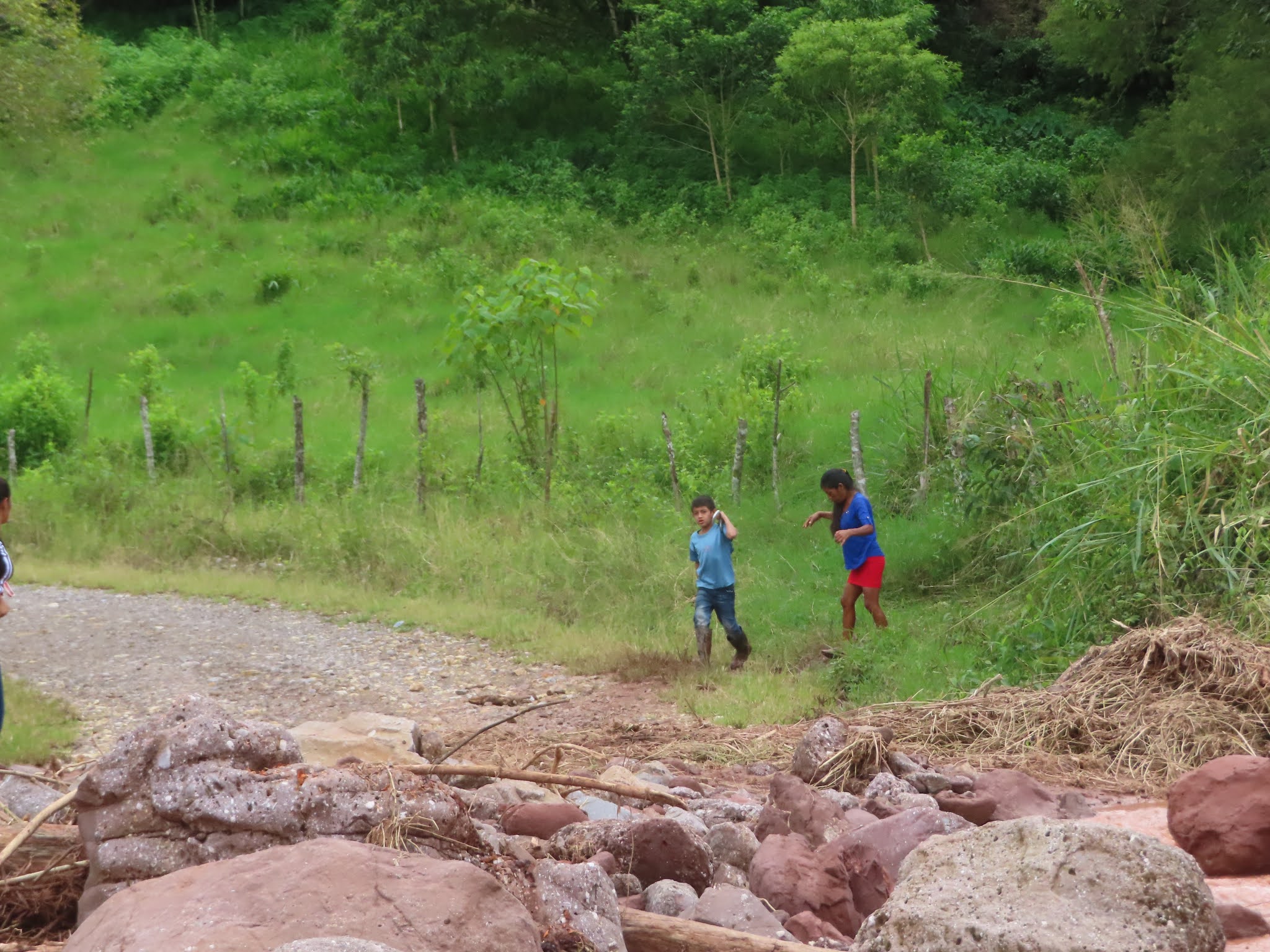
On Thanksgiving I went with three other cars loaded with provisions and clothing to aid two distant communities in the parish - San Marcos las Pavas (Saint Mark the Turkeys) and Barbascales. San Marcos has bee isolated since ETA. At least five houses were destroyed, many have serious damage, and probably close to half the houses are at risk if there are future landslide or sinkholes. We had to go to La Entrada to get there, making it close to two hours. We couldn't get to the village because the bridge (which was in poor condition) had collapsed. In addition, the land that went from the bridges to nearby roads was washed out. While we were there a number of men were trying to put rocks in the river so that people could pass over.


Last Saturday, I went with several others to take basic supplies and clothing to four villages. We could see where the landslides had closed the road in several places.


We couldn’t get to the fourth village because a landslide was being cleared away and we couldn’t pass. We did, however, leave provisions for five families there who had been identified as particularly affected. They managed to send someone to pick up the supplies. 

On our way, we could see some of the damage to coffee crops. 


On the way back, I passed over this sunken part of the road near the cemetery in Delicias, Concepción. It sank because the cement drainage pipe was falling into the hillside.


Right now, we have supplies in the parish which we hope to get to the communities when we can arrange the delivery. The problems are numerous – the roads, the lack of electricity in some villages that makes communication by cellphone difficult (because of batteries running out), and more. But we will keep trying. 
 
Thanks be to God, up to this moment, there have not been any deaths in our parish from the hurricanes. 

What the future holds is difficult to discern. There will need to be massive efforts to restore the infrastructure – particularly water systems, electricity, and road. There are houses that need to be rebuilt in safer places. There are portions of at least five villages that need to be assessed because of the ongoing risks. The people may need to relocate and build in other areas. That will be a long-term project. 


 In the meantime, please pray for us and, if you can, find ways to help.

Friday, November 06, 2020

Hope in the midst of a hurricane

Monday, in the midst of torrential rains, I went to Mass in the cemetery of distant community, as noted in a previous post. I sensed that there was something wrong with the car, since it was difficult to turn the steering wheel. 

On Tuesday, I decided to stay home – praying and reading. I had time to sit down and again read Henri Nouwen’s In the Name of Jesus: Reflections of Christian Leadership. I strongly recommend it especially to those who serve in the religious community. 

Wednesday morning, I took the car to be repaired in Santa Rosa de Copán. They replaced the power steering belt and a set of ball bearing – for the grand cost of 300 lempiras (less than $15, including parts.) 

I spent the afternoon at home, without water and without electricity, and thus without internet. The electricity in my section of Plan Grande was off from about 1:00 am Wedneday to about 3:00 pm Thursday.) 

I was able to do a little connecting through Facebook because I bought a smartphone a year ago and have a monthly plan that lets me access Facebook and the internet. But I don’t like trying to work on a phone and so I just did a minimal amount of digital connecting. 

I also didn’t try to follow the results of the US elections. This was a blessing. I was able to tune out the noise – and there probably was a lot – about the election. I was able to avoid having to deal with all the ramblings and rantings of people on the election results. It was good to be out of the Facebook frenzy for a day. 

Wednesday morning I did repost a post of a good friend who is an Episcopal monk which was much stronger and more pointed at the President than anything I had posted this year. But I think he had something to say, analyzing the pandemic of division, ill-will, and invective that has invaded the US. I am glad I did, it even though I got a response accusing me of passing on lies and being judgmental. So it goes. 

But what is really important is what is happening here around me. 

The winds and the rains have been fierce. Trees have fallen down and blocked the roads. In a few places there have been landslides and roads collapsing (deslizamientos y derrumbes). Here are just a few photos of what I’ve seen here. 

Wednesday

Wednesday

Wednesday

Thursday

Thursday

This morning, Friday, about 6:45, I got a call from a distant community that is isolated die to flooding. Two houses have fallen and others are in danger. Some of the persons affected have been given refuge in the village church. The person who called me asked me to go to the mayor since he wasn’t answering their phone calls. I went to his house and got him out of bed. He knew of their situation as well as of other cases of fallen houses in another community. 

But all this is nothing like what is happening in the north coast as well as in some parts of the department of Santa Barbara, Tegucigalpa, and other places. 

The flooding, the overflowing rivers, the collapse of bridges have made life even worse for the poorest among us, who often build their homes in the most vulnerable places. 

Thursday, Padre German mentioned a tragic case in Santa Barbara. A woman near flood waters dropped her baby who was swept away. The rescue workers did manage to quickly get the baby – but it had already died. How many more cases will we hear while this goes on?

But in the midst of this we need to see the signs of hope. 

Last Saturday I baptized a young man who has had serious health problems the result of an accident several years ago. Recently, in the first week of the pandemic, his situation deteriorated and he had to undergo three operations in Santa Rosa. The doctors at the hospital advised him to go to a public hospital in San Pedro Sula for another operation. He was reluctant to undergo the operation. 

 Earlier this year, he and his companion of more than ten years had decided that they wanted to get married and enrolled in the marriage preparation program in their village. But the pandemic hit and so the preparation was put off. 

But his situation deteriorated in the last month or so and he could hardly talk. Getting him the ENSURE that the hospital had prescribed helped and he is now able to talk a bit. During all this time his companion cared for him, feeding him, as well as caring for their two children. 

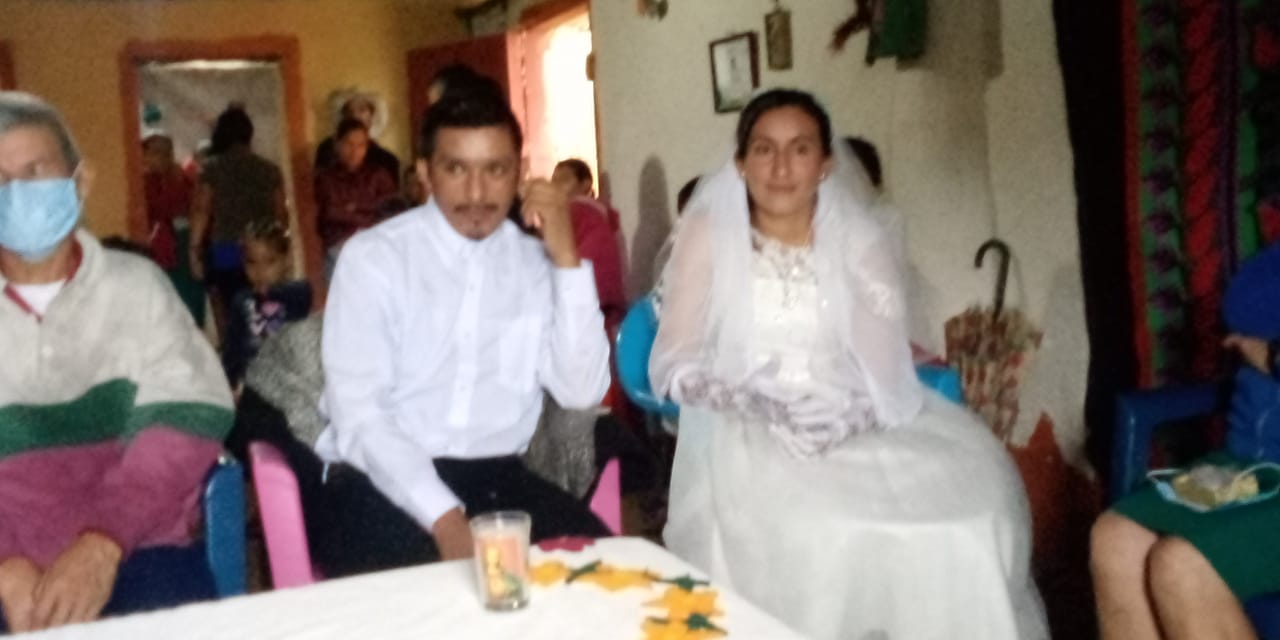
Thursday we celebrated their wedding. In the midst of a pandemic and a hurricane, two young people got married – with their children and scores of people from their village in attendance. As usual I brought along masks but ran out all the twenty-five I brought. 

There was much to give hope.

Waiting for the wedding Mass

*With help he walked from his house to the house of his parents-in-law up the hill.

*The couple celebrate the sacrament of matrimony after more than ten years together.

*He was baptized and received his first Communion last Saturday.

*We used the third form of the marriage vows so that he could just answer “Yes.” But he repeated the words when he put the ring on his wife’s finger. 

*After the prayer of the faithful, Father German celebrated the sacrament of the Anointing of the Sick. 

In the midst of all the evil, all the sickness, all the devastation of the pandemic and the hurricane, two people are manifesting their love sacramentally, showing the world that love is possible. They are sacraments of God’s love. 

These poor humble people are signs of hope.

Tomorrow, Saturday, I will go to San Agustín to baptize four little children. More signs of hope.