Showing posts with label Dulce Nombre de María Copán. Show all posts

Sunday, November 08, 2020

Grace abounds


The last two weeks have been times of grace for me, despite difficult situations and the pandemic and hurricane. Here are some photos.


Travel has been tricky – and the pastor’s car got stuck in a cemetery on All Souls Day. 


I had the power steering belt changed on my pickup on Wednesday. This is what some of the roads look like, if you wonder why I have so many repairs.


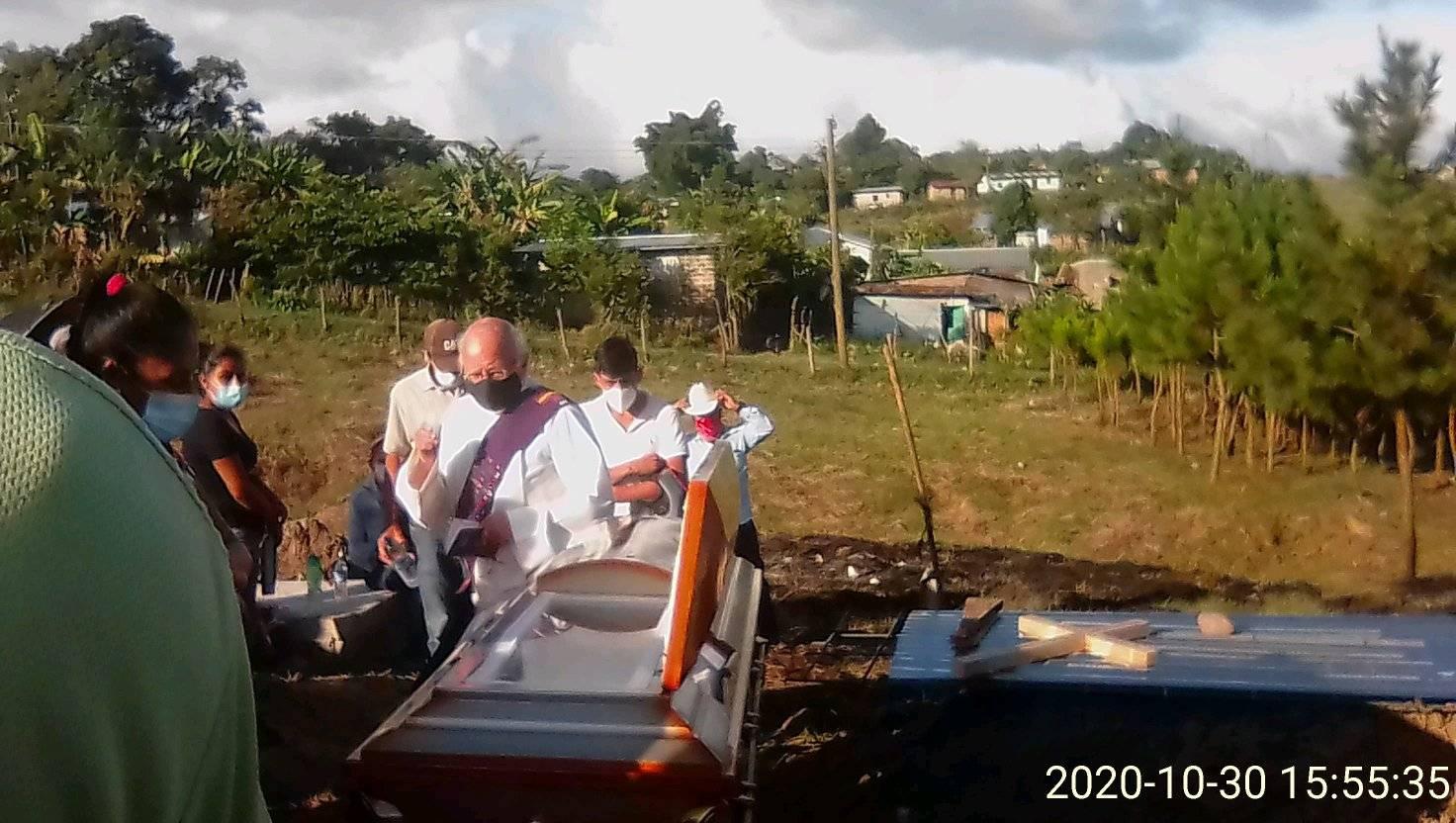
There was the grave-side service on October 30 in Dulce Nombre of a young man who died of electrocution at work. 


There was the baptism on October 31 of a young man who needs a fourth operation for cerebral blood coagulation.

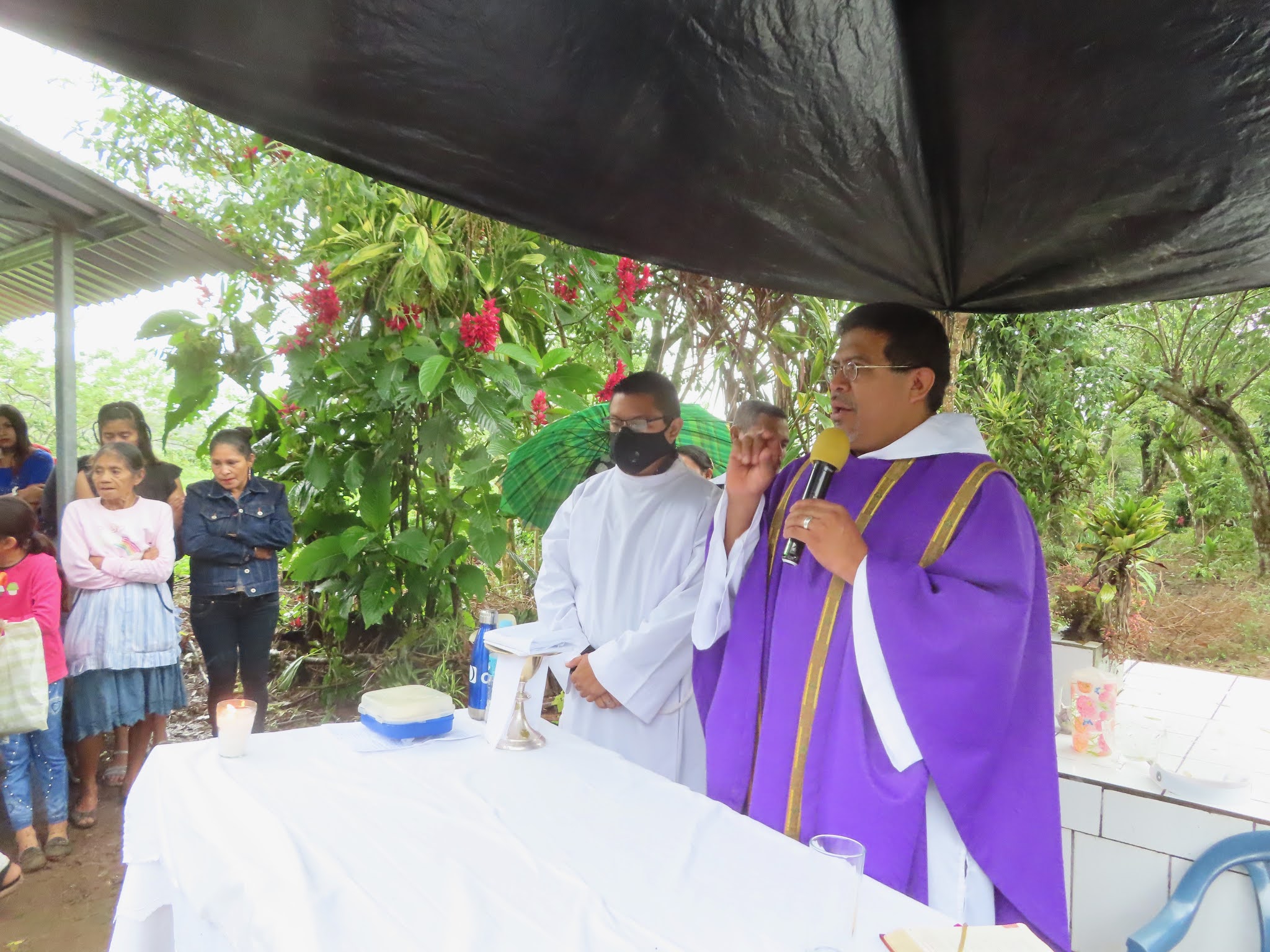
There was the All Souls Day Mass at the cemetery in Joyas Galanas (where I preached). HEre's a picture of the pastor with Fernando, the seminarian who's with us this year. 


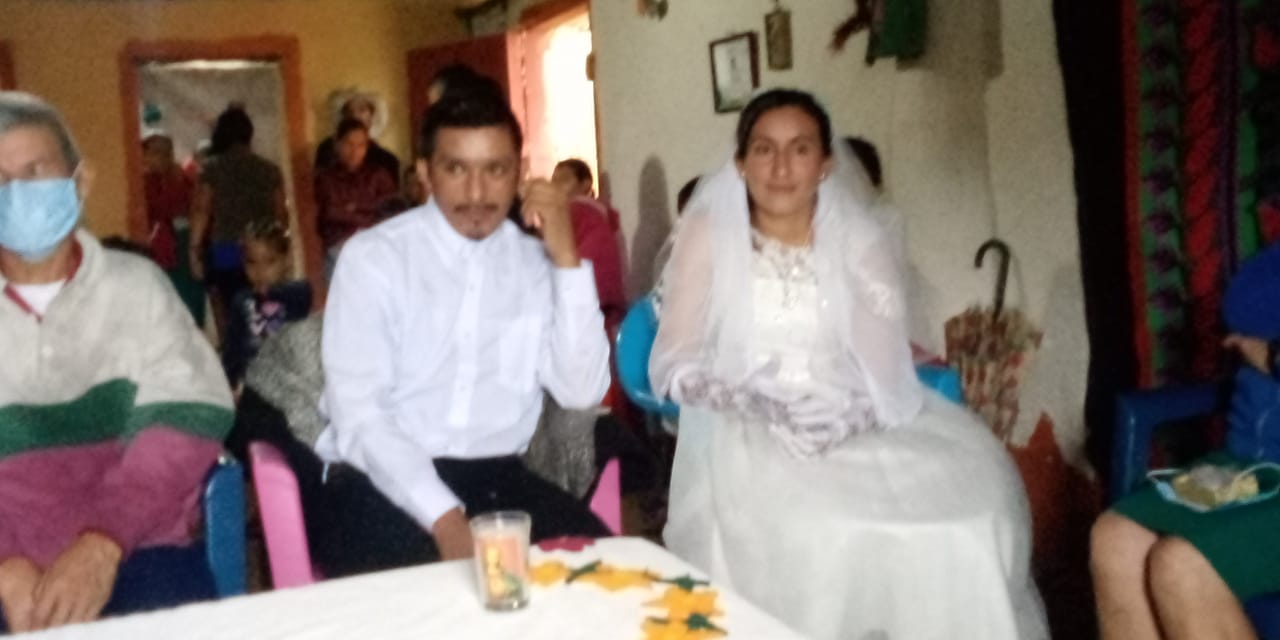
There was the wedding of a young couple in Descansadero, last Thursday, November 5. 


There were the baptisms of four kids, ages 11 months to six years, in San Agustín, on Saturday, November 7. 


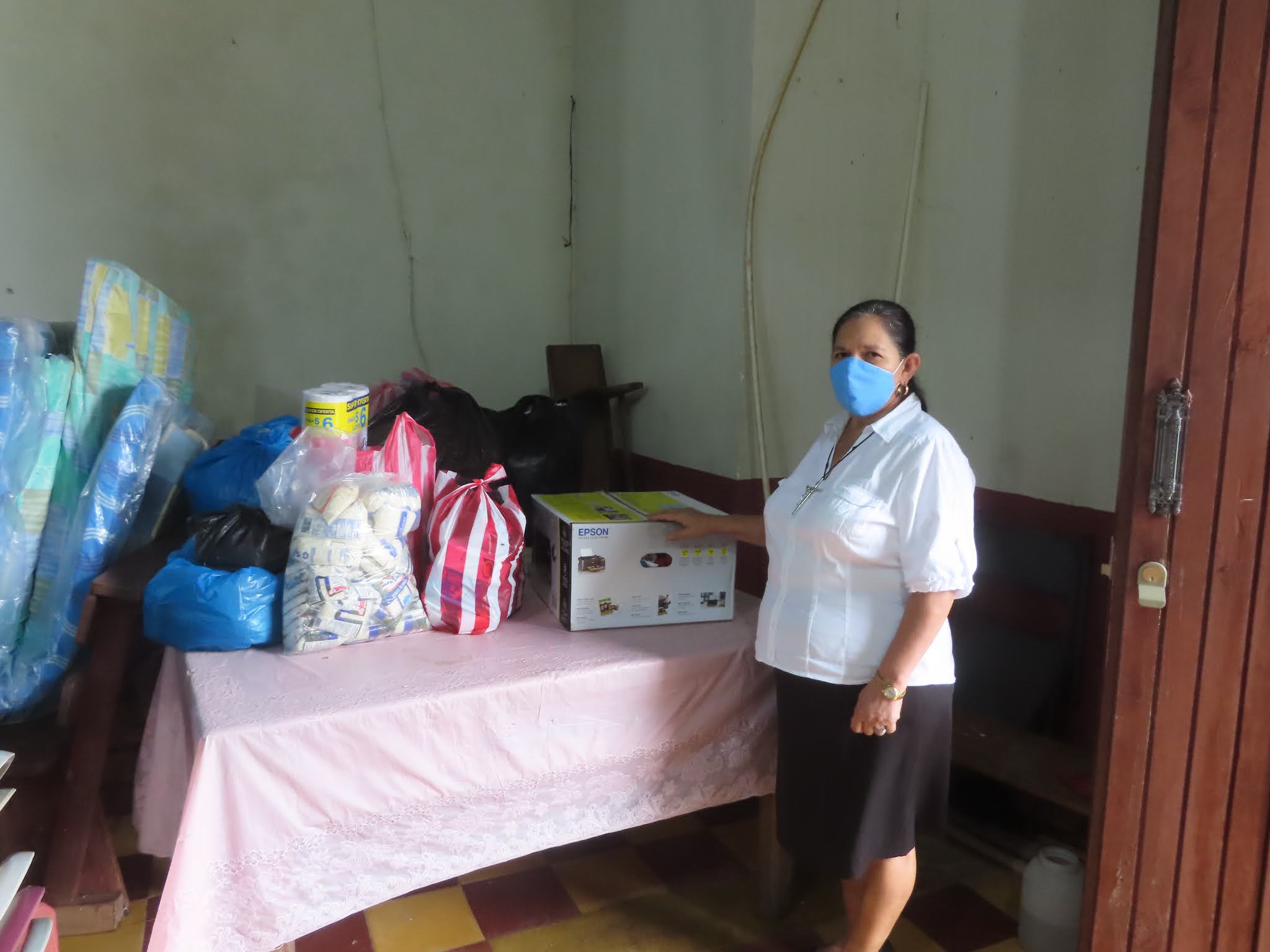
There was the joy of seeing that the church in San Agustín is collecting food stuffs and materials for the victims of the earthquake. One family donated four sacks of corn. 


And there has been my continuing amazement at the work on the murals in the parish church – with the mural of Saint Lawrence the deacon almost finished. 


 God is good.

And the sun came out for a time yesterday.


Friday, November 06, 2020

Hope in the midst of a hurricane

Monday, in the midst of torrential rains, I went to Mass in the cemetery of distant community, as noted in a previous post. I sensed that there was something wrong with the car, since it was difficult to turn the steering wheel. 

On Tuesday, I decided to stay home – praying and reading. I had time to sit down and again read Henri Nouwen’s In the Name of Jesus: Reflections of Christian Leadership. I strongly recommend it especially to those who serve in the religious community. 

Wednesday morning, I took the car to be repaired in Santa Rosa de Copán. They replaced the power steering belt and a set of ball bearing – for the grand cost of 300 lempiras (less than $15, including parts.) 

I spent the afternoon at home, without water and without electricity, and thus without internet. The electricity in my section of Plan Grande was off from about 1:00 am Wedneday to about 3:00 pm Thursday.) 

I was able to do a little connecting through Facebook because I bought a smartphone a year ago and have a monthly plan that lets me access Facebook and the internet. But I don’t like trying to work on a phone and so I just did a minimal amount of digital connecting. 

I also didn’t try to follow the results of the US elections. This was a blessing. I was able to tune out the noise – and there probably was a lot – about the election. I was able to avoid having to deal with all the ramblings and rantings of people on the election results. It was good to be out of the Facebook frenzy for a day. 

Wednesday morning I did repost a post of a good friend who is an Episcopal monk which was much stronger and more pointed at the President than anything I had posted this year. But I think he had something to say, analyzing the pandemic of division, ill-will, and invective that has invaded the US. I am glad I did, it even though I got a response accusing me of passing on lies and being judgmental. So it goes. 

But what is really important is what is happening here around me. 

The winds and the rains have been fierce. Trees have fallen down and blocked the roads. In a few places there have been landslides and roads collapsing (deslizamientos y derrumbes). Here are just a few photos of what I’ve seen here. 

Wednesday

Wednesday

Wednesday

Thursday

Thursday

This morning, Friday, about 6:45, I got a call from a distant community that is isolated die to flooding. Two houses have fallen and others are in danger. Some of the persons affected have been given refuge in the village church. The person who called me asked me to go to the mayor since he wasn’t answering their phone calls. I went to his house and got him out of bed. He knew of their situation as well as of other cases of fallen houses in another community. 

But all this is nothing like what is happening in the north coast as well as in some parts of the department of Santa Barbara, Tegucigalpa, and other places. 

The flooding, the overflowing rivers, the collapse of bridges have made life even worse for the poorest among us, who often build their homes in the most vulnerable places. 

Thursday, Padre German mentioned a tragic case in Santa Barbara. A woman near flood waters dropped her baby who was swept away. The rescue workers did manage to quickly get the baby – but it had already died. How many more cases will we hear while this goes on?

But in the midst of this we need to see the signs of hope. 

Last Saturday I baptized a young man who has had serious health problems the result of an accident several years ago. Recently, in the first week of the pandemic, his situation deteriorated and he had to undergo three operations in Santa Rosa. The doctors at the hospital advised him to go to a public hospital in San Pedro Sula for another operation. He was reluctant to undergo the operation. 

 Earlier this year, he and his companion of more than ten years had decided that they wanted to get married and enrolled in the marriage preparation program in their village. But the pandemic hit and so the preparation was put off. 

But his situation deteriorated in the last month or so and he could hardly talk. Getting him the ENSURE that the hospital had prescribed helped and he is now able to talk a bit. During all this time his companion cared for him, feeding him, as well as caring for their two children. 

Thursday we celebrated their wedding. In the midst of a pandemic and a hurricane, two young people got married – with their children and scores of people from their village in attendance. As usual I brought along masks but ran out all the twenty-five I brought. 

There was much to give hope.

Waiting for the wedding Mass

*With help he walked from his house to the house of his parents-in-law up the hill.

*The couple celebrate the sacrament of matrimony after more than ten years together.

*He was baptized and received his first Communion last Saturday.

*We used the third form of the marriage vows so that he could just answer “Yes.” But he repeated the words when he put the ring on his wife’s finger. 

*After the prayer of the faithful, Father German celebrated the sacrament of the Anointing of the Sick. 

In the midst of all the evil, all the sickness, all the devastation of the pandemic and the hurricane, two people are manifesting their love sacramentally, showing the world that love is possible. They are sacraments of God’s love. 

These poor humble people are signs of hope.

Tomorrow, Saturday, I will go to San Agustín to baptize four little children. More signs of hope.

Monday, February 06, 2017

The good, the inspiring, and the challenging

I’m tired. I just helped, in a small way, about forty parishioners finish up with the third harvest on the parish coffee lands. Starting out at 5:45 am, I finally got home to rest about 3:00 pm. But it was worth it.

The parish has about two manzanas (about an acre and a half). One manzana was donated by a former mayor and the other was bought by a donation from St. Thomas Aquinas Church and Catholic Student Center in Ames, Iowa. The idea was to have a way of generating income for the parish.

All the work on the lands is done, without compensation, by members of the parish. Yes, we often go out and drive them to and from the fields, and we do give them lunch. But they take a day or so out of their daily work to help the parish.


I often drive the people to or from the fields and transport the coffee berries to the place where the coffee cherry will be removed to leave the bean which is then washed, fermented, and dried.


Today, as always, there was a great variety of people. There were fewer kids, since classes have started, but there are middle aged people and a good number of young people, men and women. I am often amazed at the generosity of the people, especially the men and women in their late teens and early twenties. It’s inspiring.


Last week, I finished up work on the scholarships for young people attending Maestro en Casa, an alternative educational program which enables young people to go to what we’d call middle and high school with classes on the weekends. For five years, St. Thomas Aquinas has provided partial scholarships, this year for 130 students in four centers where the weekend classes are taught. It’s a small effort to help them grow.

A few months ago, our pastor, Padre German Navarro, talked about setting up a Solidarity Fund to help people with major needs. This is a rather obvious part of my service as a deacon in the parish.

I am hoping to work with the village coordinators of social ministry to get this going and to establish a system to identify those in real need and try to help them. We have a meeting next week.

Here most of the response to needs is reactive:  a need is identified, people are asked to contribute, something may or may not be done, if enough money is donated. The poor are rather generous and often the money that comes in can really meet the need.

One community, though, has begun to set up a special fund to meet needs. I found this encouraging and hope to promote this when I meet later this month with the local coordinators of social ministry.

But often the need is beyond the resources of people here.

Today, a woman working on the coffee harvest told the pastor of a need in a hamlet near her village. I talked with her. The woman, a single mother with a six year-old, has breast cancer – as well as a hip problem that has confined her to her bed. People are helping and have raised 2000 lempiras, about $85. That doesn’t sound like much but it helps to put this in perspective. A good coffee picker can harvest between 8 and 10 five gallon buckets a day, though most harvest five. At 35 lempiras a bucket, that means earning between $12 and $15, or maybe only $7 for hard back-breaking work.

St. Thomas Aquinas did donate $500 (about 11,700 lempiras) as a first donation for the solidarity fund. The woman needs about 11,000 lempiras for a biopsy and other examinations in San Pero Sula on Wednesday. I decided – maybe I’m a soft sell – to give her 10,000 lempiras, which includes a separate donation of $1000 from a separate donation I have. So she will be able to get the tests (which are unavailable in the Santa Rosa public hospital.

There are parts of this story that are very encouraging. Not only have the people from the sector’s Catholic churches donated 2000 lempiras, but they are donating it for a woman who is an evangelical. In a society with a lot of conflict and ill-will between Catholics and evangelicals, this is encouraging.

I feel tired tonight, but feel as if I have experienced God working among the people here.

There have also been some other events that have given me joy. 

On February 1, we harvested coffee. Over sixty people came and we harvested over 440 five gallon containers of coffee berries.


Last week I was in two communities to celebrate their feast days.

On February 2, I spent time in Oromilaca for their feast day, the Presentation of the Lord. There was a procession, complete with fireworks, and Mass. I ended up preaching.


On February 3, the feast of the Virgin of Suyapa, patroness of Honduras as well as of Plan Grande, we had a procession and Mass here in Plan Grande.


On Saturday, I spent part of the day with volunteers from Amigos de Jesus (as well as with the co-director and a deacon who works with them). I shared homemade cinnamon rolls, bread, and lentil soup, as well as a discussion on the Church in Honduras and being a "missionary".  It was good for me, especially when Amy, the co-director, asked me what sustains me. It made me think of what keeps me going: morning prayer in silence, connection with the Dubuque Franciscan Sisters, and writing on my blog. I'd now probably add occasions like today when I can just BE with the people.
 
The obligatory photo
On Sunday, I served as deacon at the morning Mass in the church of San Antonio in Dulce Nombre and preached. Then I went to a meeting of three youth groups in Dolores. It was good, but I only stayed for an hour because I needed to get groceries. The group helped me use up much of what was in my refrigerator! In a grocery store I ran into two people in Santa Rosa working with CAMO (Central America Medical Outreach). We talked for about 15 minutes in the aisle. I was pleased that I have not completely forgotten how to speak in English.

The next few days will be busy - a deanery meeting tomorrow and a meeting with Communion ministers on Wednesday.

Next Sunday we have a parish wide youth gathering. I'm hoping it all works out well. I'm trying to leave all the leadership to the youth, who are very competent. But I still have my worries - as a perfectionist worry-wort.

All this is a blessing. And we have a challenge.

Oh - to trust more in God.

And to be more grateful for the beauty around us.

Dawn in Oromilaca, picking up people for the coffee harvest on February 1


Thursday, April 14, 2016

Tragedies and signs of hope

There were two tragedies here last week.

An 18 year-old young man who often works for the parish in some construction crushed under a truck. His leg was amputated and he will be in the Santa Rosa hospital for a few months.

Last Sunday a mother in Dulce Nombre killed by her son. The family is poor. According to reports the son (about 20) said he killed her because she denied him a cell phone. Some speculate that he was drugged or drunk. Who knows?

Yesterday, in a Mass in a rural village, Padre German shared two stories that offer some hope, some light,  in the midst of these tragedies.

There is some speculation that the owner of truck was negligent in terms of upkeep of his vehicle. Despite this, the mother of the young man doesn’t want the man to suffer in jail.

Meeting with family members of the mother killed by her son, he expressed concern that vengeance might be taken against the son in jail and urged them to watch out for him. They agreed and one daughter said that such vengeance would be something that would shame the soul of her mother.


Such willingness to put aside vengeance and retribution is something that is not found all too often here. It is refreshing to hear this. I pray that this may grow.

Thursday, December 10, 2015

Joys and griefs

The joys and the hopes, the griefs and the anxieties of the people of this age, especially those who are poor or in any way afflicted, these are the joys and hopes, the griefs and anxieties of the followers of Christ. Indeed, nothing genuinely human fails to raise an echo in their hearts.Vatican II, Pastoral Constitution on the Church in the Modern World, Gaudium et Spes, ¶1

The first days of December have been filled with joys and griefs.

Coffee

The coffee harvest is beginning and people are glad that there is work in the fields, even though the pay is low – 30 lempiras (about $1.40) for every five-gallon bucket of coffee berries. Yet the price for coffee is low. Producers may get as little as 65¢ per pound of coffee that is dried but not completely processed.

The coffee sent by an association of small coffee producers in El Zapote de Santa Rosa is being sold at St. Thomas Aquinas Church in Ames, Iowa, this coming weekend and some has been sold to several cafés. The fifteen members of the association are working together and may have an agreement with a coffee processor in Santa Rosa de Copán to buy their quality coffee. They also have been able to get seven more solar driers, which they will pay for on credit.

Education

The school years is over, graduations are being celebrated, and people are thinking of next year.

St. Thomas Aquinas Church has been providing partial scholarships for student participating in Maestro en Casa, an alternative education program for middle school and high school for three years.

Today I just got requests from Bañaderos: twenty are asking for another year of scholarships and twenty-one are asking for a scholarship for the first time.  I’m still waiting for requests from five other Maestro en Casa centers in the parish.

Yesterday I went with Padre German, our pastor, to Tegucigalpa with eight young women and their parents who were eligible for complete scholarships for a middle and high school program run by the Hermanas de María. It’s a live in program that has more than 800 young women students who not only receive classes and faith formation but have opportunities to learn skills from swimming to playing musical instruments to sewing and working in agriculture. There were 12 eligible from our parish but I think only nine will go forward to take advantage of the scholarship.

It was a long trip. We left Dulce Nombre at 3:00 am and got back at 10:30 pm. But it was worth it since at least a few young women will have some opportunities for good education. But next year I’m going to search fro money to rent a bus to take them. Sixteen plus hours driving is devastating, though I had someone who drove my truck more than half of that time

Deaths

December 30 was the end of the novenario, the nine days of prayer, after the death of Arnaldo, the husband of one of the catechists in Plan Grande. Padre German celebrated Mass here. The final prayer was held in the house that night and I was asked to share a few words.

As I prepared for what I might say, I noted a beautiful sunset and recalled how the life of each person may show us the beauty of God’s love and mercy – if we have eyes and hearts open to see and contemplate God in each person and event.

Wednesday, January 2, Santiago Mejía, the mayor of Dolores, one of the municipalities in the parish, was killed and his wife was injured. Again violence has touched people’s lives here. It appears that a subject has been identified, which is unusual since most violent deaths (over 90%) go uninvestigated and never come to trial.

On Thursday, Padre Francisco Rivas, a priest of the diocese, was killed in a traffic accident. He had been the director of the diocesan Caritas office since last January. A funeral Mass was celebrated in Santa Rosa on Friday and his remains were taken to be buried in El Salvador, where he was from. In a diocese with a limited number of priests this makes the life of faith even more difficult.

This morning I read on Facebook that the father of a young woman in Quebraditas died. Another death.

The life of the church

The church here accompanies the people in many ways – and the people also accompany the church.

An example of thee way the people accompany the church is the parish coffee field, two manzanas, about three acres of coffee. Last week parishioner volunteers came on three days for the first harvest of the parish coffee fields. Not only was this the first ever harvest from the fields but it was the first of several that will take place during the harvest season. Next Friday and Saturday there will be a harvest. I hope to help one of those days.

Funerals have one of the ways the church accompanies the people here, but there are many other examples.

In Advent here in the parish we celebrate the Posadas from the beginning of December. In other places the Posadas don’t begin until about December 16. I will write about the Posadas in a blog entry in a few days, but, in short, they are re-enactments of Joseph and Mary seeking shelter (posada) in Bethlehem.


The first Wednesday of the month, December 2, the parish extraordinary ministers of Communion met, as is there custom. They discussed a number of concerns, including the formation process next year for new communion ministers. A particular ministry of the communion ministers here is visiting the sick and bringing them communion.

The Eucharist is an important part of the devotional life of the people, even though there aren’t as many communicants as one might expect – and hope for.

December 8 was the feast of the Immaculate Conception and the opening of the Jubilee Year of Mercy. As part of the celebration in the parish, a new chapel for the Blessed Sacrament was blessed. This will enable people to visit the Blessed Sacrament during the day when the church is not opened.


Tomorrow, I’ll be joining Padre German to go to two villages to celebrate feast of Our Lady of Guadalupe early. On Saturday, the actual feast day, the bishop will ordain two new priests and three new transitional deacons in Santa Rosa de Copán. Padre German and I will attend.

After that we will go to the city of La Entrada for the dedication of a new church in honor of Our Lady of Guadalupe. The mass will also be a celebration of the silver anniversary of the priestly ordination of our bishop, Monseñor Darwin Andino, C.R.S.

Sunday, I’ll join Padre German in the morning for a Mass in Camalote to celebrate their patroness, Santa Lucía – Saint Lucy. In the afternoon I plan to go to Gracias to a get together with the Dubuque Franciscan Sisters working there and the Honduran Franciscan associates.

Next week we will have our parish evaluation and planning meeting on Wednesday and Thursday. Lots to do and think about.

And so our life proceeds.

In this Advent, this season of hope, we look forward to celebrating the birth of Christ in Bethlehem, but we also open ourselves to celebrate His presence among us every day – amid the joys and the griefs.