Showing posts with label coffee association. Show all posts

Thursday, December 22, 2022

Advent 2022

This has been quite a different Advent for me.

Apse mural, Dulce Nombre

Advent began with the visit of the image of the Virgin of Suyapa in the parish. This year, the tiny image of the Virgin of Suyapa has been visiting all the dioceses of Honduras. The image arrived in our parish on Saturday, November 26.
After a visit to the church in Concepción, we celebrated with an all-night vigil in the parish auditorium, attended by more than 1000 people.
I took a few breaks and fell asleep for a short time before Mass at midnight as well as in the early morning. We also had a Mass for the first Sunday of Advent in the parish at 9 am – at which I preached. 

That week, I had the first of five pre-marriage interviews I've had in the last four weeks. The couple first meets with the pastor and then has a twelve session formation with leaders in their villages. Before the marriage date is set, I meet with the couple and two witnesses. For me, it is an honor to be able to be present and to help them in their final stages of preparing for the sacrament of matrimony. 

That week, Sister Nancy Meyerhofer, a Dubuque Franciscan sister who is a good friend and has been here in Honduras for 16 or so years, came over for a short visit. We had a two hour long lunch and a long supper and many hours of talk. She was very much responsible for enabling me to be able to come here to work in the diocese in 2007. She and the other Dubuque Franciscans will be leaving Honduras next month, which will leave an empty space in Honduras and also for me.

The second Sunday of Advent the parish received forty into the catechumenate, who, if they persevere, will be baptized in the Easter Vigil.  I work with the catechists and so I was glad to see them there with the new catechumens who were between 14 and 40 years old. I talked with them before the Mass and then I went with them after the Homily for a reflection period. I had a chance to speak with a number of them and it was a joy to hear of their desire to be baptized. One catechist, from a village that has 9 catechumens. introduced me to two young men in their twenties who have learning difficulties; they were so enthusiastic that I could not help but feel the hand of God in all this. A day later reflecting on this I was filled with tears of joy. 

Since I had not been at a complete Mass that Sunday morning and hadn’t had the chance to receive Communion, I went to Mass that afternoon in Dolores and preached. 

Monday through Wednesday we had a diocesan assembly, evaluating and looking toward the future. I found myself often just hanging around, sometimes with the priests and lay people. The last day I was standing around with a number of people. They asked me how long I had been there in Honduras. When I said 15 years, they said that I was in one sense a Honduran – one even saying that I was more catracho [Honduran] than gringo

Also, a number of them from the southern part of the diocese talked with me about Father Beto Gallagher, a US Capuchin priest who worked there for several years. (I wrote about him in part of the past found here.) He is buried in the church in San Marcos Ocotepeque. I find myself humbled and graced that I remind them of him. He was a priest who was really with the people. One man told how if Frey Beto was in a meeting and someone arrived and there were no chairs, he would give up his chair and sit on the floor. He was my type of missionary. 

Friday, I had a meeting for new catechists. The attendance was low, probably because many are working in the coffee harvest. Picking coffee is one of the few ways that many people in the countryside have to earn cash. I completely understand their absence. 

I used this session to help the new catechists understand the Mass. Previous sessions for the new catechists have included discussion of Baptism, grace and sin, and the Bible. The new catechists also are expected to attend the meetings every other month for all the catechists. In this way, I hope that they will be ready in about two years. 

Saturday, there was a get-together of people from the deanery in a rural ecotourism center outside of Corquín, which featured animals, including crocodiles.
What was most interesting was the road to the center, which was by a river that had been diverted by the hurricanes of November 2020.
The third Sunday of Advent I went to the early Mass in Dulce Nombre, where I preached again. Our pastor, Padre German Navarro, is very open to having me preach, which is a blessing that many deacons don't have. I think it is also a chance for him to rest, since he usually has four or five Masses each Sunday in different parts of the parish.

I had been invited to attend the middle school graduation of the students in the IHER program in Dulce Nombre on Sunday afternoon. The student listen to radio programs during the week, fill out a work book, and have classes on Saturdays and Sundays. I was glad to see so many young people, including some I know, continuing to study after sixth grade, since most rural villages only have elementary schools. This program is an alternative to classes on Mondays through Fridays, which would be difficult for many from rural villages. About 150 students receive partial scholarships each year, thanks to our sister parish, St. Thomas Aquinas in Ames.
Monday there was Mass for the feast of Our Lady of Guadalupe in the small village of Torreras. Lo and behold, the Mass was held in the home of one of those who had graduated in Dulce Nombre the day before!

That Tuesday two good friends from Central Iowa, Gary and Nancy Guthrie, arrived and I picked them up at the airport. 

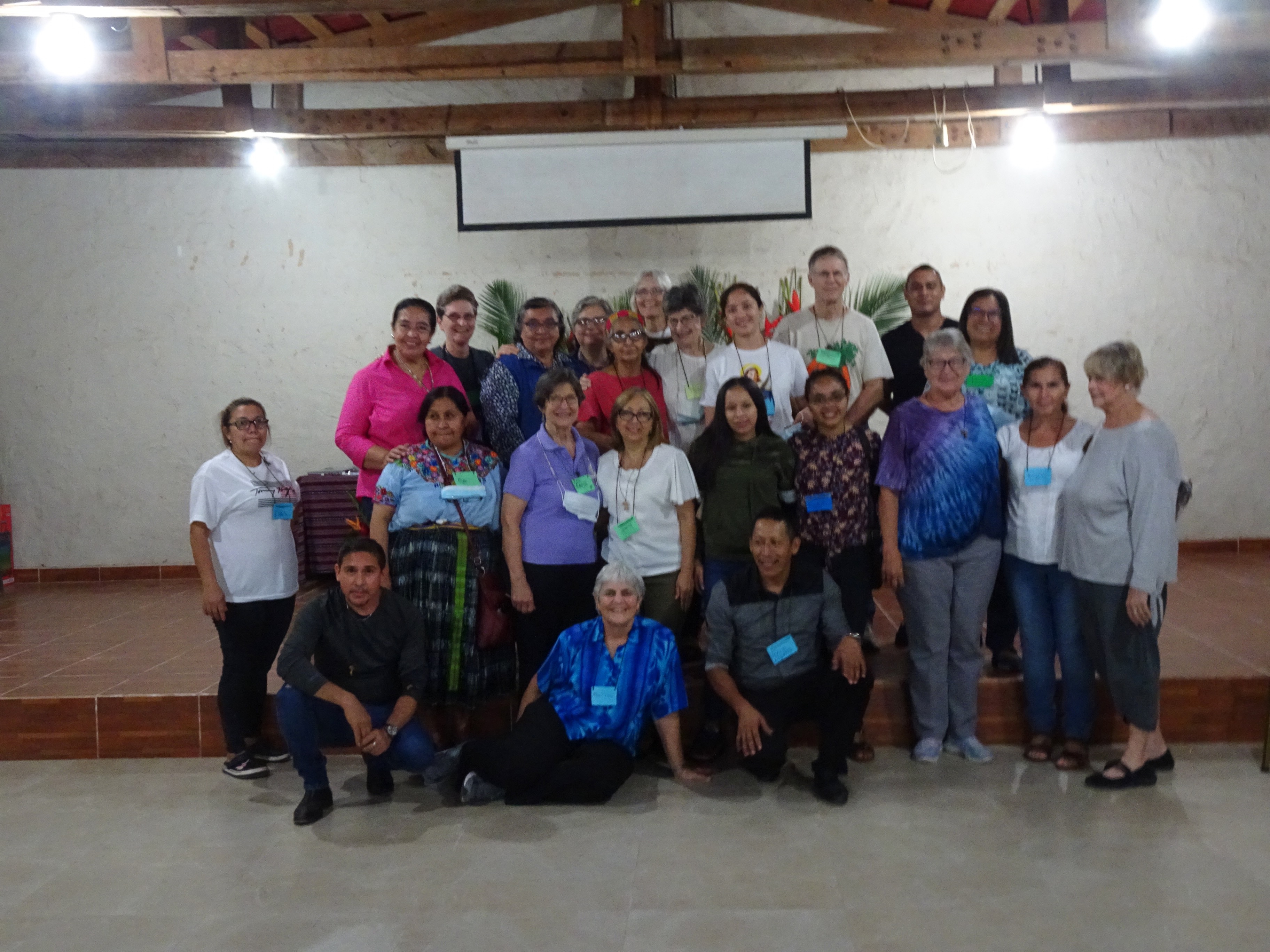
They had come mostly for a meeting of the Central American associates of the Dubuque Franciscans. They are associates in the US and it was good to have them here to know the Central American associates, who come from Honduras, Guatemala, and El Salvador. 

Gary and Nancy have been here before and speak Spanish (having been volunteers with the Mennonite Volunteers in Bolivia and El Salvador in the 1980s.) We had a great visit – mostly talking and eating a few simple meals before and after the meeting. They even got a chance to work a few hours on the parish coffee fields. I didn't get a picture of them, but here's my pickup loaded with people who helped with the coffee picking, going back to their villages.
    
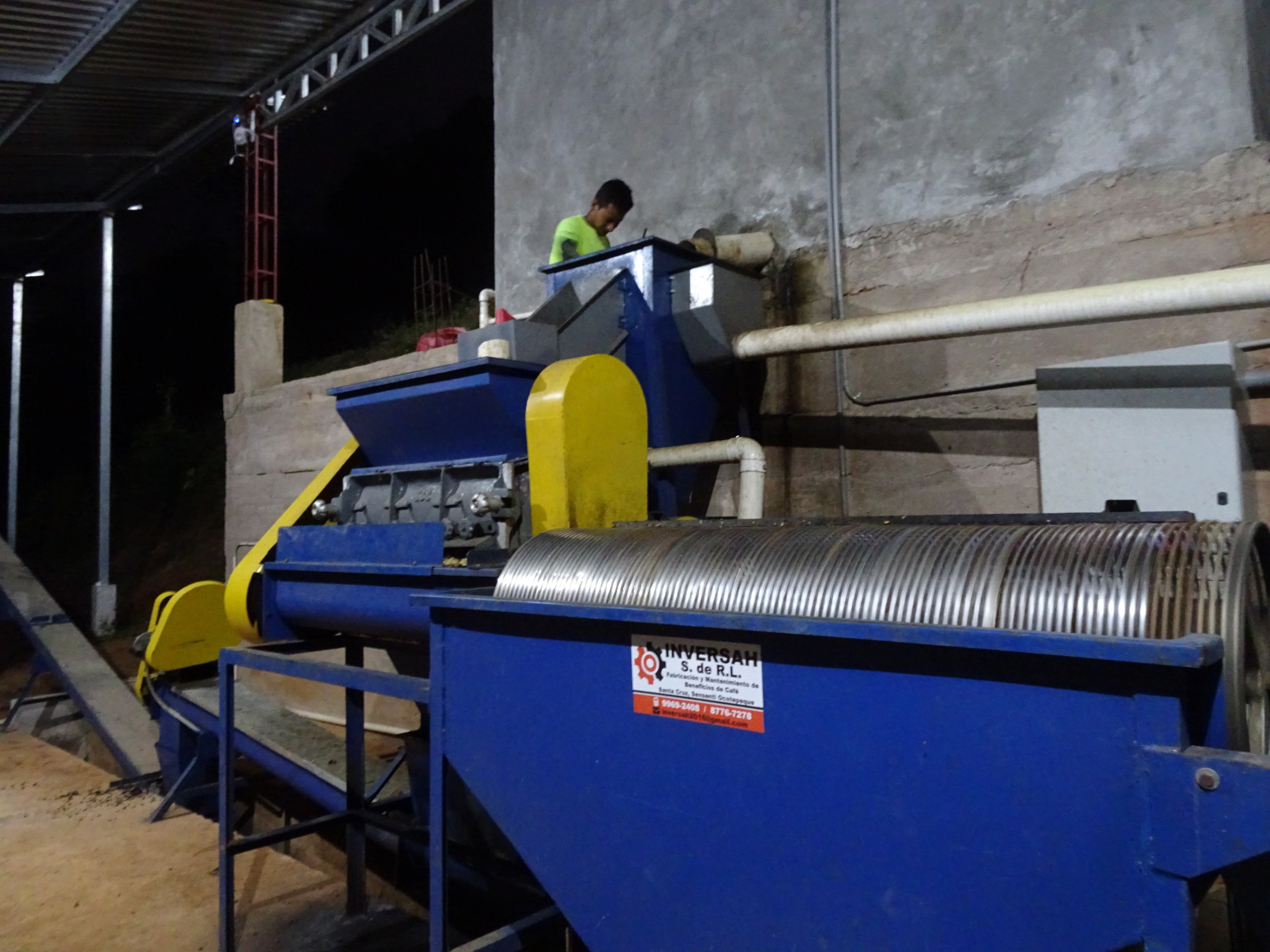
Monday, their last night here, we went out to the El Zapote coffee association’s buildings and watched the machines at work.

The meeting of the associates was a good time to get to know a bit more the other Central American associates. Since the sisters are leaving, we have to find our way to live out the Franciscan charism and to keep a relationship with the sisters. This will be a challenge and we all have to work on this.
The sisters and associates
Padre Loncho celebrated Mass (and I served as deacon)
Sister Brenda Whetstone who was visiting sharing bowls with Gary and Nancy.
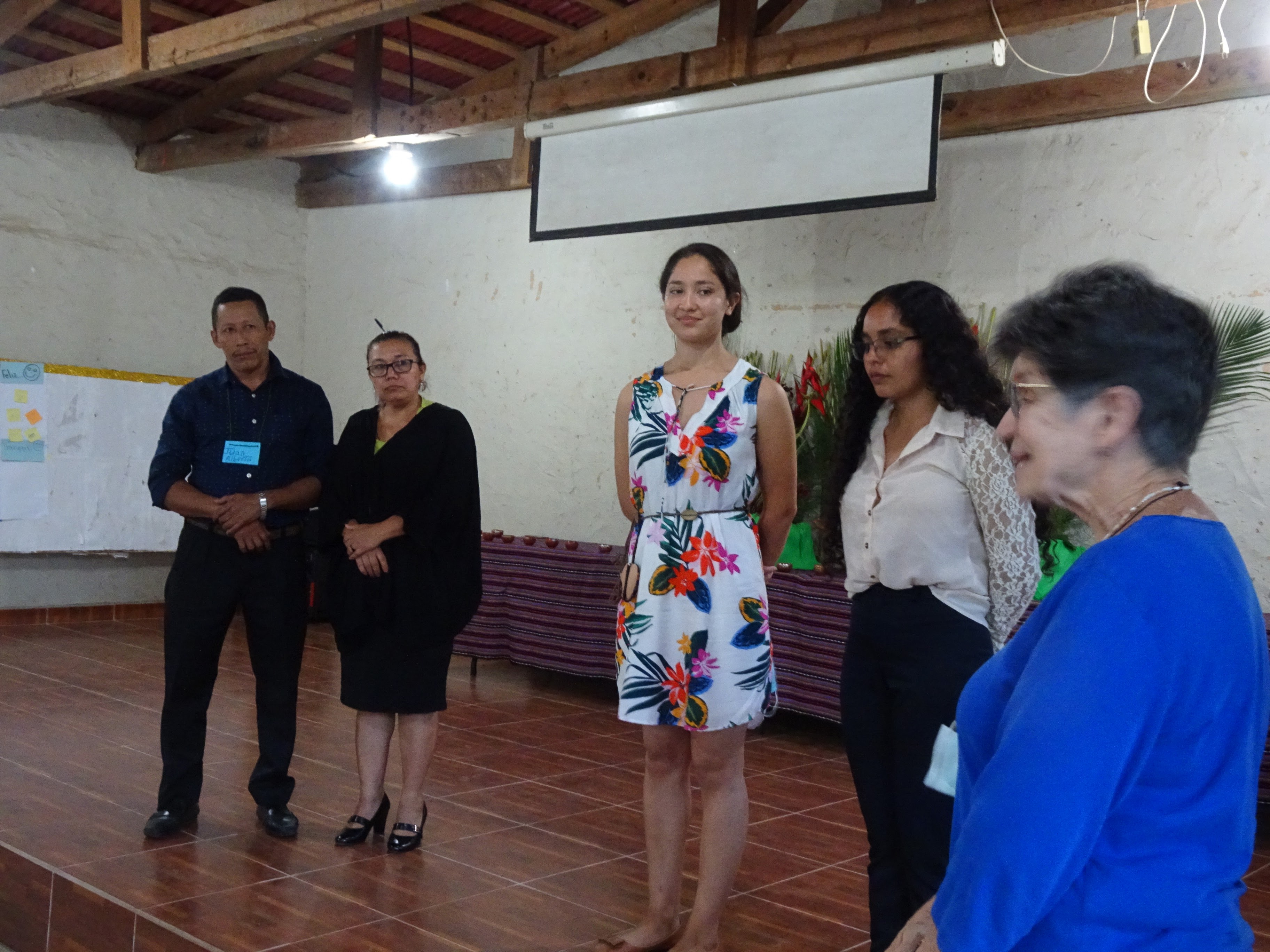
New associates with Sister Pat Farrell

On Monday, I made a visit to the parish center to talk with a muralist who is there to paint ten images of American saints in the church (above the columns in the nave.) These are the saints we plan to commemorate: Saint Martín de Porres, Santo Hermano Pedro de San José Betancourt, San Juan Diego Cuauhtlatoatzin , Santa Kateri Tekakwitha, Santa Dulce Pontes, San Francisco Solano, San Toribio Romo González, San José Sánchez del Río, San Pedro Claver, and Santa Nazaria Ignacia March Mesa. (How many can you identify?) It was hard to make the choices and we didn’t include the many blessed from the Americas. We hope this helps people recognize sanctity in our continent.

Wednesday, after leaving Gary and Nancy at the San Pedro Sula airport on Tuesday, I met with a urologist in San Pedro and tried to make an appointment for a test in January.

On a personal level, I’ve had bronchitis and then a bad cold. Not fun. As a result, I haven’t got out to visit the sick. 

 Tomorrow, there is a get together for the clergy of the diocese. 

 In some ways this has not felt like Advent – and I don’t feel ready for Christmas. But it ‘s coming. 

Saturday Christmas eve, I’ll spend the morning and early afternoon baking – making cinnamon rolls and more.

Then, I’ll be at a 6 pm Mass with baptisms in Plan Grande. I’ll also go to Dulce Nombre for the 10:00 pm "Midnight" Mass, which has been a custom. Christmas morning I’ve been invited to a community for a Celebration of the Word with Communion.

After that, I’ll head to La Entrada for the traditional Christmas lunch with the Dubuque Franciscan sisters. For me, it will be bitter-sweet since It’s the last time I’ll be at a holiday meal with the sisters. 

The week after Christmas I have two commitments, one will be working with several priests to develop materials for the weekly meeting of the base communities. But I’m hoping to take it easy, cleaning the house, preparing for the new year, and catching up on reading and correspondence. 

In the meantime, I ask you for your prayers for our parish and for me. I pray that your lives may be filled with hope. May God-with-us bless all of you who have read this.


Sunday, October 30, 2022

SERVANT MINISTRY

Introductory note: I wanted to share two events that happened in the past few days. After I finished, I realized that they have to do with trying to be a servant, being images of Christ the Servant to the world. 
 Friday we had another training for Delegates of the Word, those who lead Sunday Celebrations in the absence of a priest so that people can come together and worship. There were about ninety participants. 

During the first part of the morning Padre German led the group in the retreat in the training manual for delegates. 

After a break, I went aside with about eighteen women and men aspiring to become delegates. I am very encouraged that almost all are young. We need new blood in this important ministry. 

Padre German asked me to work with them on basic church teaching and to start with examining them. Being a rebel, I decided to do the exam differently. They divided into groups. I asked a question which they were supposed to answer in the group and then we’d discuss it. This broke down when people began to just shout out a response and then we discussed the response.

But Padre German had the more difficult task with the delegates, some of whom have served for more than twenty-five years. 

 About a week ago the shared with me a concern about our annual celebration of Christ the King.

The tradition here is to get the whole parish together for Mass, often preceded by music and presentations, at times with a procession. The feast of Christ the King is also the day to honor the Delegates of the Word.

Father was concerned that we give an image of Christ as a king, who lords it over others, dominates, has the last word, and is the supreme leader.

I too share this concern. When I discuss our baptism into Christ - Prophet, Priest, and King, I almost always say King/Servant. 

A problem is that emphasizing this image  of a worldly king on the Day of the Delegate of the Word may give the message that the delegate is to be the one who makes the decisions. I have even heard of a delegate who said something to the effect that the pastor rules in the parish, but he’s there; I rule here. 

And some think clericalism is just something that has to do with priests. Clericalism runs deep in a patriarchal society and the notion of a privileged caste in the institutional church.

Don’t get me started. But, if you want to read more, I highly recommend Clericalism: The Death of Priesthood, by George B. Wilson, S.J.

Anyway, Padre German spent time trying to elicit from the delegates another way of looking at Christ the King – gentle, suffering, servant, humble.

We’ll be trying to emphasize these images for the feast. 


Today, Sunday, I was supposed to pick up a group of people from Ames, Iowa, connected with the group importing coffee from an association in our parish. They are also connected with our sister parish, Saint Thomas Aquinas in Ames. 

 I was late leaving home for the airport (three and a half hours away) when I got a WhatsApp message that they had only twenty minutes to get to their second flight because of delays due to fog.

A few minutes later, there was another message – they had to rebook their flight.

So, I stayed in Plan Grande.

Tomorrow I’ll pick them up and be with them until next Sunday. 

In the meantime, this morning, the pastor had called me to ask if I could assist at a funeral this afternoon.

I finally tracked down the people concerned and went for the two o’clock funeral.

I wasn’t as prepared as I usually want to be. I almost forget the books and my vestments and when I arrived there I realized I had only green vestments – for hope, as I explained to the people gathered at the family home. 

 The house was poor and up a path where only motorcycles could enter.

The woman who died, whose husband had died two years ago, was in her seventies. They had twelve children, only two of them women. Most were there, together with lots of kids and friends. 

I was moved by the presence of kids around the table we used for an altar, just outside the tiny room where the coffin was. They were attentive as I put on my vestments, as I explained to them a little of what they meant. 

The Celebration went well, and God provided me with what seemed like the right words. People seemed attentive. 

I was also surprised and grateful that so many came forward for communion. 

At the end of the celebration, I asked the adult children to come into the house for the final rites of sending – saying goodbye. La despedida. 

Then they carried the coffin to a pick up to begin the procession to the cemetery.
What a privilege to be able to share with these people, to offer them a few words which I hope will give them courage and consolation. This gives me joy. 

Just a last note. People usually give the priest who comes for a Mass a donation to cover fuel. They ask me and I try to decline. But today one of the sons insisted on handing me a two hundred lempira note, which, I told him, I will put into the parish solidarity fund for the poor. He insisted. How can I refuse?

Monday, October 11, 2021

Masses, marriages, meetings, and more

The pastor is taking a nuch-needed short vacation (before I head to Ames, Iowa, on October 21, for a week at our sister parish.) So, I have a few things to do.

WEEKEND CELEBRATIONS

First of all, the pastor asked me to be available for what might happen as well as to serve at several places each weekend. Last night I had a Celebration of the Word with Communion in Dolores, Copán, and today, I had three in Concepción, Dulce Nombre, and San Agustín, Copán. Next weekend I’ll probably only have three celebrations. 

A priest will probably come from Santa Rosa for the Sunday night Masses, but otherwise we'll have Celebrations of the Word with Communion.

EDUCATIONAL OPPORTUNITY

Last Wednesday was busy – and a bit stressful. For several years, a group of sisters in Tegucigalpa, las Hijas de María, have run what we might call boarding schools, for poor boys and girls from the countryside, to study for five years – completely free.

Though they have several hundred in each of the schools (one for boys, one for girls), there is a selection process, including examinations and interviews of the students with their parents or guardians. In the past, the sisters have gone out to various parishes, but this year it was all done virtually.

The pastor asked me to arrange the testing and interviews on Wednesday, the day the sisters had set. But I was still trying to figure out what to do while the kids were taking the exam – all 25 of them. I had to figure out how to arrange the interviews by Zoom.

Thanks be to God, the internet was working and I had brought my tablet as well as my computer and so we could have two interview sites (one for the 8 males and the other for the 17 girls).

It was stressful, since I had no idea exactly what I was supposed to be doing – and there were a few computer glitches.

I’m glad I had looked ahead and brought my printer/scanner so that I could scan the papers needed to be sent to the sisters. Otherwise, it would have been a near disaster. Luckily, I don’t have to worry about pulling out my hair – since there is so little of it. 

 PREPARING TO PREVENT DISASTERS 
 
Thursday, I had the last of six meetings in various sectors of the parish to help people think through how to respond to any natural disasters. 

Last year, two hurricanes in November seriously affected a number of towns. The people responded fairly well in many places, but it was all unplanned. So, we decided to help the people look ahead and get organized in case of future difficulties.

Over 120 people participated in the sessions, but I was disappointed that some communities who had major problems last year didn’t participate.

But all least four the sessions were, I believe, very good. I started asking people what they had experienced last year and what they had done. Several times I was pleasantly surprised by what they did – without planning. In one community, forty persons gathered to help a family move from their home which suffered from the rain and the landslides. Getting forty people together to help is quite an accomplishment.

I shared some ideas and organizing tools with them to help analyze the risks and possible responses, as well as to begin to organize. Some folks are really enthusiastic – knowing that it might not be needed this year, but that it is good to think about how they can respond when there are serious needs in the communities. (It’s also a good way to help them see their capabilities and to wean them from dependency on politicians who use aid to control the people.)

MATRIMONIES

I have mentioned in several blogs posts how I am involved in the final interviews for couples seeking to be married. I had one this Friday which was a blessing. 

I don’t serve as the church’s witness at many weddings, but this Saturday the pastor delegated me to be at a wedding, since he expected to be on vacation.

The wedding was at the main church in Dulce Nombre, even though the couple is from a distant aldea. There were less than thirty in attendance but it was such a joy to be with them. The couple had lived together for several years but decided to get married. Their two little sons had a part in the wedding.

BABIES

One tradition here is the presentation of babies at Masses or celebrations when the baby is forty days old. (Think of the biblical story of the presentation of Jesus in the temple.)

In our parish, the baby is brought forward after the prayer after Communion; a prayer is offered, the baby and mother (and father, if he’s there) are blessed. This Sunday I had one at each of the celebrations.

I also noted at the 7:00 am celebration today at least three little babies in the congregation – two held by their fathers. I knew one couple (who had recently been married) and went to see their baby – which was so tiny, even though it was four months old. The baby had been born prematurely (1 pound, 4 ounces at seven months), but was slowly growing, now weighing almost four pounds. I was reminded once again of the fragility of life here. 

COFFEE EXPORTATION

Friday afternoon I went out to El Zapote and spent time with one of the members of the coffee association that is exporting coffee to Ames, Iowa. I wrote about this in an earlier post. I left with mandarins that he had picked from tress in his coffee fields.
Adding these to oranges, bananas, and avocados that I had been given recently, as well as tomatoes I’m buying from a local grower, I am eating a little more locally than before.

CONFIRMATION

I returned from Saturday’s wedding and saw a group, mostly young people, working on a shelter near the church in Plan Grande.

An older man, a little mentally unstable, who is Nicaraguan, lives there. He may have been in the Nicaraguan army and probably suffers from Post-Traumatic Stress, since, every once in a while, he begins shouting loudly, as if yelling at troops. He wanders about the village, virtually harmless to himself and others; people give him food and drink. The place where he has been staying was falling down.

The confirmation class decided to help erect a more dignified place for him to sleep. It was great to see the young people helping.

CHANGING PLANS
 

I had planned to spend Monday in Santa Rosa de Copán, getting medical exams (blood and urine tests) as well as a medical appointment.

I’ll do that, but it will be a bit complicated. I’ll go early for the tests and then go out to a rural community for a funeral. Then I’ll drive back to Santa Rosa for the doctor’s appointment. I know the community well and know some of the family; so it is important to be present. I should be able to do this easily.

And I’ll probably take part of Tuesday off to relax and recoup forces.

A VISIT TO AMES 

I spent about four weeks in Iowa in May and June – to renew my Iowa driver’s license, to get my Pfizer vaccinations, and for an eight day retreat. But I decided it would be good to get back when there are more people at St. Thomas Aquinas parish in Ames and, especially, when there are more students.

So, I leave for Iowa on Thursday, October 21, and return early Thursday, October 28. It’s a lightning visit, but it will be good to deepen connections and let the people know what is going on here.

FUTURE EXCURSIONS

I don’t need to work hard to find things to do, but I hope to make at least two trips outside of Honduras in early 2022.

The first is for the beatifications of four martyrs: Jesuit Father Rutilio Grande, two laypeople killed with Father Rutulio (Manuel Solorzano and Nelson Rutilio Lemus), and Franciscan Father Cosme Spessotto, on late January.

I’m also hoping to get to the East coast to visit friends and family whom I haven’t seen for more than two years.

Next year will mark my seventy-fifth birthday and my fifteenth year here in Honduras. I don’t have anything planned and I hope to be able to continue to do what I am doing. I have NO plans to leave. I’m here until God calls me somewhere else.

I should find some way to celebrate. I’m open to suggestions.

Saturday, October 09, 2021

Honduras coffee in Iowa

In January 2014, the pastor of St. Thomas Aquinas church in Ames, Iowa, came to visit the parish of Dulce Nombre de María, with two young men. One was very interested in trying to get something started with importing local coffee to the US.

We met with a few coffee producers. I proposed that this not be simply buying coffee but investing in a group of small coffee producers, importing their coffee but also making an investment to help them improve their production as well as the quality of the coffee.


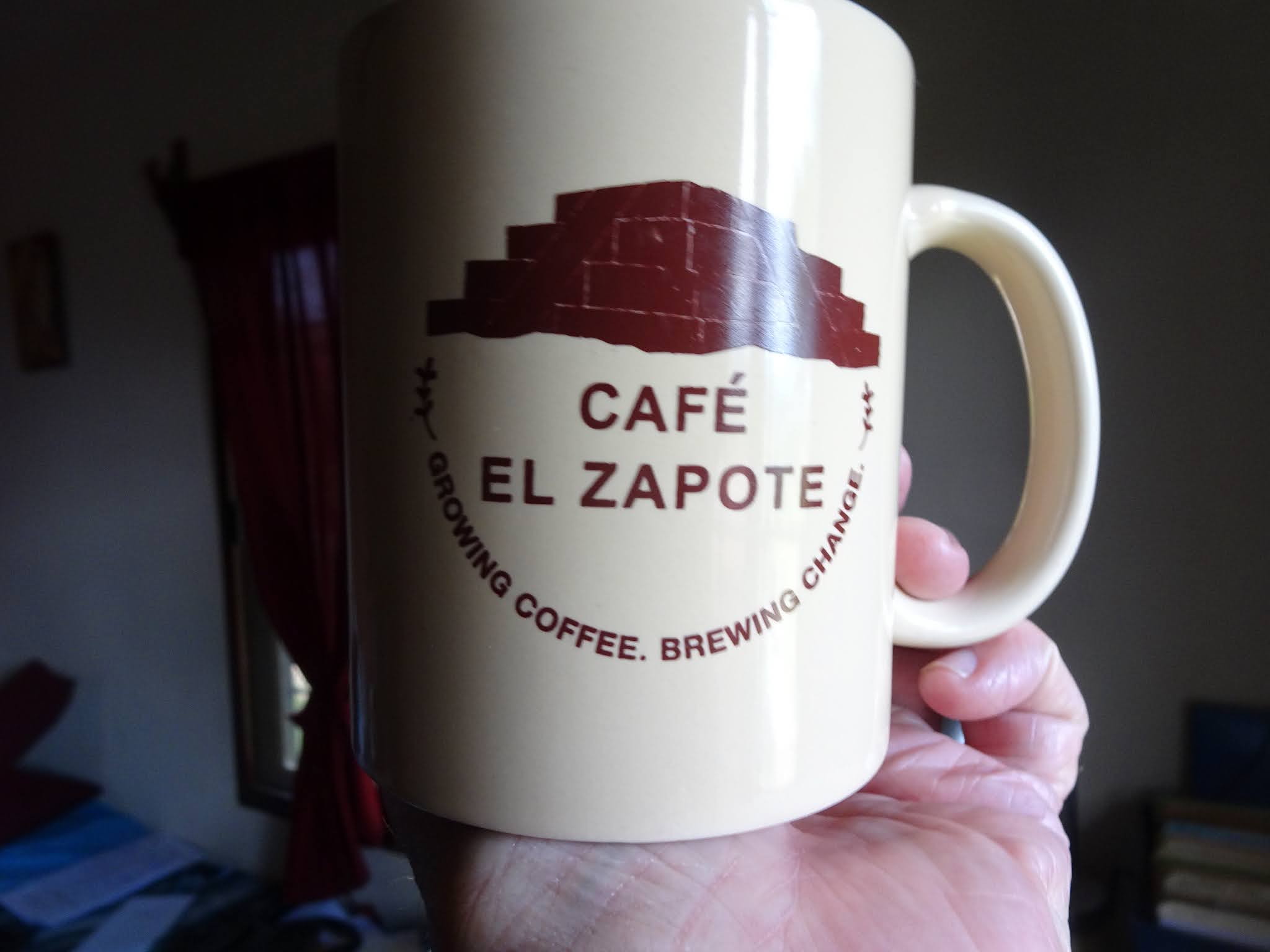
In the aldea of El Zapote Santa Rosa, José Garcia got about fifteen producers together and they began to work forming an association, which they named “Café hacia el futuro” – Coffee toward the future. At first a group at St. Thomas Aquinas imported the coffee but later they formed into “Café El Zapote.” 


It’s been quite the journey – first finding ways to get small quantities sent as samples, then finding ways to export and transport coffee. There have been ups and downs – but the association has grown, has gotten help to improve their fields, as well as production processes.

They have even managed to build a “centro de acopio” – a place where the coffee will be collected and processed.
Marco Antonio pruning one plant

A few days ago, the head of Café El Zapote asked me to interview one of the producers whose high quality coffee had been purchased by a café in Tama, Iowa. They wanted some background for their customers as they market his coffee as "single source."


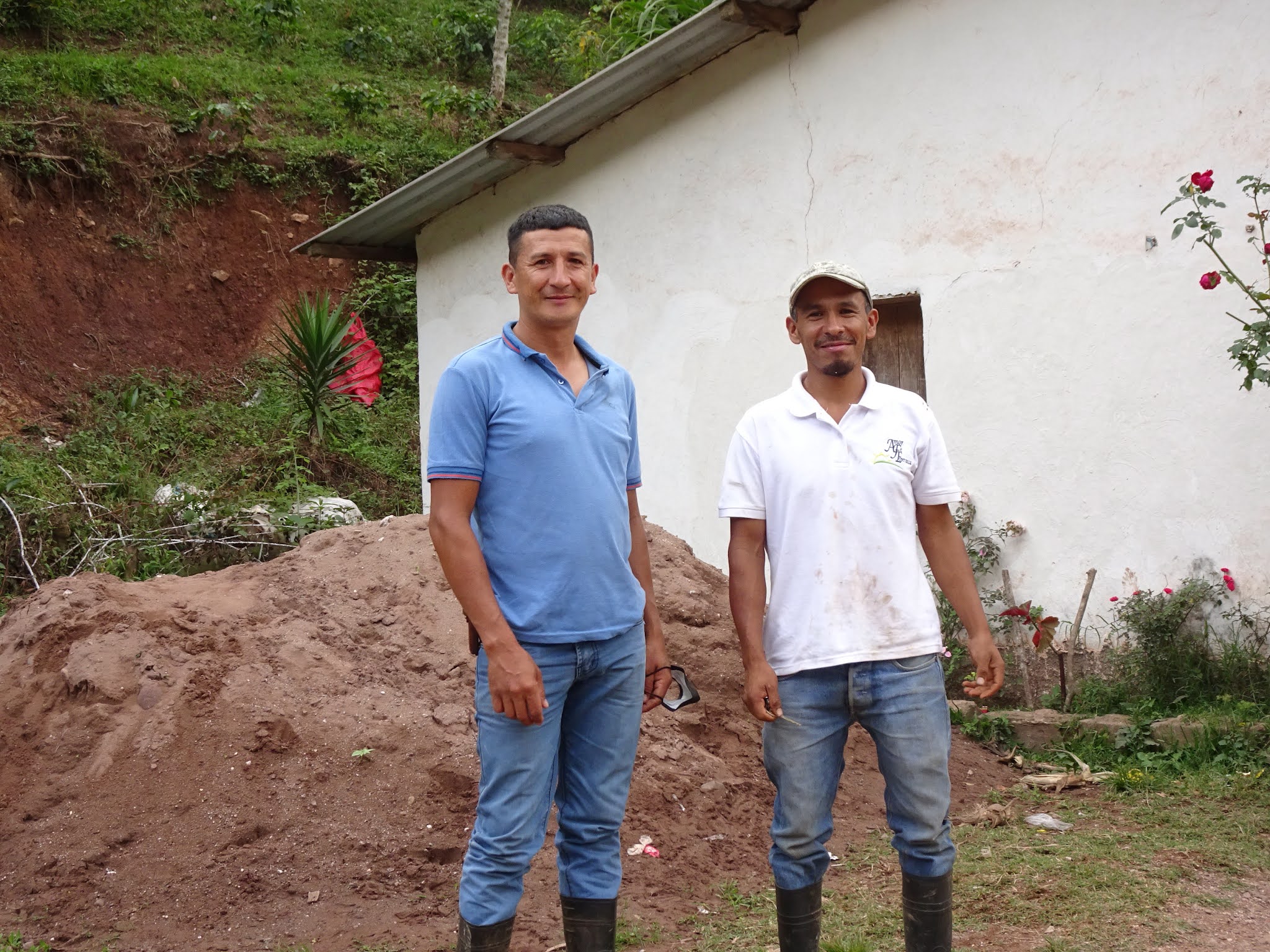
Here are some notes from time spent with the producer, Marco Antonio García; we were accompanied by Moisés García, the president of the association.
Marco Antonio and Moisés

Marco Antonio García Henríquez, Tonio, is 35 years old, married with three kids, one son who is 14 years old who helps and is also studying in the equivalent of junior high in an alternative program in El Zapote. There are two daughters, one who is ten years old and who accompanied us out to his fields. 

Marco Antonio's daughter finding some fruit to eat

Tonio was born in El Zapote Santa Rosa and has lived here all his life. His father also grows coffee and he worked with his father many years. He started helping in the coffee harvests when he was five years old – not uncommon here. He worked for years with his father but be began working on his own fields when he turned 18 years.

He has worked with the Asociación Hacia El Futuro for only two years. The association currently has 19 members (2 of whom are women). They are hoping to incorporate up to 7 more women, mostly spouses of the members) in the coming year. 

Tonio has three manzanas. (A manzana is about 1.7 acres.) The elevation of his fields is about 1350 meters.

When I asked him how he got such high-quality coffee, he said that he does all in the name of God and with passion and love, selecting the best coffee beans.

It is clear that he and his family live with a deep faith and with a passion for their work. He proudly showed me the flower garden at the side of his house which his wife and he tend to have flowers for the Catholic church in the village.
The association has worked with several organizations, including a Spanish foundation which worked through Caritas and Heifer International. With their help, as well as the help of El Zapote Coffee in Ames, they have been able to improve their farming, harvesting, and processing procedures. They also have been able to have solar coffee dryers. 

They are working toward a much more ecological approach to coffee production. The centro de acopio (collection and processing center) that the association is completing will have procedures to deal with the pulp from the coffee as well as the water used in washing and soaking the beans to avoid contamination of the water systems.
Centro de acopio of the association

Tonio does not use herbicides to deal with the weeds in the coffee fields (fincas, in Spanish). Instead, they clear out the weeds manually, with machetes.

However, one of the problems in the past few years, and one which has had a resurgence last year, is what is called roya, a type of leaf rot. They are working with developing natural fungicides for control of the roya.

Up to this point, Tonio has dried the coffee in the solar dryer by his home. He has stored the coffee in his house to avoid contamination by any odors.
Tonio and his son beside his small solar dryer

The harvests in this area are between November and April, because of the elevation. Producers will harvest several times during the harvest season, since the beans mature at different times. (There are several flowerings earlier in the year.) Tonio harvests up to six times in the harvest season. (Editors’ note: the first and last harvests do not usually bring in a good quality coffee, since they may have beans that are overripe or underripe.)

We went to see Tonio’s fields which are in two different locations.
He has been very careful to have a good number of trees in his fields – pine trees, guamos, fruit trees (including oranges and mandarins), avocado trees, bananas, and more. (I came home with a load of mandarins.) When he plants new coffee trees, he tries to avoid cutting down trees.
In at least one part of his fields, he has planted zacate (a type of tall grass) between the coffee rows – to cut down the erosion as well as to lower the temperature of the soil.
Tall grass between the rows of coffee

Tonio is not a man of many words and so when I asked if he had any message for those who will drink his coffee he was at a loss – just drink, enjoy, and buy more. As I left, he thanked all those who are helping him and the other coffee farmers in El Zapote.
Information on ordering Café El Zapote can be found here: https://www.facebook.com/cafeelzapote

UPDATE - October 10, 2021: 

 Here's an image from the Facebook page of Ross Street Roasting Co.


Saturday, March 06, 2021

March is upon us

I wrote about two weeks ago but I wanted to share more information. If there is some repetition, please excuse me.
COFFEE 

There is still a lot of coffee in the fields and I guess that people will be harvesting coffee for a week or two. We’ll probably be spending a day or two soon in the parish coffee fields next week.

But I have also come across coffee bushes in flower. The fragrance of the coffee flowers is one of God’s gifts and you can smell them from a distance. The closest fragrance in the US is honeysuckle.
I have been involved for several years with an association of small coffee growers in the nearby community of El Zapote Dulce Nombre. There are twenty-one members, two of them women. They’ve been exporting some coffee to the US, first through the parish of Saint Thomas Aquinas in Ames and now through a non-profit, El Zapote Coffee. Click for their facebook page. I have independent testimony on the quality. 

The association has had some help from veracious non-governmental organizations to help them develop their work. Most recently, a foundation has given them some seed money for setting up their own beneficio, a processing plant. This will enable them to cut costs as well as to lessen the environmental effects of the coffee production process. EL Zapote Coffee is doing some fund-raising to help them. The association already has some funding and they have worked to prepare the site for the processing and to set up a solar dryer and a one-sided shed. But much more is needed. It is great to see them working taking and taking the initiative, with very competent leadership. 

TOMATOES

Last year, shortly before the pandemic began, a neighbor and his cousin began a tomato project, producing beefsteak tomatoes in a large greenhouse.
Since he could deliver the tomatoes to my house, I enjoyed fresh tomatoes until about October, when the plants needed to be uprooted and new ones planted. I had to endure other tomatoes until the beginning of this year when the new harvest began. 

 I have been ordering for myself, but several women at the church in Dulce Nombre have been asking me to get some for them. I’m so happy to be able to share them and to support a local farmer. 

Friday I had a chance to visit Alex and the tomato greenhouse. It was amazing to see what they are doing. His cousin had learned how to do this in the department of Ocotepeque and the two of them had put together their resources to start the project.

But I was also pleased to see that Alex and his cousin were also cultivating other vegetables in their gardens – garlic, onions, green peppers, mustard, cilantro, squash, cucumber, and more. I hope I can buy some of their produce. 

SOLIDARITY

I’ve been connecting a lot these days with a community that was severely affected by Hurricanes Eta and Iota last year. Many homes were destroyed or severely damaged, About a third of the houses in the community are in precarious situations and could be severely affected when the rainy season arrives.

They’ve formed a board to help consider how to go forward. They hope to have a study made of the geological situation to help determine if they need to relocate the village. 

The parish has brought aid to the community several times. This past Wednesday night, a woman from the community called and told me that there had been a fire in the home of an elderly woman and that she had lost clothing, a mattress, and more. The fire came from a defective light fixture. Since the roof was of tin with metal beams, the house itself had not caught fire and so she could continue living there. 

I brought a mattress, clothing, and supplies from the parish. 

I got another call just before I left the parish asking me to bring a mattress, clothing, and supplies for an older man who had showed up in the village a few weeks ago.

One of the women helped him get washed up and set him up in a room be the church. She told me how the stench was overpowering but she went forward and washed him. He is also rather ill with inflamed stomach and legs. And so the woman and others are raising money to take him to a clinic to have him examined. In their poverty, they have reached out to one who is suffering even more. They put me to shame. 

Providentially, the Gospel for the day I went there was the parable of the rich man and Lazarus, in Luke 16, 19-31.

POLITICS

March 14 the country’s parties will hold internal elections, choosing the candidates for November’s elections for the presidency, congress, and municipal mayors. I have seen some signs for candidates and once almost got stuck in a caravan of cars in support of one candidate.

One of the most interesting things I’ve seen is a sign for one candidate for the mayor of Concepción about a block away from the house of the other candidate.

It’s also interesting that I know a number of the candidates for various positions and parties. There are even two young men I know who are running for office. Whether these elections will make any difference remains to be seen. (Excuse the cliché.) 

Corruption runs deep in the country and there are rumors of corruption of one presidential candidate. But above all are the continuing stories about the involvement of the current president in drug trafficking. It just so happens that his brother is waiting sentencing in the US. 

COVID-19

COVID still afflicts the country. In our rural area, there have not been a lot of cases, though one village seems to have had a serious outbreak. In the aldea where I live, five persons were tested positive but have recuperated. 

There were stories from the government that the vaccine would begin to arrive in the second half of February, but the date was changed to March. According to some news reports about 2000 vaccines have arrived from Israel and have been given to medical personnel. There is some controversy about the protocols but something has begun.

There are also reports that the government is purchasing 4,200,000 Sputnik V vaccines from Russia. My concerns are that the poorest will be ignored in this. 

AND MORE…

The artist is continuing with the murals in the church in Dulce Nombre, most notably in the chapel of the Blessed Sacrament. Our hopes are that he will be able to finish in April. 

Holy Week is almost upon us. We are planning to have a session for parish leaders to help them prepare for Holy Week. It will be different from last year, when we were in lockdown, but we will be trying to be responsible as we help communities offer some small gatherings to celebrate the death and resurrection of the Lord – offering hope in the midst of all the suffering the country has suffered in the last twelve months.

Friday, September 22, 2017

The benefits of a coffee association


Wednesday I had visitors and decided to have them hear about the work of the coffee association in El Zapote Santa Rosa.

This group of thirteen men and one woman are small coffee farmers who have joined together, learned best practice to produce, harvest, and process coffee. As a result, they are exporting coffee to the parish of Saint Thomas Aquinas in Ames, Iowa. This year they exported 4,500 pounds.

José, the president of the association, talked with us, showed us his solar dryer, shared some of his coffee with us at his home, and then showed us parts of his coffee fields, his finca, as well as where he washed much of his coffee.

As we drank a cup of coffee in his home, he proudly told us how he now drinks good quality coffee and not the dregs, which his family used to drink. He noted that the good quality coffee doesn’t upset his stomach as the other coffee did.

One of the visitors, a Canadian, had previously asked me why the Honduran coffee he drank in Toronto coffee shops was good but most of what he had tasted here was awful. I told him exactly what José later told us. I also noted that when we visited Aldea Development’s project in La Unión, Lempira, the director Patrick Hughes had advised the producers to begin to drink good coffee.

José has taken that advice to heart.

I pressed him on other benefits. He did not talk much about his own family, though it appears that they are doing better. But he did mention that they paid the coffee harvesters more for the selective picking they did for export coffee. He also noted how the family or some persons are hired to go through the coffee to take out defective beans before the coffee is sent to the processing company here in Honduras.

The project is not only helping the producers but seasonal coffee workers, many of whom do not have their own coffee land – or have very little land.

But as we came back from his fields, he shared what in many ways is one of the most significant benefits of this association and their ability to export coffee and get a higher price for quality coffee.

José showing off his coffee fields
As we drove into El Zapote he mentioned, “I no longer have the desire to go to the United States.”

He had tried a few years ago, was captured by the Border Patrol soon after crossing the border, and held in a detention center for several months. But I guess that the dream of the golden north remained.

Yet now, he has purpose in his life here in Honduras; he has experienced the success of helping to organize others for the good of the community; he has helped improve the quality of life for him and his family. He is at home in his home country, in his aldea.

But José is but one of many who have the dream of a good and meaningful life for his family and his village. (He is very active in promoting education in El Zapote even though he has had limited education).

But he is a minority since real development is beyond the reach of many – even the educated. I recall a very sharp young man whom I tried to dissuade from going to the United States. At one point he told me, “What does Honduras offer me?”

He had much to offer Honduras but his hopes and dreams were stilted, his gifts not recognized, his capacities not given a place to grow.

So what about the future of Honduras?

Politicians offer dreams of success, but often at a price – selling your soul to the party. Jobs are offered, but with poor salaries. Individual efforts are lauded, but not always rewarded. The efforts of people working together are not often encouraged.

Small efforts – and larger ones – need to be made. I feel very glad that this one small effort has made a difference in the lives of some people I know. I hope there are more.


And if you want to help people like José, buy more coffee from direct market sources. El Zapote Coffee, the fruit of this small association, is available at St. Thomas Aquinas Church and Catholic Student Center, Ames, Iowa. Buy some – and then, if you like it, get some friends to buy some more. That might make it easier for people to stay here in Honduras.