Showing posts with label Christmas. Show all posts

Monday, December 26, 2022

Saint Stephen, deacons, and the poor

Today, the feast of Saint Stephen, deacon and martyr, I’ve been reflecting on my ordination as a deacon on July 15, 2016.
Stephen, “a man filled with faith and the holy Spirit,” was the first among the seven “reputable men” chosen by the apostles to serve the Greek-speaking followers of Jesus who complained that “their widows were being neglected in the daily distribution.”

There are some scholars who say that these seven were not really “deacons.” Yet, the prayer of ordination of a deacon refers to the naming of seven men by the apostles, as narrated in Acts of the Apostles 6: 1-6. I remember that day, as the bishop prayed:
en los comienzos de la Iglesia, los apóstoles de tu Hijo, movidos por el Espíritu Santo, eligieron siete hombres de buena fama, como auxiliares suyos en el servicio cotidiano, mediante la oración e imposición de manos, los dedicaron al servicio de los pobres, para poder entregarse ellos, con mayor empeño, a la oración y a la predicación de la palabra. 
"in the beginning of the Church, the apostles of your Son, moved by the Holy Spirit, chose seven men with a good reputation, as helpers in the daily service; by means of prayer and the laying on of hands, they dedicated them to the service of the poor, so that they [as apostles] could devote themselves with greater commitment to prayer and the preaching of the Word." (My translation)
Though I had read and prayed over the prayer before that day, when I heard the words “los dedicaron al servicio de los pobres,” my body shook. It was as if all that I was trying to do in my life here as a missionary and all that I had tried to live in my life before coming here was being confirmed and indeed “ordered” as a public witness and ministry with the People of God. 


The English translation of the prayer of consecration is slightly different: “the apostles entrusted to those chosen men the ministry of serving at tables.” For me, the Spanish version has a fuller meaning: we are called to be at the service of the poor. 

The poor are at the center of my diaconal ministry, as they have been at many times of my life before coming here to Honduras, as they have been part of my missionary calling here in Honduras since I arrived in 2007.

I am convinced that being with the poor, at their side, serving them and accompanying them is central to who I am and to what I have been called. 

This past year, especially the last few weeks, I have been remiss in this – partly due to emotional pressures and, more recently, a series of colds. But I am convinced that we deacons ought to include this question as we examine our consciences: “When was the last time I was in the house of a poor person?” – more specifically, a physically poor person. 

It is good to be an advocate of the poor; it is good to minister to those who are poor emotionally or in terms of their faith. But I am convinced, partly by my experience, partly by the words and witness of Pope Francis, that Jesus calls us to be with those who are impoverished physically and that this is a special call for us deacons. 

In his Mass on December 24,  Pope Francis noted:
"...let us remember that it is not truly Christmas without the poor. Without the poor, we can celebrate Christmas, but not the birth of Jesus. Dear brothers, dear sisters, at Christmas God is poor: let charity be reborn!"
In that homily, Pope Francis cited the sainted archbishop Óscar Romero, who on Christmas 1978 preached these challenging words:
“No one can celebrate an authentic Christmas unless they are truly poor. The self-sufficient, the proud of heart, those who despise others because they do not possess the material goods of this earth, those who do not need or want God --- for these people there is no Christmas. Only the poor, the hungry, and those who need someone to come to them because they have need of someone, someone who is God, someone who is Emmanuel, God-with-us --- only these people are able to celebrate Christmas. Without the spirit of poverty, one is unable to be filled with God.”
Toward the end of his homily, Pope Francis said:
"He who lay naked in the manger and hung naked on the cross, asks us for truth, he asks us to go to the bare reality of things, and to lay at the foot of the manger all our excuses, our justifications and our hypocrisies. Tenderly wrapped in swaddling clothes by Mary, he wants us to be clothed in love. God does not want appearances but concreteness. Brothers and sisters, may we not let this Christmas pass without doing something good. Since it is his celebration, his birthday, let us give him the gifts he finds pleasing! At Christmas, God is concrete: in his name let us help a little hope to be born anew in those who feel hopeless!"
I believe that we ordained deacons need to show the love of God for the poor concretely, being at their side, listening to them, making their cause our own, suffering with them. This is not easy. It takes us out of our comfort zones. It takes us where we sometimes done want to go. It may even get us into trouble. 

But it is where our Lord Jesus, the Servant of Yahweh, is.
“For you know the gracious act of our Lord Jesus Christ, that for your sake he became poor although he was rich, so that by his poverty you might become rich." (2 Corinthians 8:9)

 One extra reminder of all this came in the early hours of Christmas. Just back from our Christmas Mass (our midnight Mass that began at 10 pm), I was doing a little computer work when a message arrived from a young man I know from one of our parish villages, with a Christmas greeting. In the course of our messaging back and forth, I found out that he was at the El Paso/Ciudad Juárez border, hoping to cross the bridge and get legally into the US. Jesus among the migrants.


Thursday, December 22, 2022

Advent 2022

This has been quite a different Advent for me.

Apse mural, Dulce Nombre

Advent began with the visit of the image of the Virgin of Suyapa in the parish. This year, the tiny image of the Virgin of Suyapa has been visiting all the dioceses of Honduras. The image arrived in our parish on Saturday, November 26.
After a visit to the church in Concepción, we celebrated with an all-night vigil in the parish auditorium, attended by more than 1000 people.
I took a few breaks and fell asleep for a short time before Mass at midnight as well as in the early morning. We also had a Mass for the first Sunday of Advent in the parish at 9 am – at which I preached. 

That week, I had the first of five pre-marriage interviews I've had in the last four weeks. The couple first meets with the pastor and then has a twelve session formation with leaders in their villages. Before the marriage date is set, I meet with the couple and two witnesses. For me, it is an honor to be able to be present and to help them in their final stages of preparing for the sacrament of matrimony. 

That week, Sister Nancy Meyerhofer, a Dubuque Franciscan sister who is a good friend and has been here in Honduras for 16 or so years, came over for a short visit. We had a two hour long lunch and a long supper and many hours of talk. She was very much responsible for enabling me to be able to come here to work in the diocese in 2007. She and the other Dubuque Franciscans will be leaving Honduras next month, which will leave an empty space in Honduras and also for me.

The second Sunday of Advent the parish received forty into the catechumenate, who, if they persevere, will be baptized in the Easter Vigil.  I work with the catechists and so I was glad to see them there with the new catechumens who were between 14 and 40 years old. I talked with them before the Mass and then I went with them after the Homily for a reflection period. I had a chance to speak with a number of them and it was a joy to hear of their desire to be baptized. One catechist, from a village that has 9 catechumens. introduced me to two young men in their twenties who have learning difficulties; they were so enthusiastic that I could not help but feel the hand of God in all this. A day later reflecting on this I was filled with tears of joy. 

Since I had not been at a complete Mass that Sunday morning and hadn’t had the chance to receive Communion, I went to Mass that afternoon in Dolores and preached. 

Monday through Wednesday we had a diocesan assembly, evaluating and looking toward the future. I found myself often just hanging around, sometimes with the priests and lay people. The last day I was standing around with a number of people. They asked me how long I had been there in Honduras. When I said 15 years, they said that I was in one sense a Honduran – one even saying that I was more catracho [Honduran] than gringo

Also, a number of them from the southern part of the diocese talked with me about Father Beto Gallagher, a US Capuchin priest who worked there for several years. (I wrote about him in part of the past found here.) He is buried in the church in San Marcos Ocotepeque. I find myself humbled and graced that I remind them of him. He was a priest who was really with the people. One man told how if Frey Beto was in a meeting and someone arrived and there were no chairs, he would give up his chair and sit on the floor. He was my type of missionary. 

Friday, I had a meeting for new catechists. The attendance was low, probably because many are working in the coffee harvest. Picking coffee is one of the few ways that many people in the countryside have to earn cash. I completely understand their absence. 

I used this session to help the new catechists understand the Mass. Previous sessions for the new catechists have included discussion of Baptism, grace and sin, and the Bible. The new catechists also are expected to attend the meetings every other month for all the catechists. In this way, I hope that they will be ready in about two years. 

Saturday, there was a get-together of people from the deanery in a rural ecotourism center outside of Corquín, which featured animals, including crocodiles.
What was most interesting was the road to the center, which was by a river that had been diverted by the hurricanes of November 2020.
The third Sunday of Advent I went to the early Mass in Dulce Nombre, where I preached again. Our pastor, Padre German Navarro, is very open to having me preach, which is a blessing that many deacons don't have. I think it is also a chance for him to rest, since he usually has four or five Masses each Sunday in different parts of the parish.

I had been invited to attend the middle school graduation of the students in the IHER program in Dulce Nombre on Sunday afternoon. The student listen to radio programs during the week, fill out a work book, and have classes on Saturdays and Sundays. I was glad to see so many young people, including some I know, continuing to study after sixth grade, since most rural villages only have elementary schools. This program is an alternative to classes on Mondays through Fridays, which would be difficult for many from rural villages. About 150 students receive partial scholarships each year, thanks to our sister parish, St. Thomas Aquinas in Ames.
Monday there was Mass for the feast of Our Lady of Guadalupe in the small village of Torreras. Lo and behold, the Mass was held in the home of one of those who had graduated in Dulce Nombre the day before!

That Tuesday two good friends from Central Iowa, Gary and Nancy Guthrie, arrived and I picked them up at the airport. 

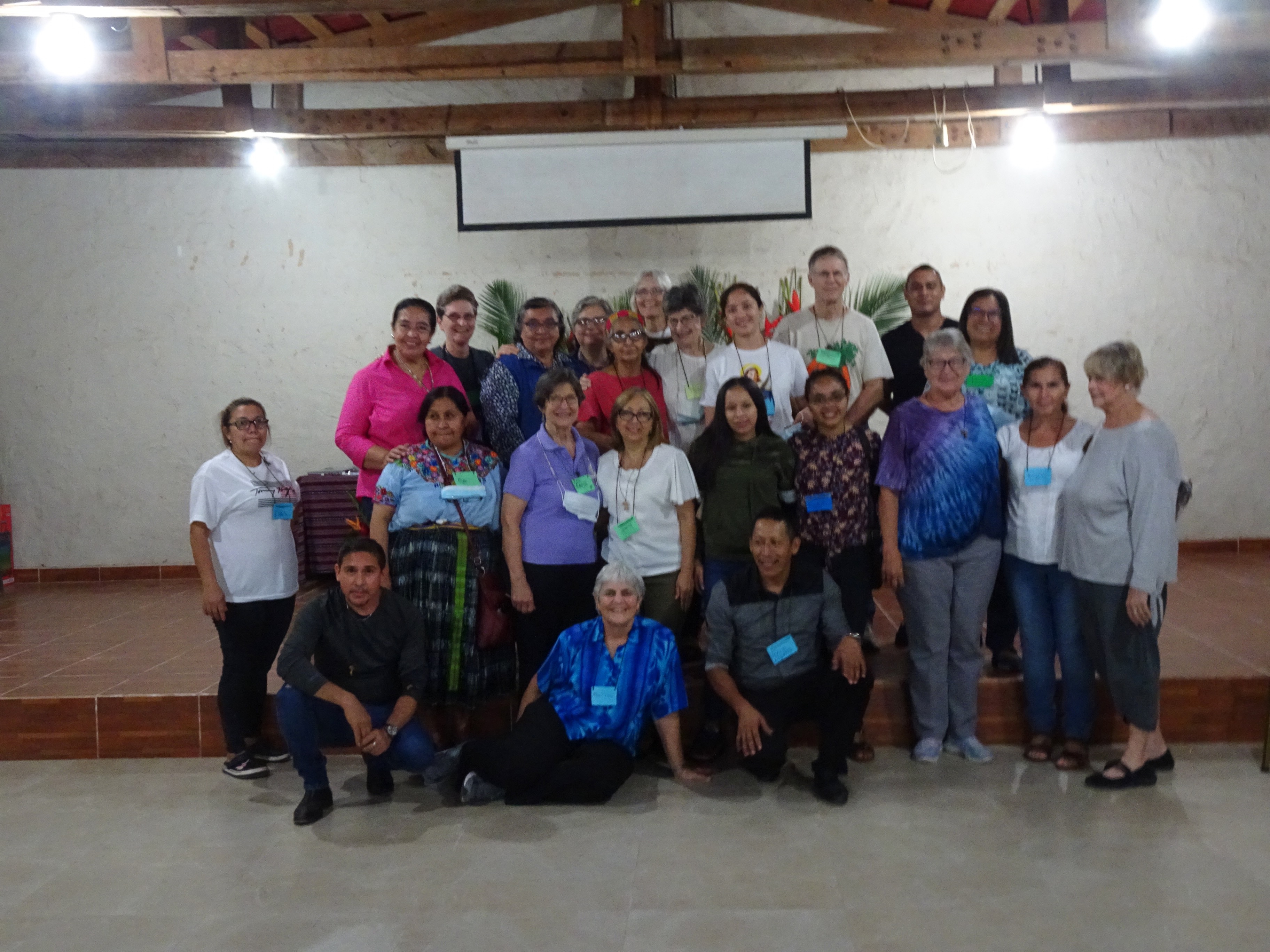
They had come mostly for a meeting of the Central American associates of the Dubuque Franciscans. They are associates in the US and it was good to have them here to know the Central American associates, who come from Honduras, Guatemala, and El Salvador. 

Gary and Nancy have been here before and speak Spanish (having been volunteers with the Mennonite Volunteers in Bolivia and El Salvador in the 1980s.) We had a great visit – mostly talking and eating a few simple meals before and after the meeting. They even got a chance to work a few hours on the parish coffee fields. I didn't get a picture of them, but here's my pickup loaded with people who helped with the coffee picking, going back to their villages.
    
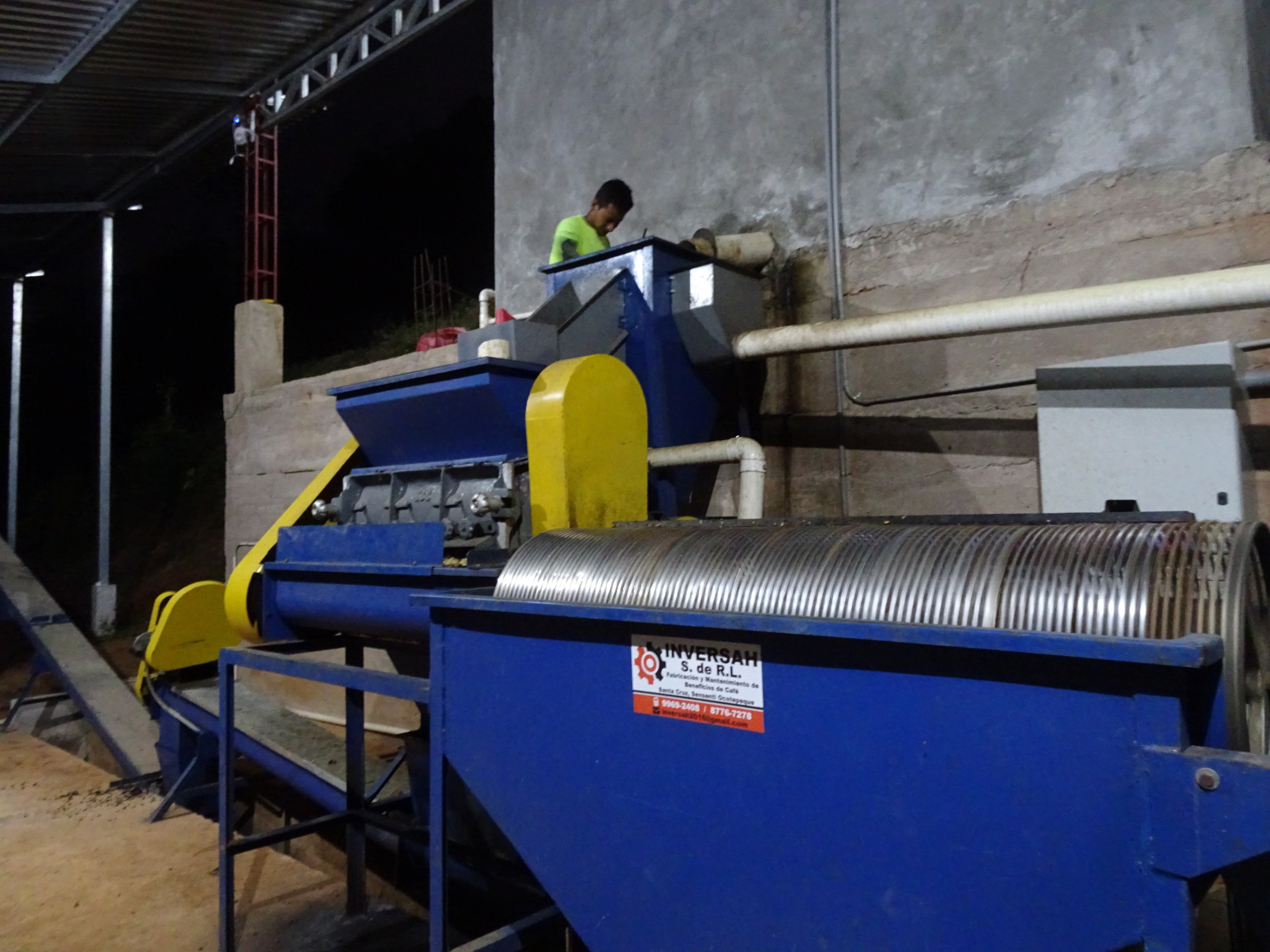
Monday, their last night here, we went out to the El Zapote coffee association’s buildings and watched the machines at work.

The meeting of the associates was a good time to get to know a bit more the other Central American associates. Since the sisters are leaving, we have to find our way to live out the Franciscan charism and to keep a relationship with the sisters. This will be a challenge and we all have to work on this.
The sisters and associates
Padre Loncho celebrated Mass (and I served as deacon)
Sister Brenda Whetstone who was visiting sharing bowls with Gary and Nancy.
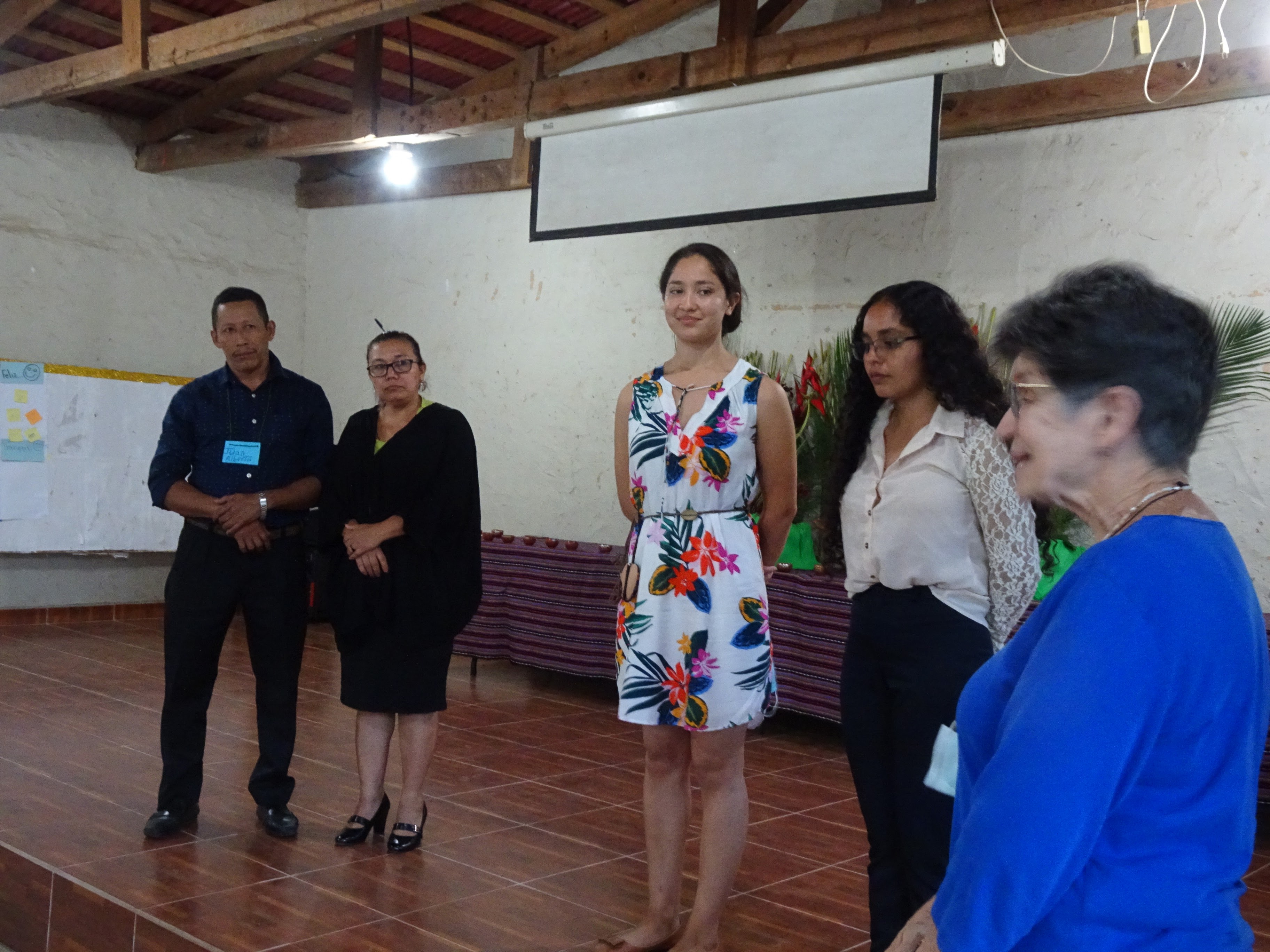
New associates with Sister Pat Farrell

On Monday, I made a visit to the parish center to talk with a muralist who is there to paint ten images of American saints in the church (above the columns in the nave.) These are the saints we plan to commemorate: Saint Martín de Porres, Santo Hermano Pedro de San José Betancourt, San Juan Diego Cuauhtlatoatzin , Santa Kateri Tekakwitha, Santa Dulce Pontes, San Francisco Solano, San Toribio Romo González, San José Sánchez del Río, San Pedro Claver, and Santa Nazaria Ignacia March Mesa. (How many can you identify?) It was hard to make the choices and we didn’t include the many blessed from the Americas. We hope this helps people recognize sanctity in our continent.

Wednesday, after leaving Gary and Nancy at the San Pedro Sula airport on Tuesday, I met with a urologist in San Pedro and tried to make an appointment for a test in January.

On a personal level, I’ve had bronchitis and then a bad cold. Not fun. As a result, I haven’t got out to visit the sick. 

 Tomorrow, there is a get together for the clergy of the diocese. 

 In some ways this has not felt like Advent – and I don’t feel ready for Christmas. But it ‘s coming. 

Saturday Christmas eve, I’ll spend the morning and early afternoon baking – making cinnamon rolls and more.

Then, I’ll be at a 6 pm Mass with baptisms in Plan Grande. I’ll also go to Dulce Nombre for the 10:00 pm "Midnight" Mass, which has been a custom. Christmas morning I’ve been invited to a community for a Celebration of the Word with Communion.

After that, I’ll head to La Entrada for the traditional Christmas lunch with the Dubuque Franciscan sisters. For me, it will be bitter-sweet since It’s the last time I’ll be at a holiday meal with the sisters. 

The week after Christmas I have two commitments, one will be working with several priests to develop materials for the weekly meeting of the base communities. But I’m hoping to take it easy, cleaning the house, preparing for the new year, and catching up on reading and correspondence. 

In the meantime, I ask you for your prayers for our parish and for me. I pray that your lives may be filled with hope. May God-with-us bless all of you who have read this.


Monday, December 21, 2020

Marvelous nativity sets

Here’s what will grace my prayer corner this Christmas: a wooden image of Mary from Guatemala, a ceramic Jesus with a crib of Lenca pottery that I bought in El Salvador, and a wooden angel from Bolivia, with a candle in a wooden star, from Bethlehem. I wish Jesus was not so white, but… 


I also have a tiny creche, from Ecuador, painted by a woman from Colombia, the wife of a colleague at Caritas a few years ago.
This image of the Holy Family, crafted from olive wood, from Palestine, was at the center of my prayer space one Christmas.
 

Some people are upset about the creche in St. Peter’s Square. While it may not be to my taste, there is one element that I find absolutely marvelous: an astronaut is bringing the Baby Jesus a moon rock. 

In Honduras, as in El Salvador, many people put a lot of effort into the arrangement of nacimientos, in churches as well as in private homes. The church of San Marcos in Gracias, Lempira, has often had marvelous nacimientos with scores of figures.
A few years ago, the pastor and I stopped at a few houses in Quebraditas and saw a unique one with Snow White on a horse, rubber duckies, Minnie and Mickey Mouse, Winnie the Pooh, and even a half-naked Barbie.
If you want to quibble about this, fine. But you may be missing an important message: the Incarnation.

Jesus Christ, God-made-flesh, came into the midst of our lives on this earth. Let all come and worship him – with moon rocks, action figures, dinosaurs, and all God’s creation. 

Different cultures will reflect this differently. In 2013, on a personal pilgrimage in Italy, I came across a display of Nativity sets in the Cathedral of Ravenna. What an amazing variety, reflecting different cultures, nations, and races.
You can find more of these images here

Truly God is born among us - and pitches his tent everywhere.

Tuesday, December 26, 2017

Christmas 2017

It's been a Christmas of coffee, baking, meals, Masses, Celebration of the Word, and caroling in prison.


Today, on the feast of Stephen, the first deacon, I’m sitting in a café in Santa Rosa de Copán, waiting for my car to me fixed. This past month or so, the pickup has been through lots of repairs. But that’s not as important as what has happened the past few days.

Last Friday and Saturday I helped with harvests in the parish coffee lands. About 200 parishioners, of all ages, showed up to volunteer their time, harvesting close to 5000 gallons of coffee berries. (I’m using US measurements. The “galón” they use to measure the coffee berries is a five gallon bucket.) It was a super-abundant harvest, the second this season. In about two or three weeks, we’ll have another harvest since there are still lots of green berries on the coffee plants. (Typically there are three to five harvests in each coffee field during the harvest season.)


I picked a little, but I mostly transported people to and from the field and took some coffee to the place where the seeds were separated from the pulp. I calculated that I drove five hours on Friday and six hours on Saturday. No wonder the pickup is in the shop.

Sunday I preached at the 7 am Mass in Concepción, Copán, and then went home to bake bread and cinnamon rolls.


Padre German had several Masses on December 24, Christmas eve, with a midnight Mass in nearby Candelaria, Concepción. He asked me to preach there. I tried to take a nap before Mass but no luck – too much anticipation and too many firecrackers (some quite loud).

After getting to bed after Mass at about 2 am, I got up early to go to the village of Grandillal, San Agustín, for a Celebration of the Word with Communion. The celebration started late but it was so good to be there. After the Celebration, they invited me to have pop and cake with the kids, but I told them I had a long trip for a big lunch.

After traveling 45 minutes from Granadillal to Plan Grande to pick up stuff, I headed to Gracias Lempira, almost two hours away. I brought the bread and cinnamon rolls (which were a great treat.) There with the five Dubuque Franciscan Sisters who are in Honduras, a sister from another Franciscan congregation, another US associate of the Franciscans (who lives across from them) and Padre Loncho, the pastor of Gracias, we had a feast. They even had a vegetarian quiche for me.

The sisters are a real support community for me. I find myself refreshed each time I visit with them.

Since I stayed overnight in their guest room, I joined them at about 4:30 for Christmas caroling in the Gracias prison. The sisters have been serving the prisoners since Sister Nancy arrived in Gracias. The director delayed the lock-down half an hour so that we could have time to be there.

We visited the three parts of the prison – the sentenced, those awaiting trial or sentencing, and the women. We walked in singing – to the surprise of the imprisoned. The sisters had a sheet with the words and invited them to sing with us. As we began with “Feliz Navidad,” I found myself almost overwhelmed by emotion. How could they have a happy Christmas there. But the sisters’ presence was welcomed with smiles and singing. I recognized a few, since I had helped Sister Pat with a few Alternatives to Violence workshops in the prison.

We got back to the sisters’ house about 6:30 and had a little to eat. I was full and so a brownie and a cup of hot tea were enough.

Today, I joined the sisters for Morning Prayer, as I do whenever I’m there. It was a great way to celebrate St. Stephen’s feast, with women who truly live the diaconal spirit.

The next few days will be busy.

Today there is another group finishing the harvest in the parish field. If my car is fixe, I may be able to help transport people at the end of the day.


-->
Wednesday and Thursday we have the annual parish meeting for evaluation and planning. On Friday I have a pre-marriage interview. Then the weekend - and lots of firecrackers on New Years Eve.

Sunday, December 24, 2017

Don't let them steal your hope.

As I prepared for my Christmas homily, these words came from the depths of my heart: “Don’t let them steal your hope.”


It is easy to get discouraged here – especially in light of the recent elections and the follow up.

Poverty still abounds here in Honduras. The poverty rate has increased by almost 3 % this past year to 68.8%, with extreme poverty at 44%.

Most people are worried, uncertain of the future.

Many people are confused, in the midst of credible reports of fraud and manipulation of the vote counting process.

Some people are angry, feeling that the election was stolen from their candidate.

Some of the opposition are disheartened with their candidate who, though still contesting the election, has virtually withdrawn, I believe because he sees how difficult it is when the US government has acknowledged Juan Orlando Hernández as the winner.

And so, some of us are saddened, angered, and ashamed at the behavior of the US government and its whitewash of the elections. The US government which acknowledges what I believe are manipulated elections results, with hardly a glance at the “irregularities identified by the OAS and the EU election observation missions.”

And so it is easy to feel hopeless.

But the situation is more serious than this. St. Paul (Ephesians 6:1) noted that our struggle is not against flesh and blood, but against the principalities and powers of this world.

What are these? I would suggest they are the systems of power and domination, of wealth and greed, of consumerism and impoverishment; they include the war establishment and the empires that seek to dominate peoples and markets.

These powers deny the human condition – desiring control, power, absolute security, and domination, a sort of godly self-sufficiency (which may have been the temptation of Adam and Eve: “you shall be as gods.”)

But at Christmas we celebrate the birth of one who assumed the human condition. Jesus, God made flesh, assumed the poverty, the vulnerability, the

We are not saved by might and power, nor by arms or money.

And the message of the God made flesh is first revealed to people on the margins, the shepherds. The angels end their message with a great chorus

“Glory to God in the highest and peace to people of good will.”

And what is the glory of God?

According to Saint Irenaeus, “The glory of God is the human person fully alive.”

And, according to Blessed Oscar Romero, “The glory of God is the poor person fully alive.”

This gives me hope and courage for the continuing struggle to be present with the People of God and to make present in our lives and in our country signs of the Reign of God that is first seen in a dark stable in an occupied land.


-----

The photo of the nacimiento in the church in Concepción, Copán, Honduras, is from last year.

Saturday, December 24, 2016

Christmas and the poor Christ

Yesterday after lunch with the bishop (after he had confirmed about 235 people in three locations), I mentioned to my pastor that I would be coming to the 11 pm “Midnight” Mass today in the town of Concepción. He asked me to preach.

I am going tomorrow for a 9:00 am Liturgy of the Word with Communion in the aldea of San Isidro La Cueva and will be preaching there, but this will be something quite different, but in both places I will be preaching of the birth of our Savior in the midst of the poor.

A few days ago, I read these words of Saint Clare in her first letter to Saint Agnes of Prague:
If so great and good a Lord, then, on coming into the Virgin’s womb, chose to appear despised, needy and poor in this world, so that people who were in utter poverty, want and absolute need of heavenly nourishment might become rich in Him, possessing the kingdom of heaven, be very joyful and glad. Be filled with a remarkable happiness and a spiritual joy! 
Saint Clare is, in part, reflecting the words of Saint Paul (2 Corinthians 8: 9):
For you know the grace of our Lord, Christ Jesus: he was rich, but for your sake he became poor, so that by his poverty you might become rich.
At Christmas we worship a God become poor.

Another insight came to me last night. Before going to bed last night, while reading a few chapters of Goodness and Light: Readings for Advent and Christmas, published last year by Orbis Books, I came across a marvelous sermon of Hans Urs von Balthazar, “Into the Darkness with God.” (I highly recommend the book and the sermon.)

What struck me was this quote, which I didn’t expect from this theologian:
It is, therefore, in order that he shall find God, the Christian is placed in the streets of the world, sent to the manacled and poor brethren, to all who suffer, hunger, and thirst to all who are naked, sick, and in prison. From henceforth this is his place; he must identify with them all. This is the great joy that is proclaimed to him today, for it is the same way that God sent a Savior to us. We ourselves may be poor and in bondage, too, in need of liberation; yet at the same time all of us who have been given a share in the joy of deliverance are sent to be the companions of those who are poor and in bondage.
As this poor Christ came to accompany us, so we too are called to accompany the poor.

All this brings me back to one of my favorite Christmas quotes, from the December 24, 1978, homily of Blessed Monseñor Oscar Romero:
No one can celebrate a genuine Christmas without being truly poor. The self sufficient, the proud, those who, because they have everything, look down on others, those who have no need of God — for them there will be no Christmas. Only the poor, the hungry, those who need someone to come on their behalf, will have that someone. That someone is God, Emmanuel, God-with-us. Without poverty of spirit there can be no abundance of God.

We are called to become poor, to be humble, to bow before the Lord made flesh, made poor, in our midst and to bow in loving service and accompaniment of those who are poor around us – not merely helping them, but befriending them, and walking with them in the light of the Kingdom of our God, made flesh.

------------------


This photo was taken on December 5, 2004, at the entrance to the Church of the Nativity in Bethlehem. To enter and reverence God become human, most of us must bow down. But it may have been constructed this way so that war horses couldn't enter the church. To enter and adore the Lord made flesh, we must leave behind all our weapons, all our weapons, entering disarmed and poor.