Saturday, September 24, 2022

What Jesus taught me about the Eucharist

After the September 17 parish council meeting, I stayed around for a few minutes talking with people. At one point a young man and I started talking about a number of topics. He expressed his concern about the catechists in his area.

At one point, he began to reflect on the Eucharist.
He noted that many people do recognize the presence of Christ in the Eucharist they receive. But he added that, when we receive the Body of Christ in communion, we also are connected with the people of God. We are also receiving the mancomunidad of the Eucharist, calling us into Communion with the Body of Christ present in our world, and not only in the Eucharist. 

He used the word “mancomunidad” which is used for associations of municipalities that work together for the good of the communities involved. He grasped something that so many forget but which is central to the Catholic understanding of Eucharist, especially among the Fathers of the Church, such as St. John Chrysostom. In a sermon on the Gospel of Matthew he said:
Do you want to honor Christ’s body? Then do not scorn him in his nakedness, nor honor him here in the church with silken garments while neglecting him outside where he is cold and naked. For he who said: This is my body, and made it so by his words, also said: You saw me hungry and did not feed me, and inasmuch as you did not do it for one of these, the least of my brothers, you did not do it for me.
I was overwhelmed by the depth of this man’s reflections. He is a campesino, who works the land, who lived with his wife and kids. His formal education is minimal, but he has grasped the mysteries of God and he has opened my heart.

The Eucharist is communion with Jesus and it is also communion with others. These both aspects are intimately related. If we forget one of them, we have missed an essential part of the mystery of God. 

This young man taught me and inspired me. 

 His name is Jesús.

Friday, September 16, 2022

Torrential rains - the effects of climate change in our parish

It rained again yesterday in the afternoon; then there was a torrential downpour about 7 pm; then it rained again, more gently, in the early hours of the night.

It feels as if it’s been raining here for over two months. Looking at weather.com, I find that it has been raining consistently for just the last two weeks.

But, before that, there have been major downpours at least since the vigil of Pentecost, June 4. As the procession began, the heavens opened and most everyone was soaked as they walked several kilometers in procession from Concepción to Dulce Nombre. 

In addition, the temperatures have been in the eighties since June, unusually hot for our area.

There has been a lot of damage from the rains, which are heavy and last for hours, often during the night. The earth is saturated, and the streams and rivers are high.

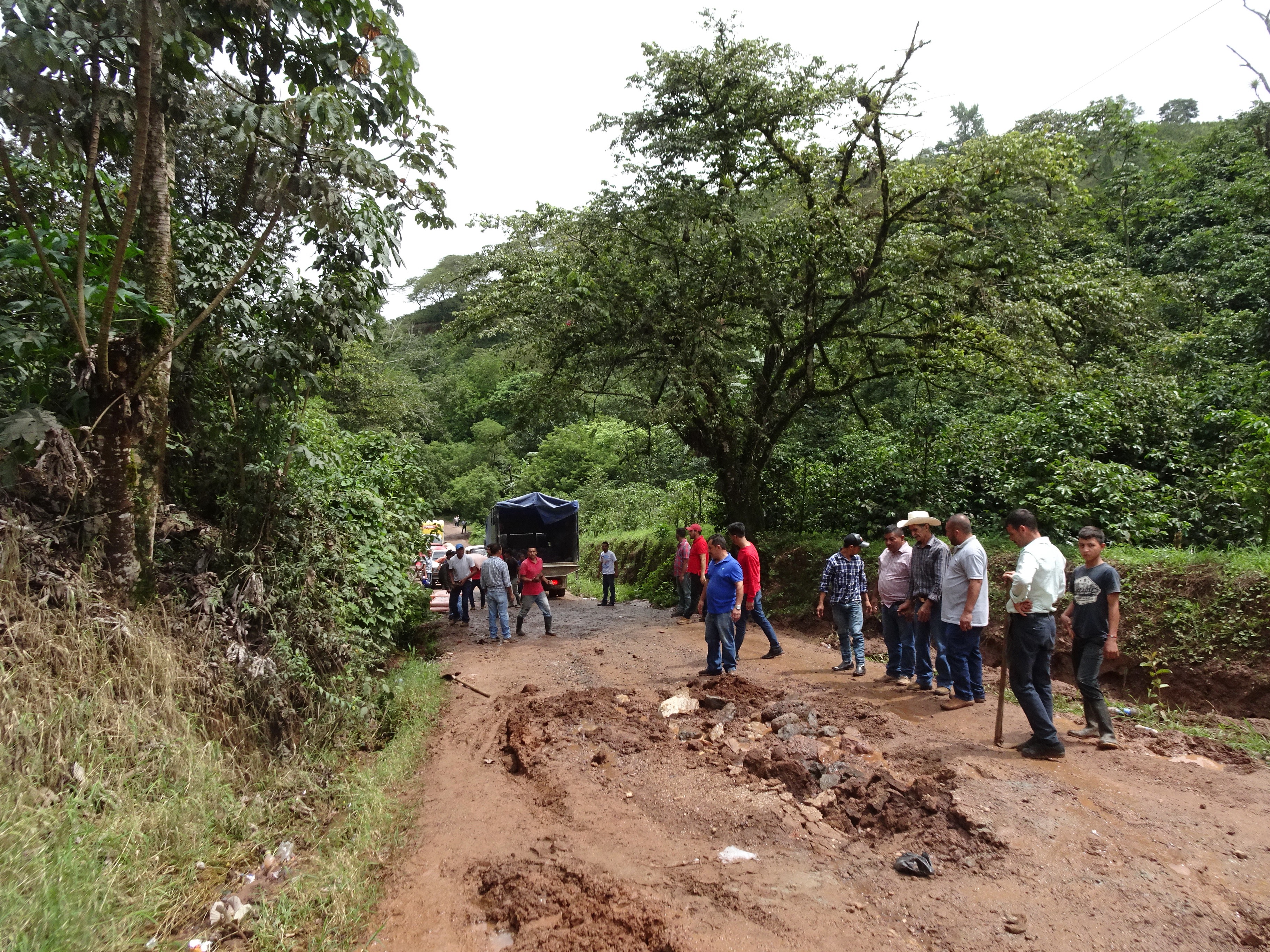
In June, a rainstorm left a major sinkhole in the road leading into Dulce Nombre from most of the villages in the parish, near the aldea de Caleras. 


But there has been even more extensive damages to the infrastructure. 

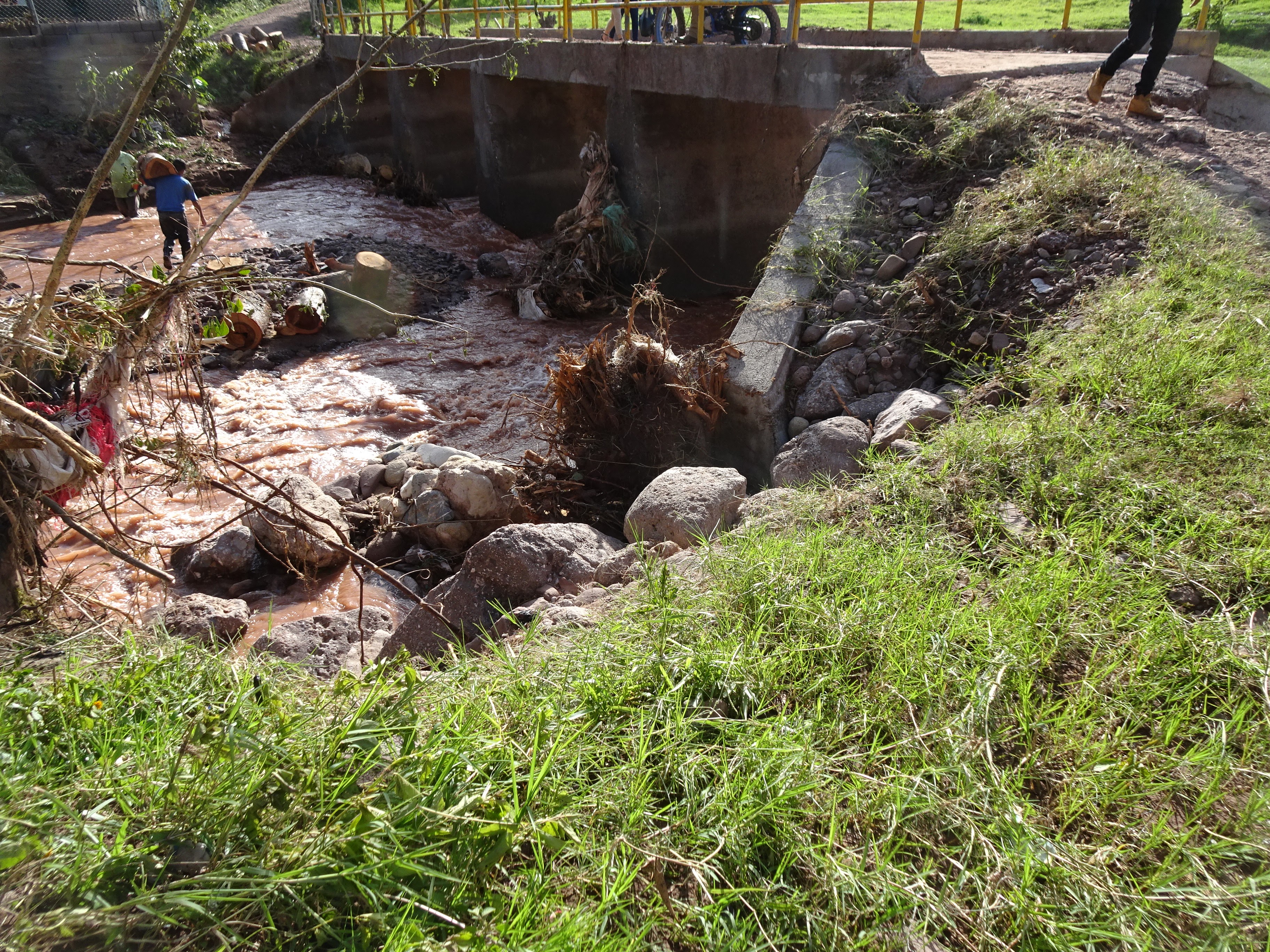
Because of the rains, part of the ramp up to the bridge by El Limón has washed away two times. The first time abut July 24.
It was “repaired.” But when I had to go to El Limón on August 16, I found it washed away again.
But the damage downstream was worse. Half of a road had collapsed and major damage was done to a bridge; several fields were swept away.
These left several communities isolated, with no access by vehicles or busses, except for motorcycles. 

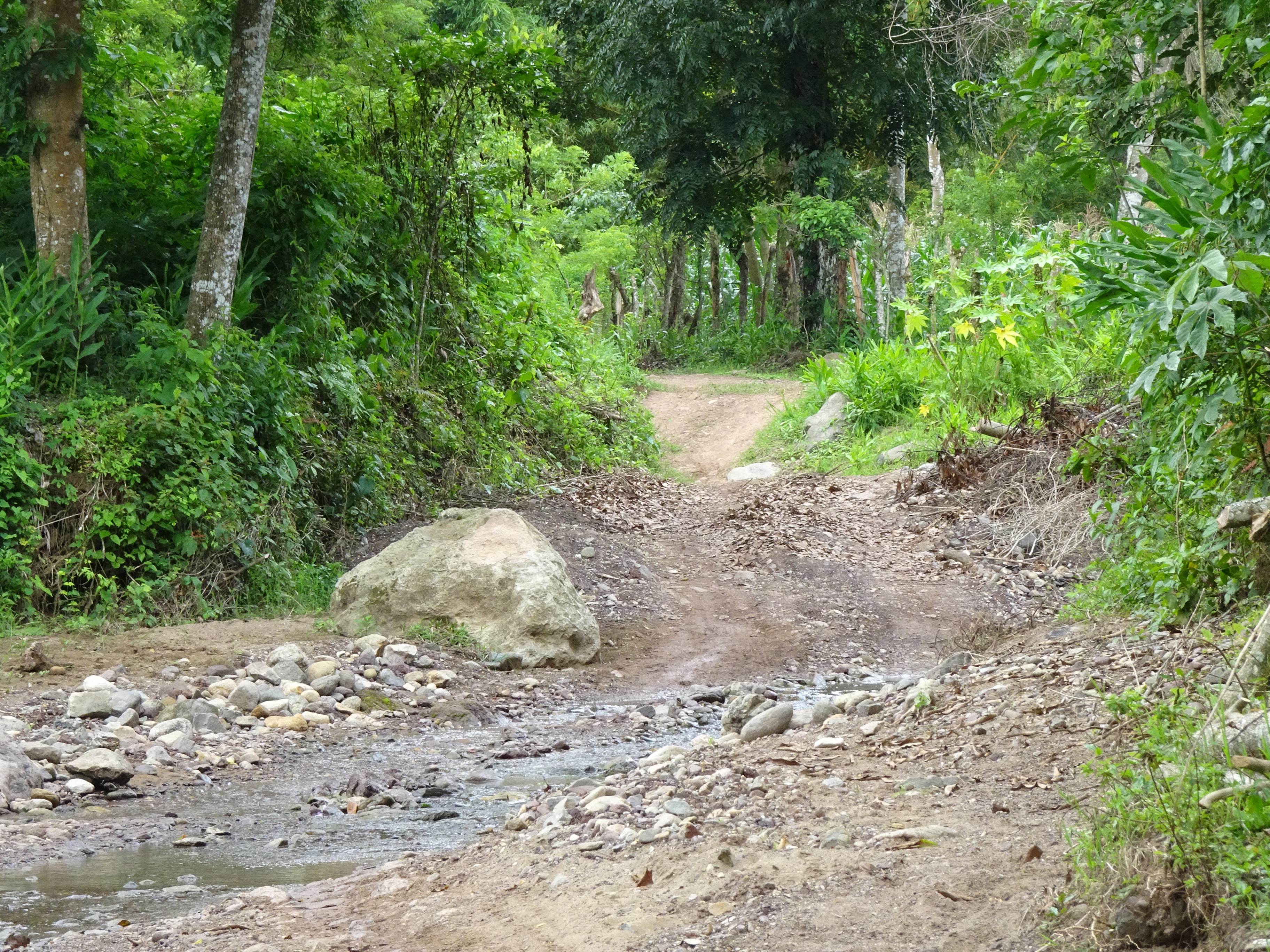
About a week before the first collapse, I had scheduled a visit to San José Obrero, on July 17. I was warned to watch out for a problem. I proceeded in and took what was the former turn off and, if I hadn’t been alert, I would have gone off a ten foot cliff, where the road had collapsed a few days before.


I reversed the car and took the other path, which led through a stream bed.


The people told me that they had gone out and prepared the path by themselves – no help from the municipality.

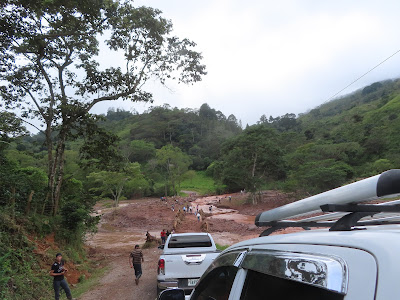
Just a few days ago, in another part of the parish, the ramp to another bridge was washed out. This bridge connected several villages with the highway to La Entrada. Here are some photos from Facebook, the first two from the page of the mayor of Concepción.


Heavy rains washed away the ramp and several villages are isolated (though there is a long way to go around to get to the paved highway).

This bridge was recently rebuilt and the area around the bridge (which had been flooded during the Eta and Iota hurricanes of 2020) was rebuilt. 

Photos from 2020

There was a major project to reconstruct the bridge with some other projects which, according to a sign at the site, cost 6,867,571.53 lempiras (about 279,000 dollars). 


 But a few years before that, the bridge had been replaced. Yet with the rains, it collapsed, revealing that the builders had taken short cuts and there was a part of the bridge where there were no reinforcement rebars. Ineptitude, shoddy work, short cuts to cut costs (for the construction firm), and corruption.

There are other problems. There have been a few landslides and there are several places where the threat of more landslides is great.

I personally had a problem with my sewage lines. After heavy machinery went down the road blow my house and smashed the underground sewer lines, a landslide detached the sewage lines (one for solid waste, the smaller one for liquid waste. 


I was fortunate to have a plumber and three guys fix it in two days. 


This is not just in our area. 

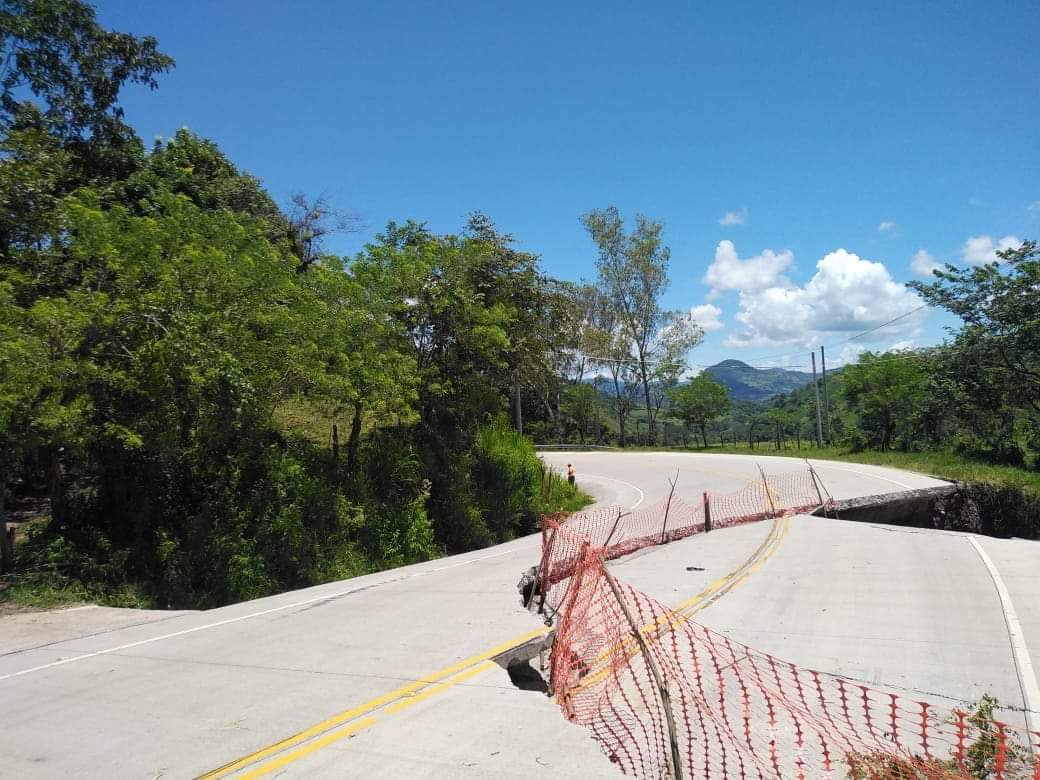
The paved road that goes from La Entrada to Copán Ruinas has suffered extensive damage in two or three places.

When I went to Santa Rita for the installation of the new pastor of the parish, on September 27, I had to pass a place near El Jaral where half the road collapsed into the river and traffic is reduced to one lane.


A friend posted on WhatsApp a photo of the road near Nueva Esperanza in the municipality of San Jeronimo where the highway has deteriorated significantly.


My major concern now is that we have not yet begun the hurricane season, which usually is in October and November. 

With the ground so saturated, with the roads in horrible conditions, with the river banks eroding, what will happen if we get the rains like we had in November 2020, with hurricanes Eta and Iota? I fear major disasters.

Last year I led a number of workshops in the parish to help people organize to monitor the situation and to be ready for disasters. I’ll be doing two more in October.

My hope is that the people will be organized, will monitor the situation, will be ready to response if there is a major threat, and so avoid loss of life, while at the same time avoiding panic.

It is really important that the people are organized to respond in their communities.

There is a great temptation is look to the political authorities (as well as non-governmental organizations) to provide the solution. In my opinion, this can lead to situations where the politicians manipulate the aid, especially here where corruption has been rampant and many politicians use aid to garner support.

And so we continue to struggle – in the face of the effects of climate change, the ongoing vestiges of corruption and ineptitude, and the ongoing impoverishment of our people.

May God accompany us in our struggles.

Thursday, September 15, 2022

A new affront to migrants in the US

I am appalled and a bit angry.

The governors of Texas and Florida, both of whom were raised Catholic, are sending migrants to cities in the north of the US as a kind of public theater. They are using these people for political purposes and are, in a sense, trafficking with human lives.

The "wall" between Juarez and El Paso.

The latest stunt of the Texas governor was sending two busloads of migrants to the home of the Vice-President.

But it is a stunt that shows, in my mind, a disregard for human life, a manipulation of people. 

I say this because every week, in our Sunday Masses, we pray for people who have migrated. Sometimes people ask us to thank God for the safe arrival of their family members to the US, mostly people ask for prayers for those who are on the road.

I openly try to discourage people from migrating, but I will not stop praying for them. They are my brothers and sisters; they are people I know and whose families I know.

They migrate for many reasons. Those in the big cities and in the areas controlled by gangs or drug traffickers often leave to save their lives and the lives of their families. Some flee the violence which affects them and their families. Over 60% of those who experience violent crime do not report the crime; such is the fear of retribution by criminals as well as lack of trust in the police and the judicial system. Others flee in search of work to sustain their families. Crop failures, torrential rains that sweep away fields and roads, and other effects of climate change push some to leave. Others find themselves unable to afford the steep rises in costs of living, transport, and inputs for their crops. Vulnerable populations, such as women in situations of domestic violence, feel they have no other recourse than to flee. The list of reasons goes on.

Migrants should not be used as pawns by politicians. What the governors of Texas and Florida are doing cries to heaven for justice.

The prophet Ezekiel castigates Sodom for not aiding the poor and needy (Ezekiel 16:49-50).

In the judgement parable of Matthew 25:31-46, the nations are judged on how they treat the stranger. 

How do I feel? I am close to tears, lamenting the hardness of heart of my fellow Catholics, crying for the migrants who face uncertain future and who are placed in even worse situations than those on the border. 

Jesus wept over Jerusalem for not knowing the ways of peace (Luke 19: 41-42).

I weep.
Jerusalem from the church "Dominus flevit" - "The Lord wept."

Thursday, August 18, 2022

Enter through the narrow door

I am working on my homily for this coming Sunday. It will be in Spanish of course, but I decided to share some of my thoughts in English. My final notes will be tuned to the reality of our people here, but I want to share the barrage of ideas that are going trough my heart.

The phrase from the Gospel (Luke 13:22-30) that hits me is “Strive to enter through the narrow gate.” In Spanish it reads a bit more forcefully: “Esfuércense por entrar por la puerta, que es angosta”. “make an effort, exert yourself, to enter by the gate that is narrow. The Greek is Ἀγωνίζεσθε εἰσελθεῖν διὰ τῆς στενῆς θύρας - struggle to enter by the narrow door. 

The Lord calls us to a struggle, because there are so many distractions and offers of an effortless life, which offer a false consolation. 

But, as I began to struggle with the text, I couldn’t get out of my mind an experience I had in 2004 when I was visiting the Holy Land.

I stayed with a friend in the Palestinian city of Bethlehem and visited parts of Palestine and Israel, often with him. Being in Bethlehem, I visited the Church of the Nativity several times. One morning I got up early for Mass near the site of the nativity. But before that, I had visited the church with my friend and entered the church by the Door of Humility.
There used to be three doors to the church but two are walled up and the third one was refashioned in the times of the Ottoman Empire.

The Door of Humility is less than five feet high and you have to stoop to enter the church.

Many have reflected that this door reminds us that we must be humble, remembering our status as creatures made from the earth – humus.

We also are called to remember that we are entering the place when God became human, taking on our flesh, “humbling himself” (Philippians 2: 6-8).

But there is another lesson to be learned when we recall the origin and purpose of this door. It’s important to that it was reconstructed during the Ottoman control of the Holy Land (and much of the Levantine Mid-East.)

The door is low to prevent soldiers entering on their horses.

To enter the birthplace of the Prince of Peace, we have to disarm, to dismount, putting ourselves on the level of others.

This reflects the wisdom of the psalms: 

 “Some rely on chariots, others on horses, but we on the name of the Lord our God,” reads Psalm 20:8. 

 “Useless is the horse for safety; despite its great strength, it cannot be saved,” reads Psalm 33:17 in the NAB translation; the NRSV is more pointed: “The war horse is a vain hope for victory, and, by its great might, it cannot save,” as is the Grail translation, “A vain hope for safety is the horse; despite its power it cannot save.” 
 
To enter the church of the Nativity we have to leave behind the false defenses of our personal lives as well as the security policies of the nations that trust in their weapons.

The narrow door, the low door of humility calls us to disarmament – of the nations and of the heart. 

Dorothy Day in 1938, during the Spanish Civil War, wrote of the need of the disarmament of the heat.

Yes, we must work for the disarmament of the nations as well as the disarmament of our cities, where all too many weapons lead to murders and mass killings.

But this must come from a disarmed heart, getting down off our high horses, laying aside our supposed superiority, renouncing attacks on our neighbors, and encountering the Lord Jesus in a manger, defenseless, surrounded by all our sisters and brothers.

-------

The full text of Dorothy Day's remarks put the disarmament of the heart in the context of the call to holiness.
“Today the whole world is in the midst of a revolution. We are living through it now – all of us. History will record this time as a time of world revolution. And frankly, we are calling for Saints…. We must prepare now for martyrdom — otherwise we will not be ready. Who of us if … attacked now would not react quickly and humanly against such attack? Would we love our brother [or sister] who strikes us? Of all at The Catholic Worker, how many would not instinctively defend [themselves] with any forceful means in [their] power? We must prepare. We must prepare now. There must be a disarmament of the heart.”

Wednesday, August 10, 2022

The roasted deacon - food for the People of God

THE DIACONAL MISSION – GIVING ONE’S BODY AS FOOD
Last week I went with Father German, my pastor, to the diocesan Day for the Sanctification of the Clergy, which is celebrated on the feast of Saint John Vianney, the patron of priests. On the way back, Father German shared an interesting take on Saint Lawrence and the diaconate. 
 
I have been blessed to work with Father German for more than nine years. We’ve had our conflicts and I get frustrated with his long homilies (and I have been caught sleeping during at least one of them). But he has a unique perspective on the importance of the diaconate. He was for some years a Franciscan friar and was ordained a deacon, with the expectation that he would be ordained a priest shortly thereafter. But he remained a deacon for three years, despite requests from his Franciscan superiors. The diaconal ministry and the diakonia of the People of God are important for him.

We spoke of many things, and he shared his unique understanding of Saint Lawrence. Lawrence was one of the seven deacons of Rome, with responsability for the goods of the church and for the care of the poor. Pope Sixtus and the other deacons were arrested and martyred by the Romans. Lawrence was spared since the Roman authorities thought the church had a storehouse of treasures and ordered him to hand over those treasures in three days.

Lawrence gathered the treasures of the church and sold them, even, according to reports, the sacred vessels of the church. He then distributed the money to the poor, the widows and orphans, the outcasts of society. When he appeared before the Roman authorities, he brought the poor, the outcasts, the lepers, the widows and orphans and told the Roman prefect, “These are the treasure of the Church!”
Woodcut of Ade Bethune
Mural in the church of Dulce Nombre de María

The prefect was not impressed and sentenced Lawrence to death, roasted on a gridiron, probably hoping that the torture would make Lawrence reveal the location of the Church’s gold and silver. In the midst of his suffering, Lawrence told his torturers “Turn me over. I’m done on this side!”
Stained glass in The Cloisters Museum

Father German’s take on this was unique. Lawrence was saying that he was ready to be served as food, as nourishment.

Aren’t we called to be food for others, to offer ourselves as nourishment for others?

This is the diaconal call – of the diaconal People of God as well as the ordained deacon. We are to be the food, the nourishment – giving ourselves for God and the People of God (and, I would add, for the whole world).

I didn’t fully comprehend Father German's thoughts on Lawrence at the time. But last night, I was reading the reflection on Saint Lawrence by the German Benedictine Anselm Grün, in his book Cincuenta testigos de confianza.
The second image of Saint Lawrence which has always fascinated people is the image of the red-hot grill. Generally, the grill is an image of life: in its fire we are roasted to convert us into food for other people. This is represented in a graphic image: our life has to be penetrated by the fire of love. It could be said that only then will we be nourishment for other persons, only then will others to able to live from us and through us. (My translation)
La segunda imagen de San Lorenzo que siempre ha fascinado al pueblo es la de la parrilla incandescente. Por regla general, la parrilla es una imagen de la vida, en cuyo fuego somos asados para convertirnos en alimento de otras personas. Dicho con una imagen gráfica: nuestra vida tiene que ser penetrada por el fuego de amor. Se podría decir que sólo entonces seremos nutritivos para otras personas, que sólo entonces podrían otros vivir de nosotros y a través de nosotros. (p. 109)
As ministers of the cup of the Blood of Christ, we deacons are called to pour ourselves out for God and for others, to shed our blood as Christ shed his Blood for us.

Few of us will be called to shed our blood in the style of Lawrence and other deacon martyrs, but each of us is called to put our hearts into our call for service, to sweat, to shed our blood and tears, to give ourselves for and with others.

We do this because our ministry flows from our baptism, our dying and rising in Christ. For us deacons, it especially flows from the altar and calls us to nourish the People of God, first of all, with our lives, the way we live in our families, in our jobs, in our social and civic duties. Then, bringing our lives, our needs and the needs and lives of all, especially the poor, to the altar, we ask God to transform our lives and the world by the fire of His love – to become a People who are living images of Christ the servant who came “to serve and not to be served, to give us life as a ransom for many.” (Matthew 20:28)

This is not easy. It means a daily dying. It means, recalling today’s Gospel (John 12: 24-26), being like the grain of wheat which has to die to bear fruit.

I close with these words from Saint Óscar Romero, martyred archbishop of San Salvador, to whom I dedicated my diaconate. Preaching on this Gospel text on April 1, 1979, he said:
To each one of us Christ is saying: If you want your life and mission to be fruitful like mine, do as I. Be converted into a seed that lets itself be buried. Let yourself be killed. Do not be afraid. Those who shun suffering will remain alone. No one is more alone than the selfish. But if you give your life out of love for others, as I give mine for all, you will reap a great harvest. You will have the deepest satisfactions. Do not fear death or threats; the Lord goes with you.
Romero's tomb in the cathedral crypt, San Salvador