Sunday, May 01, 2022

Holy Week 2022

A late update.

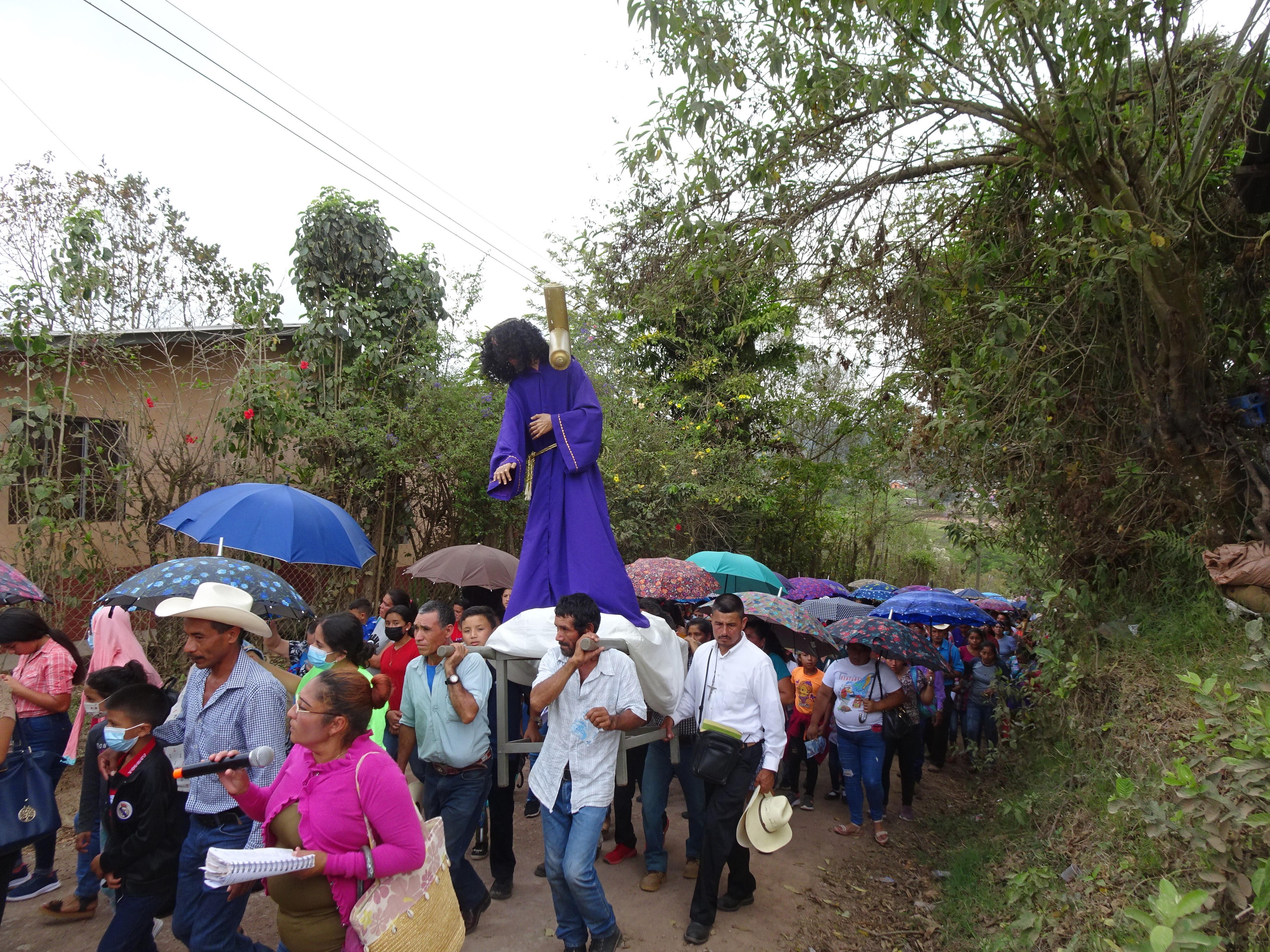
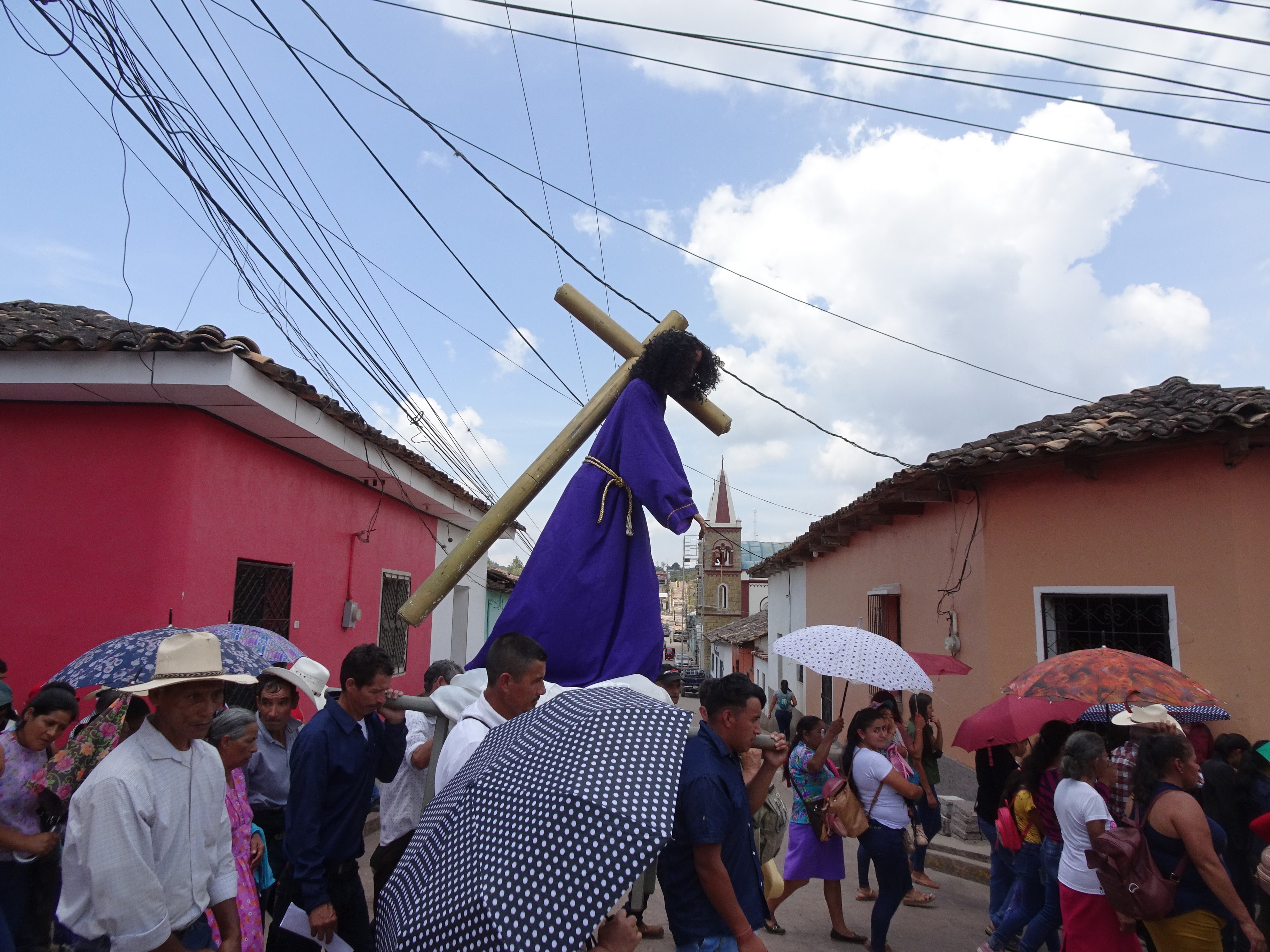
In our parish we begin the celebrations of Holy Week with a parish Stations of the Cross in Dulce Nombre on the Friday before Palm Sunday. We walk through the streets of Dulce Nombre, stopping at fourteen stations, followed by Mass in the main church to celebrate La Virgen Dolorosa, Our Mother of Sorrows.


This year the Stations focused on three concerns in the parish – migration, violence, and drugs and alcohol.

Migration, mostly to the US, has devastated some parts of the parish. People pay coyotes, often an exaggerated sum of money, to get them to the US. This leaves some villages with few men. In many places, this also wreaks havoc on families. 

Violence continues to devastate the parish. There have been cases this year of murders. In addition, there is the hidden violence of domestic violence and abuse (sexual and psychological). The abuse of alcohol and the use of drugs continues to plague some communities.

Alcoholism has long been a problem. More recently, selling and use of drugs has become a problem. We remember these and other concerns, recalling how Jesus shares our sufferings and our concerns. 

Palm Sunday was cold and rainy. I had a cold but still went to the Procession and Mass in Dulce Nombre. I preached, but I didn’t walk in the procession. Instead, I rode in the car with the sound system since I felt a cold coming on.


Tuesday, I went to a rural village to visit the sick and for a Celebration of the Word with Communion. 

Thursday was busy. First of all there was the Chrism Mass in Santa Rosa de Copán. It was good to be there – and also to see a few friends. 

After the Mass (and coffee with a friend, Padre Pato), I went to a Celebration of the Word with Communion and Washing of the Feet in Concepción, at 3 pm. 

At 5pm I was in La Colonia San José Obrero for another Celebration of the Word with Communion and Washing of the Feet. They had arranged twelve chairs on one side of the church for the twelve men whose feet were to be washed. I didn’t say anything beforehand, though in the Holy Week planning sessions I’d emphasized that they should include men and women, young and old. But, after I washed the feet of the twelve men, I asked if there were any women whose feet I could wash. Four women agreed.

At 7 pm, I was in the main church for the Mass of the Lord’s Supper. As our pastor, Padre German, washed the feet of twelve persons, I found myself accompanying him and drying the feet with a towel. We hadn’t arranged that, but it just seemed natural for this deacon.

Good Friday, I went to two remote villages. In the morning I went to El Higon, a small hamlet whose delegate died a few years ago. They had planned to go to a nearby village but were glad to be able to do the Stations in their small village. The people had arranged the stations on the road with small bouquets of flowers. It simple, but a moving sign of the people’s faith and devotion. 


In the afternoon, I went to Mar Azul for the Service of the Passion and the Veneration of the Cross. 

Holy Saturday is a day of rest – remembering and awaiting the resurrection. For many years, this has been a day to prepare for the Easter Vigil – by baking bread and cinnamon rolls.

The Vigil began at about 6 pm and entered about midnight. After the blessing of the fire and the Paschal Candle, we walked to the new auditorium for the Celebration of the Word, the Baptism of 29 catechumens, and the Celebration of the Eucharist. We heard all the readings and the responses to the readings were sung.

The Baptisms were held in the entrance to the auditorium. One young woman, an aspirant to the community of religious in Dulce Nombre, whispered to me, “What joy!” You could see it in the faces of many of the baptized as the paster doused them with the baptismal water. 

I got home and couldn’t sleep until about 1 am. 

I got up a little later than usual, but I arrived in time for a Celebration of the Word with Communion in a distant village.

After the Celebration I planned on going to La Entrada to have Eatser lunch with the Dubuque Franciscan sisters, bearing cinnamon rolls and fresh-baked whole wheat bread. 

The people told me that there was a back way to get to the main highway to La Entrada. I had traveled it once with the pastor, but I managed to get lost. I knew I was lost when I saw the road plunge to a ravine with fifteen-inch rocks. I turned around and started back when I came across a few people who told me how to get to the highway. They even offered to send their son as a guide. I declined the offer, but when I got to one point, I felt myself lost again. Fortunately, there were some people in a nearby stream who showed me the way out. It was an adventure. 

I arrived in time for a great visit with the three sisters and a great meal. I got home and was glad to be able to relax.

Monday morning I had two pre-marriage interviews. I did take some time off to stay at home (and wash clothes and clean the house.) Such was my Holy Week.

On the first Sunday after Easter I ended up taking four seminarians from the diocese to the seminary in Tegucigalpa – six hours away. After early morning Mass in Concepción, where the pastor had me preach, we headed out. The four are in the first year of seminary formation, which is set aside to help prepare the candidates for their studies. The public school system here is so deficient that a year is set aside to help the new seminarians learn study skills and more. Some don’t need it as much as others, but it just underlines the poor educational system here.

At the seminary, I had two chances to talk with the thirty or so first year seminarians about the permanent diaconate. There are only six deacons in the whole country. Four were ordained for the archdiocese of Tegucigalpa (and at least three of them are academics). I was ordained for the diocese of Santa Rosa de Copán. Another deacon, José Peñate, came with his family as a missionary and has been in the Tegucigalpa area for about seven years (working in a very poor area.)

While I was preparing to speak to the seminarians, I began to realize that for me the accompaniment of the poor is a critical aspect of being a deacon. I really need to make an examen of life every week, asking myself when was the last time I was in the home of a poor person. When it’s been a while, I need to reform my life and get out and visit.

I stayed in Tegucigalpa until Tuesday. I even had a chance to meet Deacon José before I left.

The trip home was longer than the trip to Tegucigalpa. I stopped in Siguatepeque to purchase a few things – and had a double dip ice cream cone from the Mennonite Store. Just before Intibucá I stopped at a roadside stand where I bought strawberries as well as a bunch of asparagus.

I had never encountered asparagus in Honduras until I passed the same stand about four years ago. I usually stop at this stand to buy strawberries and other fruits and vegetables, but finding asparagus there was a real surprise. The woman was there with her three kids – one a few months old. The oldest (about 11) helped with my order of strawberries. I ended up talking with the woman and two of her kids. She was proud that the two older boys were in school and that the first grader loved school and was learning very easily. She was proud that he was so smart. As I drove, I asked myself, “why did I take time to talk with the mother and her kids?” My first thought was because I want to give them a sense of being important and worth listening to. But then I told myself, “You do it because you love them.” 

I also stopped at a café near Yaramanguila where we had stopped on the way to Teguc. The owner had purchased some asparagus for me, and I stopped to get it. She gave me five bunches – as a gift.

I ended up sharing two bunches with US Protestant missionaries in Santa Rosa whom I know. (I tried calling the sisters in Gracias, but no one answered.) I love asparagus but couldn’t eat that much. I had received a gift and so I too had to share. I got home after 5 pm, but I didn’t collapse until I had prepared and eaten rice and asparagus.

That’s a summary of the last few weeks. 

In all this I thank God – and the people who are so good to me.

Monday, April 18, 2022

Celibacy as solidarity with the poor

CELIBACY AND HOLY ORDER VIII 

As I continue trying to understand what it means to be a celibate deacon, I read as widely as I can.


I have written more than seven blog posts on the topic, but recently I came upon a unique insight in some writings of Father Ron Rolheiser, OMI. He connects celibacy to solidarity with the poor.
To sleep alone is to be poor. To sleep alone is to be stigmatized. To sleep alone is to be outside the norm for human intimacy and to feel acutely the sting of that. 
When Jesus went to bed alone, he was in solidarity with that pain, in solidarity with the poor. A vow of celibacy, whatever its negatives, also does that for a person, it puts him or her into a privileged solidarity with a special kind of poverty, the loneliness of those who sleep alone, not because they want to, but because circumstance denies them from enjoying one of the deepest human experiences that there is, sexual consummation.
Initially, I thought this a bit strange, even considering his examples.
Anyone who is because of unwanted circumstance (physical unattractiveness, emotional instability, advanced age, geographical separation, frigidity or uptightness, bad history, or simple bad luck) effectively blocked from enjoying sexual consummation is a victim of a most painful poverty.
But a few weeks ago, I began to see what this might mean.

The pastor has me do the final interview of couples before they get married. He had interviewed them at the beginning of the marriage preparation process. Then their formation consists of twelve themes, which are given in their respective communities. After this,  I interview them and two witnesses – mostly to assure that there are no obstacles or impediments.

Some of the couples have lived together, often for years, and have children. Yet there are a good number who have lived separately.

Some of the questions are quite personal, but others are quite straightforward: “Do you know and accept that Catholic marriage is for life?” I sometimes add, to emphasize the importance of this, “Will you still be faithful, if you have to feed and bathe your spouse who is confined to bed and cannot work?”

One young man noted that he had been taking care of his spouse when she confined to bed after a difficult birth. 

I was amazed.

Here is “love in action,” a great example for us celibates. And Rolheiser’s remarks began to make sense.

Love, even celibate love, makes sense when we continue to love and pour ourselves out to other, when sexual relations are not possible or when we have chosen to abstain.

Many people find themselves in situations in which they are unable to express their love with sexual intimacy. They sleep alone. Some because of health issues. 

But I also think of the women whose husbands have left for the US or for one of the large cities in Honduras, looking for work to sustain the family. Their poverty had provoked a separation – perhaps for years. She is alone.

I think of the women whose husbands have been murdered or have been jailed. I recall a woman whose companion was murdered. She had a miscarriage a while before and was pregnant at the time of his death.

I think of the women who have fled violence and war, especially now as thousands flee the war in Ukraine.

There are more situations of people who are forced to sleep alone.

But I return to the young man who cared for his spouse, sleeping alone because of her sickness, but obviously loving and caring for her and for their children.
  • Does my celibacy have that self-giving love? 
  • Does my celibacy open me to love and open my heart to those who find themselves alone? 
  • Does my celibacy open me to a solitude that bears fruit in solidarity? 
  • Does my celibacy move me to go out from my comfort zones to love and accompany those who yearn for love? 

  • Is my celibacy open to self-giving love? 
- - -

Quotes are from Fr. Ron Rolheiser’s columns, “In Exile,” and can be found on page 72 of Ronald Rolheiser: Essential Spiritual Writings (Modern Spiritual Masters), published by Orbis Books.

Sunday, April 10, 2022

Way of the Cross in the parish of Dulce Nombre

 On the Friday before Palm Sunday, celebrated in much of Latin America as the feast of the Virgen of Sorrows, the parish of Dulce Nombre prayed the Stations of the Cross in the streets of Dulce Nombre. 

The text in Spanish can be found here.

Here are a few photos


Monday, March 21, 2022

Touched deeply by a death

This morning I got a call about 7:10 telling me of the death of a young man, Gerson Noe Rivas, 20 years old last Friday, in Agua Buena, Concepción. They asked me to come.


Even though I had a 9 am workshop, I knew I had to go. 

 He was becoming more involved in the parish, especially in the social ministry. In fact, he had gone with me and three others from the parish to a Caritas workshop on social ministry. 

He also has been one of our missionaries, visiting villages for a week, evangelizing.

It took about 35 minutes to get to his village. On the way, I saw a crowd in the road as I entered the village. They had gathered where Gerson had died. 

 At about 1 in the morning, he and a friend were returning home when they ran into a pile of rocks someone had placed int he road in the road. 

The young man with him, his good friend, is in the catechumenate, to be baptized in the Easter Vigil. He had been in the Celebration of the Word yesterday in Delicias where I had prayed the Scrutinies with him and two other catechumens. 

I gave him a short ride to the house of the young man who had died. On the way he showed me his right arm which was scraped, bloody, and inflamed. 

When I arrived at the house I entered and encountered Gerson’s body on a mattress on a table, with a sheet wrapped around him. Tears flooded my eyes. 

They removed the cloth covering his hear and I could see the wound in his temple. 

But what struck me was his smile. I don’t think I’ve ever seen a corpse with such a beautiful smile which radiated a deep peace. As someone said later, he received death with peace. 

I prayed a bit amidst my tears. And talked with a few folks.

His mother was away, probably arranging the casket and other details. 

After about a half hour, I left. I gave a ride to a few folks, relatives of Jairo, who were going to the workshop. 

 After the workshop I went with a a neighbor and the two relatives to the wake. 

As I entered the mother was talking on the phone with a daughter, leaning over the casket, overwhelmed with grief. All of a sudden she collapsed and people carried her to a chair. After the people moved back a bit, I approached her, holding her hands, saying a few things, but mostly listening.

This is not the first son who has died. Last year a son in the US was shot and killed. 

Her husband and a son (and perhaps a daughter) are in the US. So much suffering she has experienced and how alone she must feel.

I listened a lot. For me, sitting with a person and listening seems to be the best I can do. I don’t believe in talking much.

She mentioned how last night he was reading the Mass readings, as he often did. And that he just celebrated his birthday.

He was a young man who enjoyed life. He had a lovely smile, and he was very responsible – especially in his commitment to his community. I was looking to work with him in social ministry. But now he’s with the Lord. 

I stayed around there for a while. After a while, I went and prayed with the mother who was resting in her bedroom for a bit. 

I talked with some folk who shared what a good young man he was. That was my experience, the few times I was with him. 

Now he has gone to the Lord. May God receive him with open arms and a broad smile and may God comfort his family.

I think now of the beautiful hymn for the funeral, In paradisum

In Paradisum deducant te Angeli
in tuo adventu suscipiant te Martyres
et perducant te in civitatem sanctam Jerusalem.
Chorus Angelorum te suscipiant
et cum Lazaro quondam paupere
aeternam habeas requiem. 

May the angels lead you into paradise;
may the martyrs greet you at your arrival
and lead you into the holy City of Jerusalem.
May the choir of Angels greet you.
And, with Lazarus, who once was poor,
may you have eternal rest. 

May the saints receive you, Jairo. 

 I have to choose the readings for tomorrow. Padre German suggested one of the Servant Songs of Isaiah since Jairo had the heart of a servant. I think the beatitudes would be the perfect Gospel. 

Blessed may you be, Jairo.

-------------------------------------------------------------------------------------------------------------------

This post was exited to give his age and his involvement as a missionary in the parish.

Wednesday, March 09, 2022

Hands full with the Gospel

A Facebook friend shared this photo of me with the heading: “And down in Honduras, GB John Donaghy has his hands full.”
My comment, “Yes, the Gospels are a handful.” I haven’t written on this blog for over a month – some for personal reasons, some for being busy with ministry.

Looking at the past month, thinking of the Gospels as a handful is a good way to help me discern the ways I have tried to live the Gospel and the ways I have failed – as well as the ways the world around us puts obstacles.

CONFIRMATIONS

The first two weeks of the month were filled with confirmations and preparations.

The confirmations were scheduled for February 12 and 13, but we had to schedule confessions beforehand. 

Other years we have had one day with several priests hearing confession in the main church, but this year the pastor didn’t find priests nearby to help and so we had confessions in six different locations, beginning January 29. This meant that we had to prepare a penitential rite as the confessions began and have music, reflections, and some silence, during the hours of confessions. 

I had worked with the catechists to prepare these as well as the confirmation Masses. We also prepared for a Mass at the end of the confessions since almost half of the confirmation candidates had not received their first Communion.

For the most part, the catechists did a really great job. But in one case, the catechists in the town where the confessions were scheduled had not prepared a place large enough for the confessions. So at the last minute we had to scrounge for a place. People from a nearby town knew someone and we moved there. There were two problems. First, there was no room private enough for confessions and so Padre German heard confessions outside, behind a curtain. Second, it rained; if it hadn’t rained we could have had Mass outside; but with the rains people were smashed together in a small space.


We had asked the bishop to come for three days, but his schedule changed and he could only come for two. So we had to find ways to accommodate all the candidates in three locations. This was no easy task – with, finally, 427 confirmed. But we got through it, without a lot of hassles.

The catechists and people in their communities did a marvelous job in all this. Saturday, the morning confirmations were under a tree between the church and the village school. Thank God it didn’t rain. 


The second was in a community center. The problem here was that the water hadn’t been connected for the bathrooms. But, the day before the Confirmations some young guys were there digging the trench for the water line.
Sunday was in one way easier. We celebrated in the new auditorium in the parish center in Dulce Nombre.


After the confirmations, I had several  parish meetings – of delegates, of catechists, and of a team to help resurrect the base communities. 

LENT

Then Lent arrived - a little faster than I expected. 

Ash Wednesday, we had a Mass at 10 am in Dulce Nombre. Delegates of the Word came from most of the communities and they took the ashes back for Celebrations of the Word with imposition of ashes later that day. I went to two communities for Celebrations of the Word with Communion – and imposition of ashes.

Last Sunday, we had the Rite of Election and inscription of the catechumens. We had 30.

In some places in the world, the rite of election is celebrated with the bishop or his representatives. But here we’ve been doing it at the parish level. Also, in most of the world the catechumens write their name in a book. We don’t have a book and we have another difficulty. There are people – even young people – who cannot write and there are many who can sign their names but it takes almost a minute. So, we have them write their name on a card before Mass and place their card in a basket which is received by the pastor.


At the morning Mass, I left with the elect after the rite for a short session to reflect on their experience and on the nature of temptations. It went well, though many of them are reluctant to speak out.

They will celebrate the three Scrutinies in their villages. Where the pastor or I cannot be present, a delegate or catechist will lead an abbreviated rite of the scrutinies. 

Those "elect" will have a retreat in their villages with their sponsors and then will be baptized and receive their first communion at the Easter Vigil. 

They will not be confirmed until later in the year. I wish at least those over 18 years of age could be confirmed at the Easter Vigil, but the custom is to delay the confirmations. I may have to talk with the bishop about this.

During Lent there are numerous activities in the villages. Every Friday most villages celebrate the Stations of the Cross. We encourage them to celebrate the Stations in the streets.

We will have a parish Stations of the Cross on the Friday before Palm Sunday, traditionally the day of Our Mother of Sorrows. The pastor has asked me to prepare them – as I have done for many years.

The pastor will try to get to as many of the more than 45 villages for Mass and for confessions during this season.

In addition, the sisters in the parish will lead retreat days in ten sectors of the parish. I won’t be involved in this – though I have enough to do.

Catechists

I had a meeting of the catechists in February. In some places we are trying to restart the catechesis. Some catechists have dropped out since the beginning of the pandemic. Some have left, migrating to the United States. It has also been hard to start up again.

But there are a good number of persons wanting to start as catechists. I am hoping to design a process to do this in a systematic manner and at an accelerated pace so that they can be integrated into the processes in their villages. I will have the first meeting of new catechists at the beginning of April.

A few weeks ago, I started an online Diplomado program on the new Directory for Catechesis, sponsored by CELAM, the Latin American Bishops Conference. Though I am a little disappointed with the course, it has gotten me to study the document and I hope to do a proposal to help design our parish’s formation for catechists. 

Social Ministry

This Monday we had a meeting of Social Ministry. We invited each village to send at least one person. Twelve arrived – but, though the number was small, the energy, the experience, and the initiative were astounding. I left the meeting with hope.

This Saturday, the diocesan Caritas office will have a workshop on Social Ministry in the parishes.. I’ve been asked to lead a part on the spirituality of social ministry. I relish the opportunity, though I wish I had more time to prepare. I expect that my contribution will reflect my personal experience in my ministry as deacon.

WORLD EVENTS

There have been several world events that are quite important and affect my ministry. 

On February 15, the former president of Honduras, Juan Orlando Hernández (JOH), was arrested to face a hearing for a request for his extradition to the United States to face charges of drug trafficking, use of weapons for drug trafficking and conspiracy to use weapons in drug trafficking. The hearing is scheduled for March 16.

Whether he will be extradited is still in question, since the judges who will decide were appointed by JOH. In addition, JOH’s attorneys are trying to investigate if there are charges against him in Honduras (which would mean he’d have to face them before being extradited (a convenient way to put off or avoid prosecution in the US).

This is an historic moment, not because he is the only Honduran extradited to the US for drug charges – his brother is in prison in the US. This could signal a real challenge to the rule of drug lords and their allies in the Honduran government at all levels. But that will not be easy. 

On February 24, Russian leader Vladimir Putin sent troops of the Russian Federation to invade Ukraine. The implications of this for us here are still unknown, though it could be disastrous. There’s a saying that when the US sneezes, the world catches a cold. But I think it could be more serious. When the US sneezes, the poor get pneumonia.

UPCOMING

Sometime in the next few weeks, stained glass windows will be installed in the Dulce Nombre Church. They will be placed in the main sanctuary and in the two side chapels. We are doing this, in part, to cut down the glare that comes f=through the plain glass windows. 

Alejandro Carbajal who painted the murals in the sanctuary of the Dulce Nombre church has done another mural at the back of the church – near the ceiling, above the door.


To emphasize that we are called to mission, to go forth to encounter others (in the words of Pope Francis, Jesus is walking out, with a woman and a man by his side. The scene is what one sees when one exits the church. We are sent forth in mission with Jesus.

Alejandro's work has had an impact here. In fact, the mayor of Dulce Nombre is working with him for a two week session of muralists arriving from around Latin America to paint the walls of Dulce Nombre. They will also be painting some walls on the church grounds. They will be here the last week of April and the first week of May.

PERSONAL

Today there was a deanery meeting of the clergy. It was in a balneario – a recreational park with several swimming pools. I ended up being able to do laps – the first time in almost fifteen years. I only did eight laps to-and-fro. I used to be able to do 30 or more. But then I’m almost 75 years old.

After two years, I finally went to the dentist on February 24. I had made an appointment a few weeks before the pandemic, but it was, of course, cancelled. Three teeth were filled and I have to have a root canal, beginning next Monday.

Next week from noon Monday to Friday, we have a diocesan clergy retreat, after my root canal! I will largely be incommunicado. Pray for us.

I am hoping to be able to get to the eastern US in May or June, to visit family and friends. More later.

Have a blessed Lent. I’ll try to write a little more often.