A question that ought to be central for anyone from the
first world who works with the poor is whether we are really helping.
Do we help when we give people things?
Sometimes, yes – sometimes I wonder.
Do we help when we bring backpacks for kids with
toothbrushes, toothpaste, soap and a washcloth?
When a group brought these a few years ago and wanted to
“teach” the children how to brush their teeth, I insisted that they do the
demonstration with a salt and bicarbonate of soda paste that is easy to make and
is very cheap. When we got to the first group of kids, I looked around and knew
that there had to be kids who knew how to brush their teeth and so I insisted
that the kids show the other kids how to do it. I don’t think this went over
very well with some of the visitors.
Do we help when we use aid as ways to win people over to
political or religious ideological positions?
Do people really help when a group of evangelical Christians
from the US stay a week in a rural village, which is mostly Catholic, giving
out clothes and goods and use the school as a place to “evangelize” the kids?
Is this not another version of the “rice Christians,” a term used of Christian
missionaries in China who arrived with rice to convert the starving.
A woman from a village who experienced this asked me to come
to the village in June when the group will be showing up again.
How do we really help?
Do we help when we bring them together for meetings and pay
their way and give them snacks and lunch?
All too many non-governmental organizations do this as part
of their work.
Doe we help when we bring technologies that the people did
not ask for in response to “needs” that didn’t surface from the community?
I have seen a few agricultural projects that do this,
including a project to promote soy production. How many people here drink
soymilk or eat soybeans?
Do we help when we come into a community and don’t take the
time to listen, to hear what they have been doing, to rejoice with them in
their successes?
Do we help when we come and the first question we ask is
“What’s wrong here?” or “What do you need?”
Do we help when we come to share our solutions rather than listen to them?
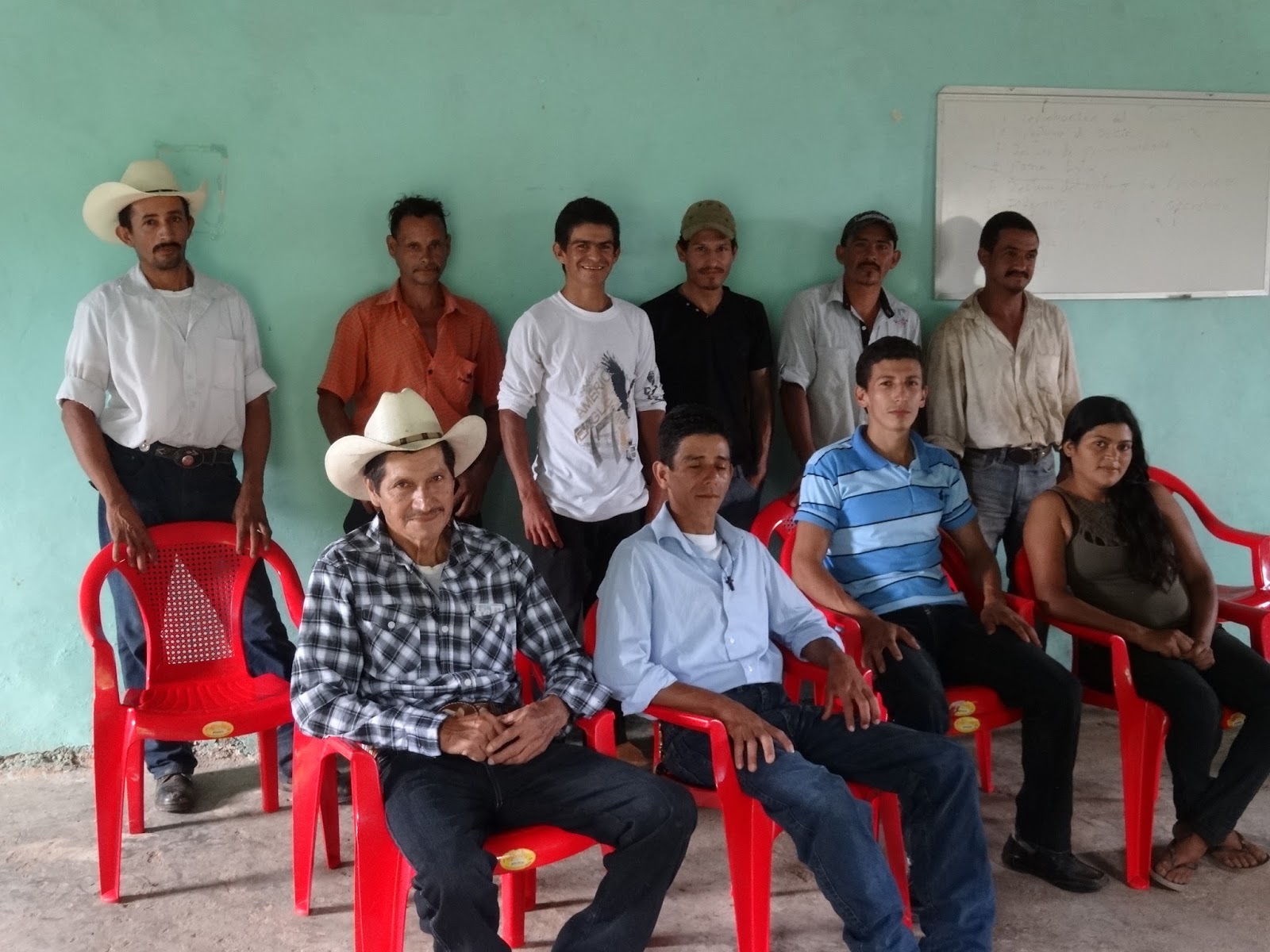
Friday I went to Gracias, Lempira, facilitating a workshop for
Caritas on Catholic Social Teaching for the Social Ministry of the Gracias parish.
The first thing we did was identify where they have been
successful in their ministry. A marvelous list of their accomplishments
followed. We put the papers on the front of the altar. I identified these accomplishments as signs
of the presence of the risen Christ in their communities.
Then they worked in groups to identify their dreams. The
dreams were different but complimentary – a good place to live and human
rights, reforestation of the water sources and organic agricultural practices,
and harmony in communities and solidarity with people in need.
Then we identified difficulties.
In the afternoon, a Caritas worker led them in an exercise
to identify what the Reign of God would look like in their communities. The
drawings showed their hopes for a full life for themselves and their families –
with a school, a health clinic, a community center, and decent roads. What each
drawing contained was a large church – faith is central to their understanding of
a full life.
Afterwards Simon asked them to identify what they needed to
attain such a community.
Tomorrow we’ll deal with two concerns they mentioned – the
need for a solid spirituality and issues about the environment.
In this type of working with the poor we in Latin America
owe a lot to Paolo Freire who died on May 2, 1997, who promoted a liberating
styling of education, beginning with his classic work, The Pedagogy of the Oppressed. He once wrote:
Authentic help means that all who are involved help each
other mutually, growing together in the common effort to understand the reality
which they seek to transform. Only through such praxis — in which those who
help and those who are being helped help each other simultaneously — can the
act of helping become free from the distortion in which the helped dominates
the helped. For this reason there can be no real help between dominating and
dominated classes, nor between “imperial” and so-called “dependent” societies.
It is so easy to be a “do-gooder” if one does this from a
position of power. But can we do good, working at the side of people in need,
listening to them, letting them lead us in a common pursuit of a decent life
for all God’s children on this earth?




 Posts
Posts

