Showing posts with label poverty. Show all posts

Saturday, October 22, 2022

A long-overdue update on the Dulce Nombre parish

It´s been a long time since I wrote about my daily life. I have been slowing down a bit - partly I'm getting older (75), partly torrential rains and a hurricane, partly a bit of laziness.

The past few months we have experienced a lot of rain, much more than usual. The ground is saturated and the rains have been heavy. In September we had very few days without rain – and not light rains but strong, extended downpours, often with strong winds.
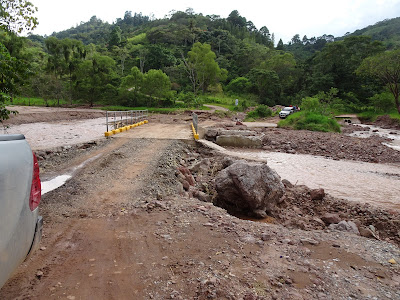
Houses have been damaged, roads have been washed away, parts of bridges have fallen. As a result, communities have been isolated, busses have stopped running for a few days. Life is precarious. 

Here´s the experience in one part of the parish, near El Limón. 

On July 24, part of the ramp up to the bridge.
It was repaired, but even more of the ramp was washed away about August 17.
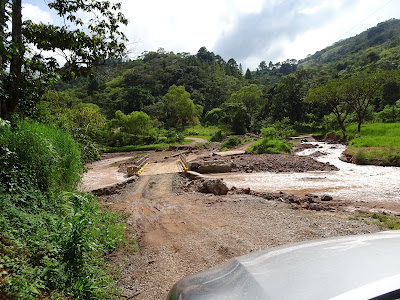
But the rains were so intense that the river washed away half of the road on the way to Vega Redonda. Another bridge suffered intense damage, wiping out a large concrete block of the bridge.
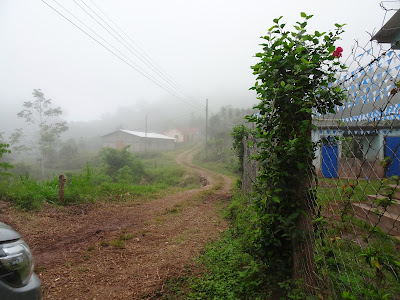
The roads in the parish have been a challenge. 

There are a few places that are inaccessible and others where you must find a different route. A few times I have had to negotiate really muddy roads, Thanks be to God and a generous gift, I have a good four wheel drive pickup.
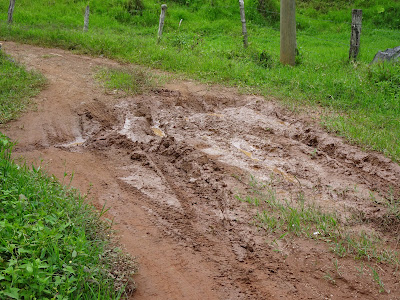
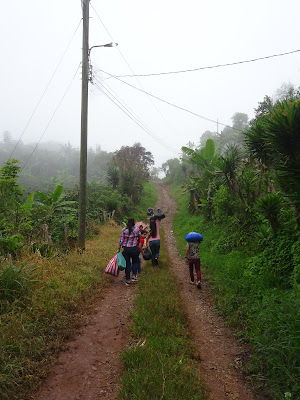
Last Sunday began our week of missions. Twenty-five parishioners went out to various communities to visit people in their homes. 

I was asked to take two to a distant village, San Marcos Pavas. Normally you can go there directly, but there was a landslide that wiped out a road and prevented access. So I had to take an alternative route that was much longer. 

But when I go to the place where a bridge crosses the river and usually provides access to both Las Pavas and Bañaderos, I found the area devastated. The road to Bañaderos was cut off and I had to negotiate over narrow paths to get to Las Pavas. 

Here are a few photos.
Here's a photo of the two missionaries with a woman from Las Pavas who was arranging their visit.


We, as a parish, have been trying to help and accompany the persons. 

While I was away for a short visit to our sister parish in Ames, the pastor visited a number of communities, including one where people had to abandon their homes and others were in danger.

We have a parish solidarity fund that has been used to help subsidize people medical exams and prescriptions.

We have also used it to help people rebuild their homes or make repairs. I went out a few times.
There were a few donations of clothes. Thanks be to God, the clothing was good and appropriate for our people. (The last time clothing came, the quality was poor and much of the clothing was XL – with pants large enough for three Hondurans. 

Some communities also donated food stuffs, including one that has suffered from the storms. 

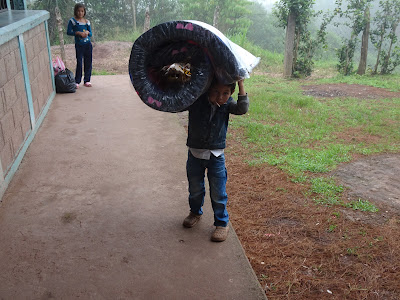
I also learned of several communities where there was a need for mattresses. So I bought some in Santa Rosa.

I went out to a few communities with food, mattresses, and clothing. In one community, even the kids helped in the distribution of supplies.
While in Mar Azul, I visited a ninety-four year old woman who was dying. I prayed with her and the family. Although she couldn’t speak and the family thought she was not conscious, she was responding with her eyes and even with a gentle touch when I took her hand. She had not received communion for a while, partly because she couldn’t easily swallow. I asked the family if she had been anointed. She hadn’t. I told them I’d mentioned this to the pastor. 

Padre German went out a day or two later, which was good since she died just af ew days ago. 

This week we had a group come out to weed the parish coffee field. Twenty-five came, including about 16 young people. I went and picked them up some of them in one community.
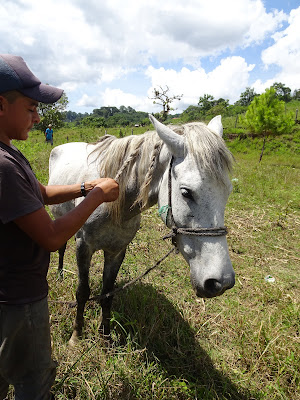
There was a horse grazing near the coffee field. Two guys decided to give it stylish braids!
I didn’t take them back to their communities since I had planned to visit a priest friend of mine who is the priest for Amigos de Jesús which serves about 130 children from difficult living situations.

The trip was filled with surprises. The international highway had suffered from the rains.
There was even a new road sign – “Geological fault.”
In addition, the road into Amigos had been cut off for a short time; part of the road being washed away by a river. A new road was carved out a little above the washout.
I was at Amigos de Jesús less than 48 hours, but it was a time to catch up with Padre Pato, serve as deacon at Mass twice (preaching once), relax, pray, and read. It was good for me. I want to return sometime next year.
I left Thursday morning, since I had agreed to a Celebration of the Word with Communion for the end of a novenario in San Antonio El Alto for Don Efraín.

 The novenario is a beautiful tradition here after a death. People meet, usually in the home of the deceased, for nine days. People come and pray and be with the mourning family. What a great way to say goodbye to a loved one and to mourn in community.

Often the family asks for a Mass on the ninth day. The pastor was not available and so they asked me. I was most happy to go since I had brought Communion to Don Efraín and his wife several times. I drove part of the way and parked the car up from the house and walked the rest.
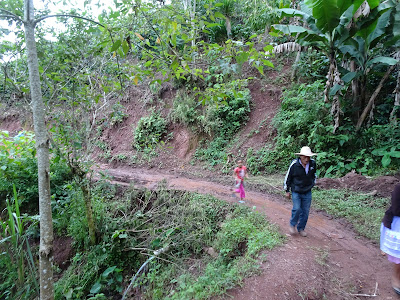
A good crowd was there from many villages, since family members and friends often come from afar.
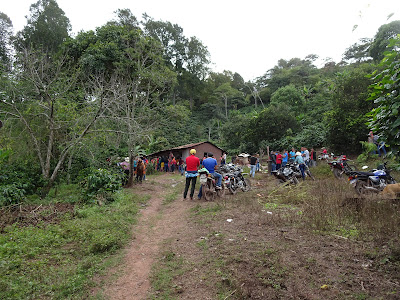
For me, it is privilege to be able to be present and bring the consolation of the Church.

Friday, I had a training for new catechists. Because of the weather we didn’t have as many as I had hoped. But I did an extended catequesis on the Bible. 

Today, Saturday, I'm working at home: cleaning the house, rearranging drawers, washing some clothing (and hope it dries in three days), writing this blog, preparing for Sunday's homily.

Tomorrow, we will welcome the missionaries back with a 10:00 am in the main church in Dulce Nombre.

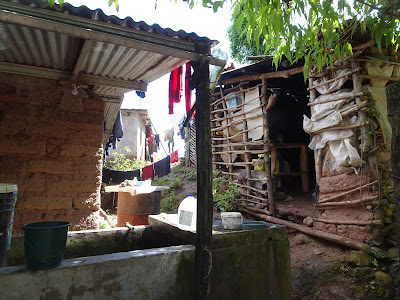
One last thought. About a month or two ago, after visiting a family in their home, I thought about my ministry and my vocation. I realized that I need to make a regular examination of my life, asking "When was the last time I was in the home of a poor family?" 

 Here's a picture of the home of a family we helped with clothes and food.
Sunday, May 26, 2019

Fractured limbs and fractured lives - malnutrition and poverty


My ministry isn't often filled with surprises. There are training sessions with catechists, meetings with the parish social ministry, talks at training sessions for missionary and delegates of the Word, assisting at Masses and preaching, visits to remote villages on Sundays for Celebrations of the Word with Communion, visits with youth in various towns, and visits to the sick. 


My life is also not filled with too many surprises - except for car repairs and now some dental work.

But once in a while there is a situation that touches and, sometimes, troubles me. Often they reveal the fractured lives of the people. 

A few weeks ago, Padre German noted a serious health situation in a family in a remote village in the parish. Two of the children had recently had a fracture. Two others had fractures in the past. In addition, the family had little to eat. He asked me to visit.

I knew the couple because I had done the final interview with them before their church marriage. I had also arranged some financial aid for the medical costs of the earlier fractures.

I went after a meeting in a nearby village. As I approached, in the midst of barking dogs, I was greeted by the mother of the family. I also saw the fifteen year old boy who had a fracture in his leg, due to an injury during a soccer game. The other boys, ages twelve, nine, and four were also there, as well as a five-month old girl. I found out that two of the boys had had two fractures at different times. 

The father, in search of work, was trying to enter the US.

We talked and I asked her about their diet. In particular, I asked if the children were drinking milk or eating cheese. No – it was too expensive for them.

I contacted a friend from a medical group that visits the area and explained the problem. She asked me to have a doctor friend go and evaluate the situation, so that they could bring what is  needed when they arrive in early June.

We went last Friday. The young doctor briefly examined the boys and measured their height and weight. As we had expected, malnutrition is a major contributing factor. To make things more complicated, the father is stuck on the Mexican-US border and has no way to cross – no money to pay anyone and, as I have heard from other sources, people are waiting extremely long times to even try to get a legal hearing.

I wonder how many other children in our parish are suffering serious malnutrition – which is exacerbated by the extreme poverty, in the face of higher food and utility prices, few opportunities for work that pay decently, little or no medicine in the public health centers, and more.

I find myself sad, perplexed, and wondering what can be done.

I talked with someone from the community yesterday and asked if there was someone who made cheese in their village. There is - but how could this family buy even some several times a month?

We will arrange for the whole family to get to one of the sites where the medical brigade will be. But in the long term? How can we accompany the people in their struggle to lead decent lives?

The problem is in large part due to the system that enriches some and leaves many impoverished, a system that is beset by massive corruption, militarism, and more. Systemic change is needed, as well as some cultural, social, and personal habits that impede real development.

I pray we can begin - and find ways so that people can live with dignity and initiative. God help us - and help us to come together to do this.

Saturday, September 01, 2018

What's wrong with helping the poor?


“Let no attempt with small gifts of charity
to exempt himself from the great duties imposed by justice.” 

Pope Pius XI


The poor, or rather the impoverished, are around us. How to respond? What I saw yesterday leads me to ask, in the context of Honduras, “What in the world can be wrong about helping the poor?”

Here are my simplistic first thoughts:
  • When they are manipulated by aid to vote for a particular party or candidate.

  • When they are aided only if they are members of one’s in group or political party.
     
  • When they are not treated as people with specific needs and capabilities, but are treated as numbers to be helped.
     
  • When the aid is given only to those of one religion or as a way to attract converts.
     
  • When government aid is not considered as a governmental response to poverty or other needs but is presented in such a way that it seems like a gift from the government or a political party.
     
  • When the aid is made to appear as a gift from a political leader.
     
  • When the aid is given without looking at ways that the person can develop his or her own personal resources and qualities.
     
  • When aid doesn’t respond to real needs, but is meant to show the largesse of a government or political party.

  • When basic human needs aren't met and injustice is not remedied.

This morning I saw scores of people packed in the back of pick-up trucks. I had no idea where they were going. I gave a ride to a young man on my way to the afternoon confirmations. I asked him why I was seeing so many people in groups walking with plastic bags. He told me that they were receiving a government “Bolsa Solidaria” - a solidarity bag.

We stopped and asked a woman if I could take a few pictures of her bag.


What did I see manteca (lard), spaghetti, maseca (commercially prepared corn flour to make tortillas), oats, sugar, white rice, and cheap coffee. This is for an area that produces corn and where there are a lot of people with coffee, even just a small plot. This doesn’t make sense to me.


I asked the young man about how much the bag was worth. He calculated about 115 lempiras. I would add about 25 lempiras more. That’s 140 lempiras – that’s a little less than six dollars. But, unless they walked – and there were a lot of people walking, they would probably have spent money on the ride in the pick-up or paid for a bus ride – between 15 and twenty lempiras each way. You do the math.

There was, however, a picture on the bag that makes sense: a photo of the president of Honduras. This seems to say that the “solidarity bag” is his personal gift to the people.


But the cost of living is going up, the country is being militarized, corruption and impunity flourish, and public hospitals and house centers often lack supplies. It the “bolsa solidaria” a way to cover injustice with the veneer of “charity”?

In my mind, this is not solidarity. This looks like manipulation of aid to seek political support. I don’t think this really helps the poor.

Real charity and real justice are what the impoverished people of Honduras need. Honduras is a rich country – but with the second highest poverty rate in the hemisphere. The poor suffer hile injustice flourishes.