It is extremely important that we remember the witnesses to the love and justice of God, not just the grand saints that are known and recognized by the church, such as Monseñor Oscar Romero.We need to remember the saints at our side, at our doorstep.
I have been investigating the story of the church in Suchitoto, El Salvador, since I spent six months there in 1992. I encountered many people of faith and many stories of those who had suffered and died because of the massive repression and then the bloody civil war - both of which were supported by the US government.
One of the stories that has fascinated me has been the story of a 28 year old seminarian and twelve young people killed in Los Leones, in the canton of Platanares - a place not far from the repopulated settlement of El Barillo.
About nineteen years ago I was able to spend time in a celebration in the ruins of the unfinished church where they had killed. Today, on the fortieth anniversary of the massacre, I want to share what I have written and which I hope can be published in a book on Suchitoto some day.I had hoped to get to the site of the martyrdom today for a celebration, but travel there is not possible, due to COVID-19. Instead, I offer this account,
The Massacre of Los Leones: José Othmaro Cáceres and 13 Young People, 25 July 1980
José Othmaro Cáceres was born on September 19, 1951, one of fourteen children. He was raised in Canton Platanares in the municipality of Suchitoto. A pleasant and sincere young man, he entered the seminary of the diocese of San Vicente as a teenager. In 1980 he was finishing his studies in a seminary in Guadalajara, Mexico.
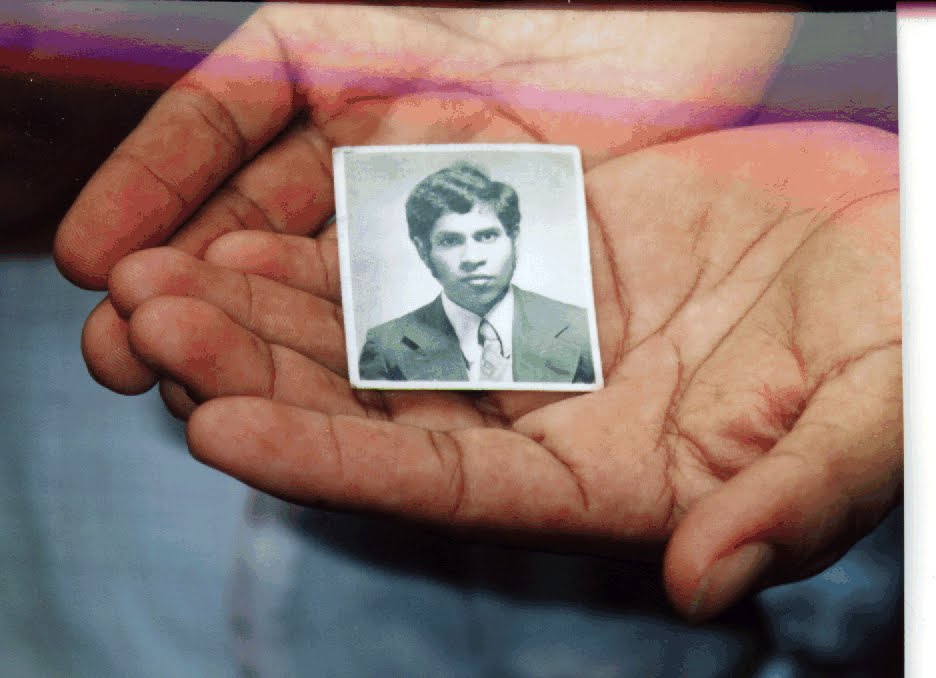 |
| Photo of Othmaro Cáceres, shared at the memorial Mass |
A note in the archdiocesan newspaper, Orientacion, remarked that he was noted for “a great sense of friendship, joy, tenacity, openness to everyone, simplicity, piety, spirit of service, a deep love of his people, especially the poorest.” He was also a great soccer player. Othmaro’s brother Ariel remembers him as a very friendly and helpful older brother. When he came home from the seminary on vacation he would get up early to milk the cows and then would go out and help in the fields with a cuma, a type of machete. On his visits home he would also meet with the young people in the area who looked up to him and loved to follow him around. He cooperated with Padre Higinio Alas in the parish of Santa Lucía, Suchitoto.
 |
| Othmaro Cáceres |
On July 16, 1980, Othmaro arrived in El Salvador from the seminary in Mexico. He was going to be ordained deacon and then a few weeks later ordained to the priesthood for the diocese of San Vicente. After a visit home he planned to return to San Vicente, where he would be ordained. And so, on July 24 he went to visit his family in the canton of Platanares outside Suchitoto, even though he had been advised against this.
On July 25, 1980, thirteen young men, with José Othmaro Cáceres were killed in Caserío Los Leones, Platanares, by a death squad from Fabián Ventura’s private army. This was a joint military operation with ORDEN and the armed forces that began about 11:00 am.
Some of the young men may have had connections with the guerrilla forces. But this was a time before there were many organized guerrilla groups in the area. Some were digging shelters for the people as well as preparing supplies if the people had to leave the area suddenly. Many of the youth were actually involved in the work of building the small chapel. Three walls of the chapel are still standing but it still lacks a roof.
Othmaro was meeting with the young people in the unfinished chapel. According to one report, they were meeting to plan his first Mass in the little chapel. The young people had taken a break in their meeting and were in the church, sharing candy, but Othmaro was outside.
 |
| The unfinished church of Los Leones, site of the massacre |
Two of the young men killed, José Belarmino Leon and Santos Adrián Leon had been working on the church. An account from their mother, Santana Josefina Leon de Reyes, includes the following details:
After they had killed the youth, they were seeking a girl names Esther. While seeking them they ran into Othmaro. “You’re the one we’re looking for,” they said. Othmaro lifted his hands and said, “Lord, pardon me.” They took him behind the house and killed him under a mango.
They machine-gunned him perhaps only because he was studying for the priesthood.
Those who were meeting in the church all were killed - some with candy in their mouths, others with candy in their hands.
The death squad cried out afterwards, “We’ve won.”
An edited version of another account from the testimony of Señora. María Angel Alas, widow de González, October 2, 1983, follows:
On July 24, 1980, the seminarian José Othmaro Cáceres came to Canton Platanares. He had just arrived from Mexico and was about to be ordained. He was originally from Platanares.... He stayed in the house of Don Manuel Cáceres and his other brothers. That very night he invited my sister Fidelina Alas whether she would serve as his mother for his priestly consecration.
The next day at 8:00 am he went to the chapel we were constructing for the canton. There he was waiting for his friends from the canton because they wanted to show him how the construction was going. I was present for the meeting and he was inviting us to attend his ordination when four trucks cam by way of the road with National guard, solders and by the field the civil Defense came so that the people wouldn’t flee out the back.
At that time Fabián Ventura, the head of the Civil Defense, with members of the Civil Defense, entered with National Guard and soldiers. When they first entered, the civil defense members said: “Thus we would like to meet them.”
Then the youth group which was with Othmaro said that they were just a group of friends meeting together. Then seminarian Othmaro joining his hands and lifting his face [alzando su vista clara], told them that they should let him speak with them. It was at this time that the Civil Defense led by Fabián Ventura began to shoot; the National Guard and the soldiers followed. The dead were: the seminarian Othmaro Cáceres, Belarmino Reyes (24), his brother Adrián Reyes (21), Angelito Rivas (14), Alfonso León (26) and the others young people - a total of fourteen; one young man who managed to flee and get into a straw hut which they set fire to and he died burned.
I was able flee with Ester Deras, with Martha Alas, Julia Solórzano and a number of others and we ran away from that hamlet. When they left we returned and found the destruction which was horrible: the body of seminarian Othmaro was asked for by the priest of Suchitoto and was buried there. We buried ours in the canton. After that day the men no longer slept in their homes and began to sleep in the fields.
There was a woman in the house where Othmaro had been before he was killed. A young woman named Nicolasa Leon, she was involved with Caritas which was distributing food and other necessities to the people affected by the violence. Although her name was registered as Nicolasa, she had been called Guadalupe from infancy when she had been healed after prayers to our Lady of Guadalupe. When the death squad entered the house, they asked for Guadalupe Leon. She told them to look at her identity card and see that she was Nicolasa. They left her in peace. She and others look upon this as a second miracle of la Guadalupana.
After the killing of Othmara and the twelve young people, Ventura went to a house nearby and hacked a mark in the door with his machete. “Here I leave my mark,” he said. “Next Friday I will continue from here on up [the road to Suchitoto].”
There is a legend that the next Friday Fabián Ventura went to continue his killing at the turn off the Suchitoto-Aguilares road toward El Roble. At the entrance to the road he encountered a woman in white with her hand raised to prevent him from entering. He could not enter then. Other times when he tried to enter, he encountered the same woman. Who was it? Some say it was the ciguanaba; others say the Virgin Mary. (
After their death, the young people were buried near the unfinished chapel. Fr. Jorge Benavídes came out to take the body of Othmaro Cáceres into town where a wake was held in the Palacios family home. (Father Rafael Palacios was a priest killed in June 1979. The Palacios family lived in Suchitoto and Fr. Raphael is buried in the church.) The funeral Mass for Othmaro Cáceres was celebrated in the church of Santa Lucía in Suchitoto on July 26 with Monseñor Freddy Delgado, vicar general of the diocese of San Vicente, presiding.
Some have wondered whether Cáceres was targeted or if his death was merely circumstantial. However, he had been involved earlier in the mission teams that assisted Padre Higinio Alas in the countryside; when he came home for vacations from the seminary he would help in the missions and spend time talking with Higinio about pastoral work.
His death and the death of the others were the work of Fabián Ventura, death squad leader who had his own private army. Othmaro’s death is considered to be the straw that brought the Resistencia Nacional to plan the murder of Ventura. They killed him later that year with an attack on his home in the canton of Asunción, Suchitoto, at the same time they attacked his house for his mistress in what is now Haciendita Uno.
-----------------------------------------
Photos of the procession and Mass remembering the massacre, about 2001


 Posts
Posts

