Showing posts with label Maestro en Casa. Show all posts

Saturday, February 18, 2023

Thanks to Saint Thomas Church for help with education

The school year in Honduras starts in February with classes lasting until November.

For more than ten years St. Thomas has provided assistance to students in the parish of Dulce Nombre de María through funding partial scholarships for students enrolled in the programs of IHER – Honduran Institute of Education by Radio, commonly known as Maestro en Casa – Teachers at Home.

There are various levels of public education. Most rural villages have kindergartens and primary schools (to the sixth grade.) A few larger towns have Básico, seventh to ninth grade (similar to middle school). The major municipal centers and some other large towns often have the Honduran equivalent of high school, colegios. These have different programs based on different career track. Most all high school have a few career track options. 

The IHER program offers other opportunities for middle school and high school The student have work books and are expected to listen to programs on the radio and then fill out the workbooks. Saturdays and Sundays teachers give are classes in the four centers.

There are four centers of IHER within the parish: Dulce Nombre de María, El Prado de La Curz, and Bañaderos offer both high school and junior high. El Zapote Santa Rosa only offers junior high classes. 

This past year the IHER program in El Prado de la Cruz, worked to provide a career track in computation, but they needed to provide a computer lab. The faculty and students did several fundraising projects but also asked for assistance from St. Thomas Aquinas, The Honduras Committee designated $1100 for purchase of computers. Here are some photos the director of the center sent me.
This year there were more applicants for scholarships than last year. 211 – 125 high school; 86 middle school. As a result, your gift of 234,840 lempiras – about $9483.75 – was a great help for many poor families.

The scholarships cover part of the cost of the books. The students and their families will be paying for the other costs, including transportation. 

 Thank you for your generosity. 

An investment in the youth here is so important.

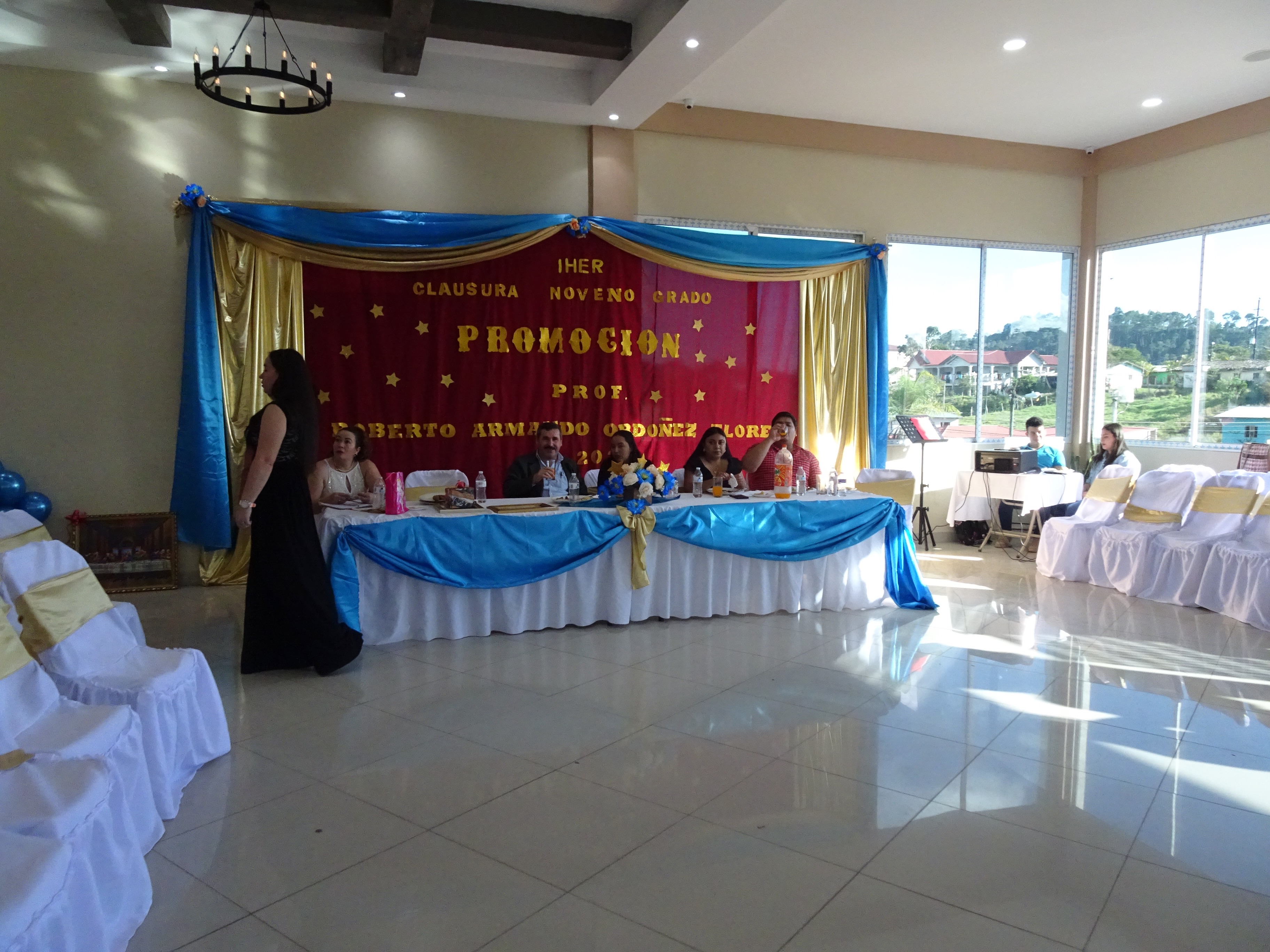
Here are a few photos of the graduation from 9th grade (junior high) in Dulce Nombre. 


Lastly, here's a letter of thanks from IHER El Prado:


Wednesday, November 12, 2014

Back home in Honduras, November

After 12 days in Iowa, I’m back home and already in the midst of many projects.

Yesterday, Tuesday, November 11, I was with 28 catechists in the remotest zone of the parish, facilitating the last workshop of the year.

It’s almost always fun to be with the catechists who pass on the faith to young people in their villages. It’s been encouraging to see them grow – especially as we are learning together new ways to work with young people.

Here in Honduras most of the education is very content oriented. The professor gives out the information; the students write in their notebooks, because there are few textbooks; the students regurgitate the information memorized for the exams.

No wonder the twelve year old at the workshop with his mother had dropped out after the fourth grade. I spent about ten minutes talking with him, asking him about his work in the fields, and even attempting to give him a biology lesson based on his experience in the fields. He seemed to be a good observer of his work. I asked him if his teacher had ever tried to explain the biology of plants as we did together. The sad answer was “No.” Now there may be some teachers who do this, but my experience is that the norm is pure rote memorization – what Paolo Freire calls “the banking method of education.”

What we are trying to do in the parish is to use popular methodology to help people learn by doing, to learn by connecting with their daily life, to learn not only material but critical thinking. It’s a challenge but I saw some results.

Part of the workshop was beginning to help the catechists develop their own lessons and not depend on material from outside. After eliciting from them some of the elements needed, I divided them into four groups, each with a different theme.

One group had as its theme “Abraham.” What impressed me was how they started by asking about fathers.

We’ll continue working on this next year. Meanwhile I have another catechist workshop this week and two more next week.

I am also in the final stages of getting the house in Plan Grande finished. Lots of details has meant three visits there already this week.

Monday the kids in the school were playing in the road.

One group was playing hopscotch, another marbles. What a delight to see them playing.


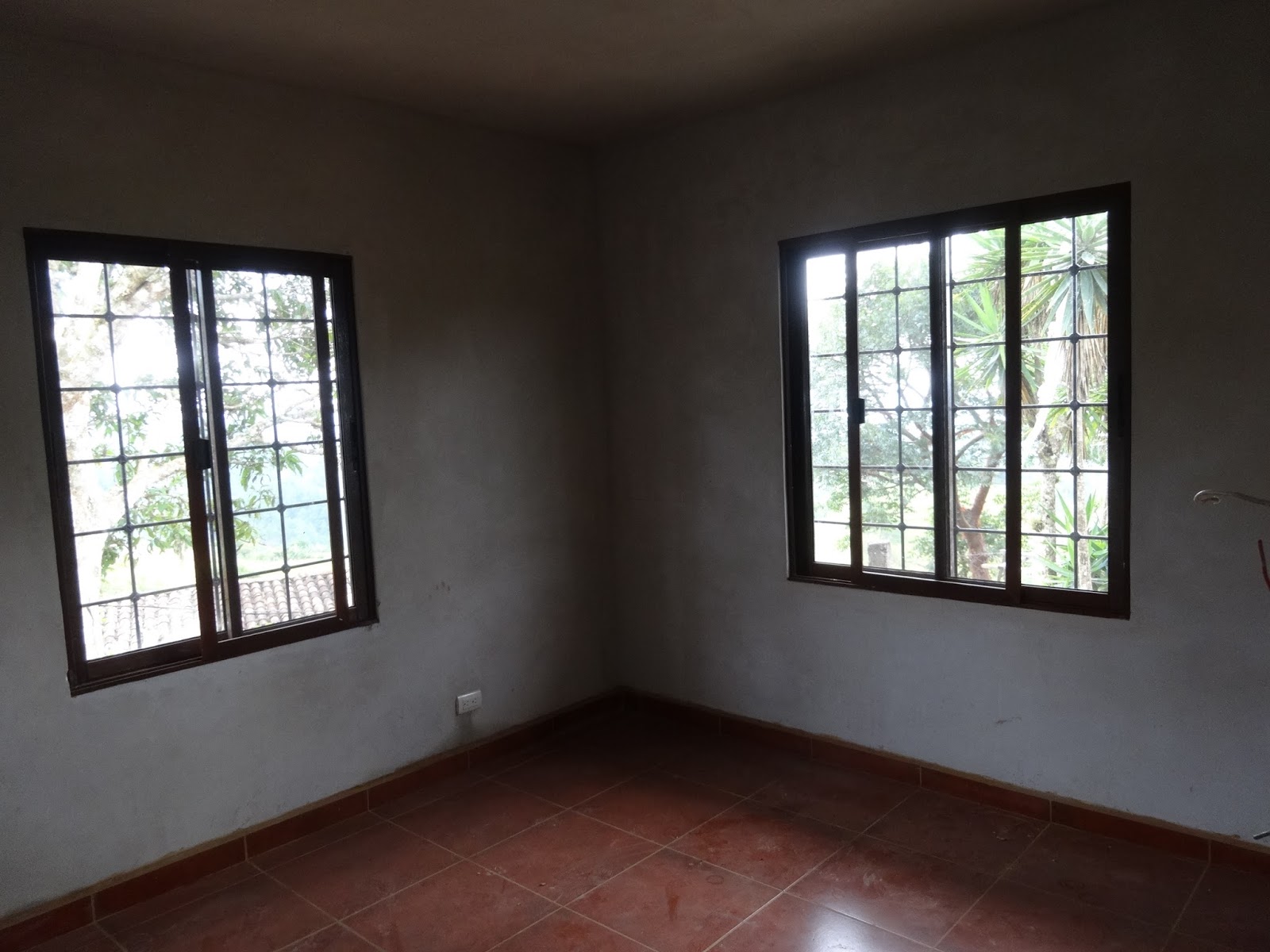
The windows are in the house; the doors will be hung this Thursday and Friday; painting will begin next week. I have hopes that I will be able to move in the beginning of December.

The upstairs
The oratory
Then I’ll be able to be closer to the people and visit communities more frequently. This will be important next year as our parish, Dulce Nombre de María, will be planning a series of training sessions for catechists, base community leaders, delegates of the Word, communion ministers, and youth group leaders.

I am also in the midst of two projects that our sister parish in Ames, Iowa – St. Thomas Aquinas – is working on.

The first is accompanying a small coffee cooperative in El Zapote de Santa Rosa  which hopes to be able to export high-quality coffee to the US.
  
The coffee harvest is just starting and there are hopes that they might be able to sell a small shipment (1500 pounds) this year to roasters in Kansas City and Ames.


The other project is the third year of a scholarship program for poor participants in the Maestro en Casa alternative education project. Students – mostly in the equivalents of middle school and high school – listen to radio programs, fill out a workbook, and meet for about 4 or 5 hours on the weekend with a teacher. When schools are not close, this is often the only way the poor can study beyond grade school.

I have to revise the scholarship application, get them printed and distributed to the six centers before the end of the month.

And then there's parish council this Saturday, a parish celebration on the feast of Christ the King, the entry of about 50 people in the catechumenate on November 30, and parish planning on December 5 and 6. Though I'm not the person responsible for all of these, I will be present and working with Padre German as well as the parish council.

I’ve got work to do.


I am grateful for that.

Sunday, March 30, 2014

A range of emotions

I‘ve had a busy weekend in the Dulce Nombre parish.

Except for a Wednesday visit in Plan Grande with the person who’ll be building my house, I had not been out in the parish since before my retreat. I’ve had some responsibilities with Caritas in Santa Rosa that kept me here and I also spent a day pricing stuff for the house.

I called Padre German Thursday night and asked him what was up and how I could be of service.

He asked me to lead a discussion on the Eucharist and Lent with the Communion ministers. He was going out to one community where, as he said, there were always lots of confessions. (He’s trying to get to every village during Lent for confessions and Mass.)

It was good to share with the communion ministers as well as to talk with them about Holy Thursday and Good Friday celebrations in the communities. We are going through a Lent here, a hard time, and so I spent some time with them naming the signs of death and reflecting on Christ’s presence with us in the death of death. The communion ministers mentioned the murders, alcoholism, political partisanship, divisions, poverty, hunger, and other examples of death.

I didn’t realize at the time how much this would be reflected in my experience this weekend.

In the afternoon I went to accompany Padre German at a village. In the last five months the village has experienced four killings. The first seems to have been related to a series of killings over the course of many years. The old man who had been killed had asked for an end to the violence and may have been killed because the person being sought wasn’t there. The second was a robbery – probably for pistols that a man from the community had begun buying. The last two happened at a wedding in a village over the mountain and may have been related to lots of alcohol at a secular wedding celebration. Such tragedy.

Padre German had asked if I really wanted to go there. I said “Yes,” since I’ve been there several times.

He was rather strong in his homily – castigating the community for the violence. He was particularly strong in condemning the presence of guns and pistols. I think he might have been a little too strong since the perpetrators were from outside the community. Several in the community told him so during the homily. But the violence is real.

I left with a heavy heart.

Interestingly, he waited for me to follow him back to Dulce Nombre. He may be more worried about the violence than I was.

This may be the moment to begin working on training people on transformation of conflicts and alternatives to violence. I need to talk with him about this.

Saturday I decided to go out to visit several of the Maestro en Casa alternative education sites.

I went to Quebraditas where they have a high school program. The director had mentioned to me their need of a computer for the program. Providentially, a friend asked me if there was a need that her confirmation class could raise funds for. A computer is something needed and something that is not too expensive – for students in the US.

I went to get some pictures that she could share with her class. I also talked with a number of the students. Many of them work during the week and this is their only opportunity to get middle school or high school education – neither of which is less than an hour away by bus. Even considering that, some of the students walk long distances – up to two hours – to get to the classes on Saturday and Sunday, unless they can find or hitch a ride.

It was encouraging to talk with them and to see their enthusiasm. One high school student told me how he had asked the program director to see if they could get computer classes next year.


On the way back to Santa Rosa, I stopped at El Zapote Santa Rosa to see about their program. It’s only three classes of what we’d call middle school, but there are probably more than 30 students, many of them with partial scholarships provided by St. Thomas Aquinas in Ames.

After talking with them a bit, I went to the nearby church where Padre German was hearing confessions. I stopped to speak with three young guys who were hanging out and who later went to Mass. Though I had urged them to go to confession, I don’t think any of them went.

I also talked with two other pastoral workers. José, who is a catechist, told me that he has about 53 drawings from the First Communion class that he wants to send to St. Thomas Aquinas. I was moved by his initiative in doing this. We’ve arranged for him to get the pictures to me and then I’ll send them on.

Padre finished confessions and so I went to Mass.

Sunday I agreed to accompany Padre for an afternoon Mass in San Agustín. There are 17 catechumens there and I’d hoped that they would have the rite of scrutinies at Mass, but they had already prayed them at the morning Celebration of the Word.  I did, however, get a chance to see the meeting of twenty young people preparing for confirmation.

On the way back, there were a lot of people in the street as we passed through Caleras. Then, all of a sudden, all vehicles were stopped.  Padre asked and we found out that someone had been murdered about half an hour ago and his body was there in the middle of the dirt road.

I approached with Padre and he spoke with the police who were there. Interesting the policeman didn’t ask him who he was and was, in fact, a bit rude. However, we found out that the fiscal, the public prosecutor, had been called and they were awaiting his or her arrival before they could move the body. But who knows how long it would be before the fiscal arrived – it’s the weekend and the fiscales are overworked.

The body of the man was in the middle of the dirt road, a puddle of blood by his neck.

The body was about 25 feet from where we were. This was the first time I had been close to the body of a person who had been murdered.

I mostly felt sad. Another life wasted. Another family devastated. More death.

Padre knew a way to get back to Dulce Nombre and as he drove we talked. He was concerned that I would be upset and fearful. Surprisingly, I was more sad than upset and I didn’t feel fearful.

He mentioned how he sometimes experiences fear – but then he drives back from villages at all hours of the night.

We talked more about the violence and the need to help restore respect for life. I also shared with him what I had read in The Locust Effect. Violence undercuts efforts at development. But it’s not merely random violence. The violence is related to the lack of a police that is fair, efficient, and professional. It is related to the overworked and under-equipped public prosecutors and a judicial system that just doesn’t work.

But, as Padre German noted, there are any number of police involved in the violence (as well as in crime). I now recall the recent beating by police of a priest in Tomalá, Lempira.

We got back to Dulce Nombre about 5:30 and I immediately  left for Santa Rosa – with a very heavy heart.

As I drove back I listened to some music. All of a sudden a song came up that helps me reflect on my role here in the face of violence. John McCutcheon’s The Streets of Sarajevo, where McCutcheon sings of the cellist who came out and played his cello in a place of death in Sarajevo.

Why am I here? To accompany the people, to be a witness of hope in the places of death and suffering, or as John McCutcheon sings:
“in defiance and to add a bit of grace,
to try to ease the awful hatred and the horror of this place.
to remember there is beauty no matter what they say…”


I don’t have answers – but I want to be presence, as my Lord is present to the suffering.

I have a great peace in this.

The other day, someone jokingly asked me if I had my body guard in the back seat. I rolled down the window so that he could see there was no one there.


And, I don’t know why, but I said that I had God as my bodyguard.

Sunday, November 10, 2013

Travelling in the Dulce Nombre parish

This past week I probably put more than 300 kilometers on my pickup as I traveled throughout the Dulce Nombre parish. the last two days I have been grateful for the pickup since it has been rainy and foggy and the dirt roads have been slick.

A foggy day in Agua Buena, Concepción
Saturday, November 2, I visited several of the sites of Maestro en Casa in order to give them the forms to apply for partial scholarships for next year that St. Thomas Aquinas Church in Ames will provide.

Maestro en Casa is an alternative for people unable to get basic education in the system. The students listen to radio programs, do tasks in their workbooks, and meet with teachers once a week.

In the Dulce Nombre parish there are 8 centers and this year 105 received scholarships. About two hundred will be available for next year. Most of the students are in the Honduras equivalent of middle school (since there are only five middle schools in the parish). A few are doing an accelerated primary school program and there are a few doing high school studies.

I didn’t get to see all the coordinators but all of them now have the forms.

November 2 is the Day of the Dead, the feast of All Souls in the Catholic calendar. Here there are not the grand traditions of Mexico with their altars for the dead, but people do visit the cemeteries to decorate graves.

A large ayote
As I mentioned in a previous post, I stopped in one village at the house of a woman whose husband had been killed earlier this year for refusing to back down from testifying about a murder. It was especially sad since she is planning on leaving the community.

As usual, she asked me if I had eaten lunch. I don’t need anything, I told her. But she insisted on giving me coffee and ayote con dulce, squash with sugar. I later realized that this is a special treat that many make for the Day of the Dead.

What a privilege to share it with a grieving widow – who has been a major force within the village faith community.

Tuesday and Thursday I went out to two different areas of the parish to lead workshops for catechists.

We went over the rite of acceptance into the catechumenate (part of the Christian initiation process for adults.) I found that many of the catechists were moved by the rite – especially by the signing of the catechumens with the cross on their foreheads, ears, eyes, mouth, chest, shoulders, and feet. The actual rite will be celebrated on December 1, but the catechists will prepare the candidates and their sponsors for the rite. It is marvelous how the rites of the church speak to people.

I also shared with them more material for the initiation of adults (14 and older) as well as new material to prepare children from 7 to 14 for baptism. I have been working on the new material so that it is simple, straightforward, and participative.

But I came across a new challenge. About five of the young people who are preparing for baptism are illiterate. I talked with the two catechists who raised this concern and I’ll be talking with Padre German about ways to work with those who cannot read or write.

Another reminder of the poverty of the parish!

On Friday I passed by the parish before going out to a meeting of one of the zones of the parish. Padre had alerted me the day before that the bishop had just confirmed that there would be confirmations on Sunday, November 10. So they had to work really fast on getting things ready. Padre would have to be hearing lots of confessions (since there will probably be close to 100 confirmations.)

He asked me to do an evaluation with three of the four zones of the parish in preparation for the parish assembly in December (for planning next year). And so Friday and Saturday I helped them do a simple evaluation (which we did in a little more than an hour in each site.) I gave the groups three questions which they first worked on in small groups and then shared: What are the successes in your pastoral work which you have had this year? What are the difficulties you’ve experienced? What can we do – or what do we need – to improve the pastoral work in your zone and in the parish?

It was good to hear that the new sacramental policy has been generally well-received – as the number of baptisms being celebrated attests. There was a real sense of gratitude for the effort that Padre German makes to visit and celebrate the Eucharist with each of the 47 villages once every two months. Another success was the re-organization of the parish.

Today there are confirmations.

This coming week I have two more workshops with catechists as well as the parish council meeting on Friday.

So life continues – and Life seems to abound, even in the midst of the poverty and the insecurity.

In two weeks Honduras will have its elections – of the president, the National Congress, and municipal authorities.


But the choices that I see people making in the parish offer me more hope than any politician.