Today, Friday, I spent all day at home – mostly doing wash. I
needed the day off.
I’ve been travelling a lot in the last few weeks – and, indeed,
this year. A few months ago I took a look at my travel this year; I averaged about
1000 kilometers each month. I do go to Santa Rosa about once a week which
accounts for about 50 kilometers a week. I occasionally have a diocesan meeting
or go to San Pedro Sula. But most of my travel is within the limits of the
parish of Dulce Nombre.
There has been a lot of international travel this year. In
January I went with my pastor, Padre German Navarro, on a pilgrimage to
Santiago Atitlán where Padre Aplas’ – Blessed Stanley Rother – was martyred. In
July I went to New Orleans for the Diaconate Congress, celebrating fifty years
of the diaconate in the US. In October I went with Padre German to the
canonization of Monseñor Oscar Romero and others in Rome and we spent a day and
a half in Assisi. I then went for a very short visit to Ames and the parish of
St. Thomas Aquinas. When I returned, I met our bishop and Padre German in
Guatemala for the beatification of Padre Tulio Marruzzo and the lay catechist Luis
Obdulio Arroyo. In November, I was in Bogotá, Colombia, for
a seminar sponsored
by CLAR (Latin American Confederation of Religious) on the care and protection
of minors and vulnerable adults. Just this past weekend I went to a meeting of
the Central American associates of the Dubuque Franciscan Sisters in
Quetzaltenango, Guatemala.
I’m tired of travelling.
I’m especially tired since two weeks ago I went to
Tegucigalpa to finish up the paper work for permanent residency. I went to
Siguatepeque and stayed there the night before. But I was planning to return
home. However, I had an accident in Gracias, Lempira, at about 6:30 pm that
night. A car braked in front of me and I couldn’t stop in time. Not much damage
to the other person’s car, but my car had to be towed and didn’t bet finished
until last Tuesday, two weeks after the accident.

When the accident happened I called the insurance company
while we waited for the police to come. I think I made more than twenty phone
calls between that night and the following two days. The insurance company
wanted me to go with the car which was to be towed to San Pedro Sula that night
at a cost of $240. I told them that I had to appear before the transit police
the next day and so they had the car towed to Santa Rosa. When I got to Santa
Rosa, the insurance company arranged for it to be repaired in Santa Rosa! What
a relief. But it was an introduction to the bureaucracy of insurance here in
Honduras.
I was fortunate that I had insurance. I ended up paying the
other person for his repairs (about $350) and my deductible came to about $230.
But it was a pain to be without a vehicle. I cut back on
commitments and relied on public transportation to get to two important
meetings the weekend of December 1 and 2 - a meeting with the communion ministers on Saturday and the Rite of Entry into the catechumenate on Sunday, where we welcomed forty-four into the catechumenate, mostly young people between 16 and 20.
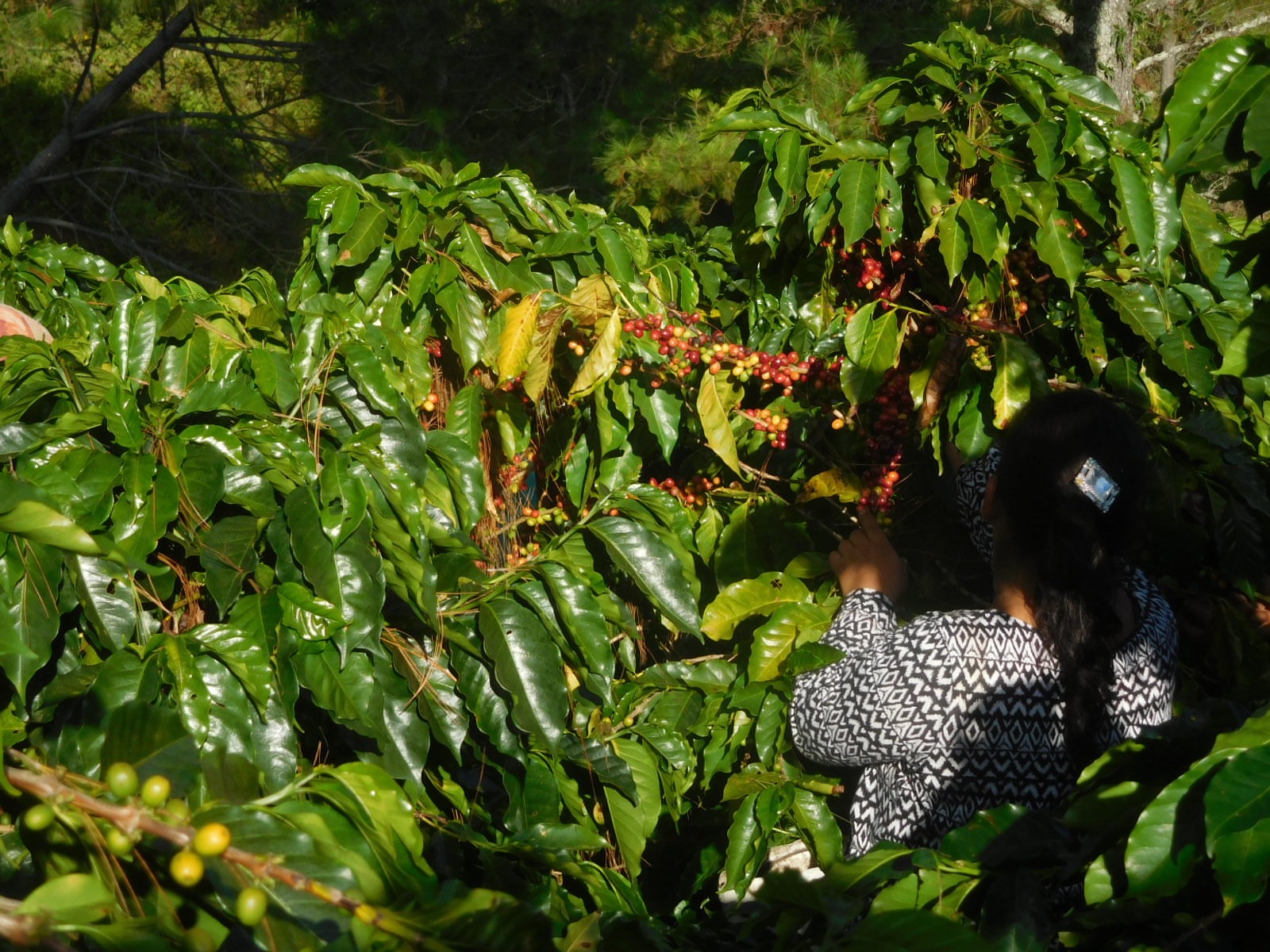
Fortunately, I was able to accompany the people working on the parish coffee field, which just happens to be in Plan Grande where I live. I couldn't give them rides but I was there picking coffee at their side.
I also had four and a half days away for the Dubuque
Franciscan Associates meeting. I went to Gracias where one group of the sisters
live in order to leave at 3 am on Friday, December 7. We ended up leaving at 4
am because the driver encountered fog getting to Gracias from Esperanza. We didn’t
arrive in Quetzaltenango until 9:30 that night, missing a dance presentation
from a group of Achí. We got in so late because we were in the worst traffic
jam I have ever experienced – almost three hours, mostly stopped in traffic in
Chimaltenango. The trip back was not as long; though we left at 2 am, we didn’t
arrive in Santa Rosa until about 4:30 pm. I got a bus and a lift from a friend
to get home.
But I still had to get back to Tegucigalpa to get my
identity card. So I left Wednesday, after Mass for the feast of Our Lady of
Guadalupe in the village of San Isidro La Cueva. I had planned to stay the
night in Siguatepeque. Things were going well until I began the final ascent
into Siguatepepque from Jesús de Otoro. FOG.
I have encountered fog here in Honduras any number of times,
but this was my worst experience. I found myself in the wrong lane at least
twice – once nearly going into the water run off ditch, once nearly going down
a dirt road. But I made it safely there.
I got through the procedures at the Migration Office with
little difficulty. At first, I thought it was all in vain, since the clerk told
me that my card wasn’t avaialable and I’d have to come back next week. I gently
pleaded my case and he did what he could. I was out of the office in 90 minutes
with my new ID.
I had thought of stopping the night in either Siguatepeque
or Gracias, but I made good time, I was awake, and it was still not late. This
was in spite of stopping at the Mennonite store in Siguatepeque for ice cream
and buying strawberries and cherry tomatoes at a stand outside of Esperanza
(where I almost always stop).
Tomorrow I head out for the clergy Christmas get-together.
But I’ll be staying within the limits of the parish for most of the coming week
(except for a trip to the mechanic in Santa Rosa for a check up on the car.)
These past weeks have taught me a lot. First of all, I need
to slow down and also be more careful in my driving. Secondly, I rely a lot on my
pickup and I need to make sure that I keep up the maintenance. Thirdly, having
a vehicle may be a luxury but it is very important in terms of my ministry, especially
in terms of trying to accompany the people in the rural communities. I really
missed the opportunity to visit them while my car was being repaired.
In all this, I give thanks to God and continue to invoke the
intercession of the archangel Raphael, patron of travellers, that I may continue
to serve the people here.




 Posts
Posts

