Friday, July 30, 2010

Diocesan Catholic Social Teaching Workshop

This past Tuesday to Thursday, July 27 to 29, we had the first of three diocesan level workshops in Catholic Social Teaching. Each deanery was supposed to end three lay persons – leaders of the three ministries in the deanery – and a priest. We didn’t have as good a participation as we had hoped. One deanery was absent and another only sent one person.


The deaneries will have workshops in their deaneries based on what they learned at the workshop.

I had a major role in trying to pull things together – preparing materials, making sure things were set up and ready to go, money matters, etc. I also had one short presentation – as well as the welcoming and the closing evaluation.

The workshop went well, though there were several glitches. One priest who was supposed to do three presentations canceled over the weekend and called a priest to ask him to do his talks. The priest who replaced him didn’t have any material and so had to wing it. Another priest asked another priest to do something at the last moment. Also, I wanted to give all the deaneries a guide to help them with their workshops, but no one gave me material and so I put together a guide on my own. It also ending up being a resource for the priests who gave the replacement presentations. This, of course, tested my patience and my attention to details.

But it went well, after all.

Padre Amílcar

Padre Amílcar had the first theme – What is Catholic Social Doctrine? One of his points was that whatever you use as a definition it needs to be related to the reality of the people – it’s not merely concepts that are generalized, not related to the reality of the situation.

This is very much what Pope Paul VI was referring to in a 1971 document (Octagesima Adveniens, ¶4) where he insisted on the importance of the response of the local church and not relying on universal pronouncements.
In the face of such widely varying situations it is difficult for us to utter a unified message and to put forward a solution which has universal validity. Such is not our ambition, nor is it our mission. It is up to the Christian communities to analyze with objectivity the situation which is proper to their own country, to shed on it the light of the Gospel's unalterable words and for action from the social teaching of the Church.
And so they divided up into four groups to pull together a concept of Catholic Social Teaching which speaks to the situation in 2010 in the diocese of Santa Rosa de Copán. Four concepts were shared and then the entire group pulled together a common concept to express what Catholic Social Teaching is for the diocese of Santa Rosa:
Catholic Social Doctrine [for the diocese of Santa Rosa de Copán] is the Gospel of Life which teaches us and illuminates for us the path toward a full liberation of the enslaved and oppressed, a liberation which arises from the church base communities living the triple ministry [prophetic, liturgical, and social].
For me, this was a significant moment – relating Catholic Social Thought to the reality of the diocese. It is the challenge for the rest of the workshops we’ll be doing.

Padre Candido

Padre Candido led a discussion on the reality of Honduras - basing much of it on the reflection translated in the previous post.

We also discussed the roots of Catholic Social Thought in Scripture, Tradition and the Magisterium of the Church.

In the material I had prepared there was a quote from the beloved Franciscan saint, San Antonio de Padua:
If you don't help the poor person but close your heart to him, I say that you are sinning mortally for you are not [living] in God's charity; if you had God's charity you would willing help the poor person.
Quite different from the normal way most people think of Saint Anthony. He is most often invoked for finding lost articles. A ditty I learned as a kid goes
Saint Anthony, Saint Anthony, please come around.
Something was lost and something was found.
Jesus was lost and Jesus was found;
Dear Saint Anthony, please come around.
Most people have a rather saccharine understanding of Saint Anthony and don't associate him with themes of Catholic Social Teaching and would probably be surprised at his teachings on poverty and riches. But then, he was a Franciscan.

And, of course, they'd be surprised at Church Fathers like Saint Ambrose who said:
Our Lord God wished the earth to be possessed by all in common, offering their products for the common good. But it's avarice which allocates the right to property.
I look forward to seeing how the workshops go in the deaneries and hope to get out to a few of them. I also plan to make sure that we plan the next diocesan workshop with sufficient time to do a better job.

________________________________

An aside


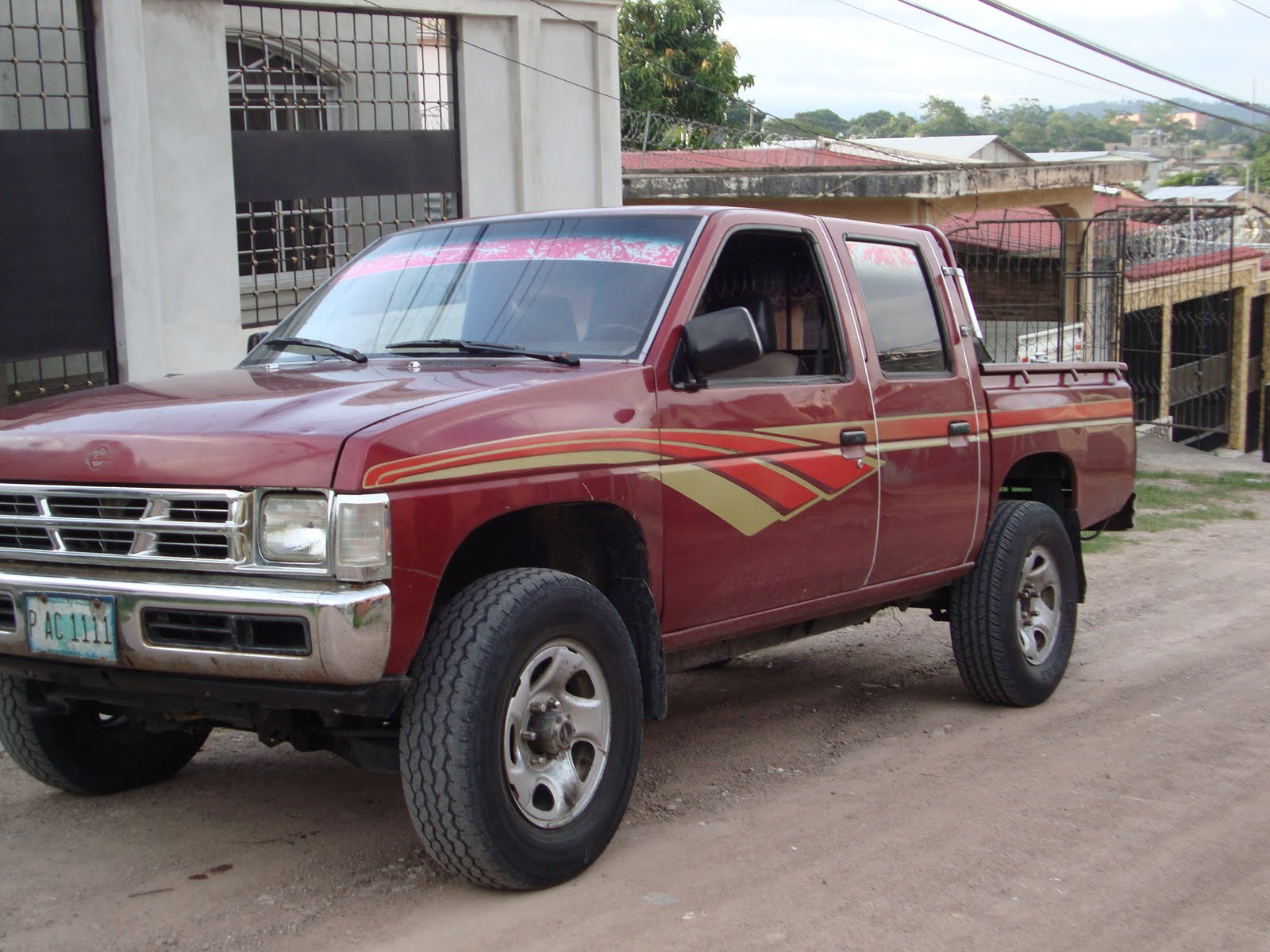
Here's the car I just bought - my first pick up, my first four wheel drive vehicle, and the first diesel. It's in the shop now - an oil leak - but soon it will be easier for me to get out to the remote villages. Hopefully St. Ambrose wouldn't be too disturbed with my purchase.

Painful truths

Below is my translation of a paper prepared by a friend which was shared with the participants of the first of three diocesan workshops on Catholic Social Teaching. I share it with his permission. The original can be found here on my Spanish language blog.

Honduras’ Original Sin
Collective Intuitions

When we read, think, and talk about the socio-political reality of Honduras in the present moment, we identify the coup d’état, the political and economic crises, rampant corruption, breakdown of the society, popular resistance, etc. We tend to hide the roots of our evils under statistics about children who die of hunger, the macro-economy and monetary investments in numbers, the percentage of persons who are illiterate, the numbers of those killed by bullets or dengue.

We paint the reality of Honduras with these and many more details when we do an analysis of the national problematic. But are these elements enough to understand the contradictory and painful reality of Honduras? Is the coup d’état the problem of present day Honduras? Is the rebellion and insubordination of the national resistance the problem for peaceful living together in Honduras? Are we truly in a political and economic crisis? What are the original sins of Honduras which condemn it without remedy to an adverse destiny?

The problem of Honduras is not the [dengue] mosquito, nor the coup d’état. Much less, poverty or the political crisis.

The original sin of Honduras is the exclusion of the great majorities.

Various structural evils stalk us, as a country. But the origin of the evils of Honduras is named the social, economic, cultural and political exclusion of the vast majorities. A very few persons, who proclaim themselves full citizens, try to impose their vision of the country and their plan for the nation behind the back (without the participation) of the vast majorities, considering them as second class citizens, under the care of the first class citizens. Therefore, Honduras cannot consolidate itself as a country, much less as a nation state.

There has existed, there exists and there will exist in Honduras a disorder [malestar- the opposite of bienestar, well-being] which is economic, political, social, and in terms of identity, etc.; but all these crises are based in and propped up by the crisis of the State and the nation. We could not construct the State, we haven’t succeeded in making a compact as a nation, because we have never dared to take the first step to accomplish this, which is to recognize all of ourselves as equal.

Honduras, a State by the power of the rifle.

The State, according to basic modern political theory is the organization of a group of persons (the society) which recognizes themselves as equals among themselves. It organizes itself to govern itself, and to fulfill the accords (laws) approved by themselves. The purpose of the State is the construction of the Common Good (the integral well-being [bienestar] of every man and woman).

In Honduras, we have never recognized ourselves, among all of us, as equals. Some were and are more equal than others. The contempt and exclusion of the vast majorities (campesinos, indigenous, impoverished, women, workers, illiterate persons, etc.) have been the golden rule throughout the crude history of Honduras. Who founded the Honduran State and who are the heirs of the Honduran State? Whom does the State protect and benefit? Who makes the laws and who are obliged to fulfill them? In Honduras, a few families (ten) were born to command and govern (they are full citizens) and the rest of us are condemned to obey like servants. Therefore, the landlords [patrones] are upset when we demand our right to participate and to decide like full citizens.

In other words, the State never existed, nor does it exist now, for the vast majorities of Hondurans are condemned to exclusion and systematic impoverishment.

The State created by the Honduras elites in 1821 has not been able to consolidate itself throughout the national territory, much less has it been able to establish its authority in all the segments of the dispersed Honduran societies.

And what do the landowners [patrones] do in the face of their inability to establish their authority through the illegitimate (or nonexistent) State over the vast majorities? They renounce political reasoning and return time after time to the brutal use of military and police force to “discipline” the Honduran people.

There does not exist in the history of our country a single government which has not been subject to the military! If you don’t believe me, look up article 272 of the present Political Constitution, the synthesis of the Honduran democracy. The governing elites maintain, for about two centuries, the illusion of a democratic state amid the pretense of ballot boxes and bloody rifles.

The coups d’état never were attacks on Honduras democracy but were slaps on the wrist among the landowners [patrones] in order that they could alternate in power, behind the back of the people. In Honduras there has never been democracy! Really, weren’t the military those who promoted and founded the two political parties (Liberal and National), the real instruments of political and cultural domination?

In Honduras today, the problem is not the coup d’état. The coup is the consequence of the absence of a truly democratic State. Honduras is living through the irreversible tragedy of the terminal crisis of the illusory State whose intent has failed! Therefore the construction of a State with all and for all is urgent. Last year’s coup d’état is only an inevitable consequence of this crisis of the State.

Honduras, a State without a nation

Okay, now. The absence of a legitimate and sovereign State brings with it the absence of the Honduran nation. Nation (the political community) and State (the political community legally organized) in political theory are two sides of the same coin. The nation creates and legitimizes the State and the State consolidates and defends the nation.

In Honduras, the State (now in crisis) exists without a nation (because it did not come into being through the legitimate and genuine will of the people) and the vast majorities who live in the territory of the country survive without the State – condemned to the rule of the revolver and the rifle.

In the schools, the churches and the barracks we are ingrained with hymns, flags, fútbol [soccer], coins, heroes, etc., but why don’t these symbols succeed in shaping the sense of belonging to a political community (the Honduran nation) in the collective character [idiosyncrasy]? Is it not because in these lands different peoples live together (with their distinct histories, dreams, grandeurs, and hopes) without meeting and recognizing themselves as such, with each other? In civic education, citizenship values such as liberty, equality, solidarity, justice, respect, etc., are instilled. But these principles do not move from being mere theoretical discussions, because in Honduras, a very few are more equal, more recognized, more free, and more respected that many others.

Toward a Honduras of everyone, with everyone, and for everyone

In the face of the systemic crisis of the Honduran State and in the face of the social disintegration in the country, violence emerges and is imposed as the only way to resolve conflicts. In the measure that these and other crises again break out, the country at this point not only suffers a lack of national identity but also the figure of authority is weakening. The rich and the impoverished – we are on the road to our destruction. The value of life is reduced to the economic value of a bullet.

In these conditions, our survival instinct summons us to dream of a Honduras of everyone, with everyone, and for everyone. In this sorrowful reality, we are threatened with striking out on a path for the long haul that we cannot turn back from, a process of momentous transformations.

The exclusion and the contempt for the vast majorities, which together generate the galloping crisis of the state and social disintegration, justify exceedingly in Honduras a constituent process, sovereign and participative, to initiate the process of refunding the country with the active participation of everyone. This is what other Latin American countries are doing, countries that have failed in their intent of consolidating a nation State which excludes the vast majorities.

This process relies on the commitment of every one of us. To become informed, to organize ourselves, to generate proposals in the face of the Constituent Assembly, as raw materials for a new Political Constitution constitute our essential task. It is true that a new constitutional text will not resolve immediately the pressing effects of the system of exclusion and discrimination which we have become accustomed to, but it will be a significant and momentous step in the process of national reencounter which is pressing in this moment.

The pending agendas for this constituent process are: the ownership and management of all the natural resources of the country, land redistribution, national sovereignty, the transition from a representative and exclusionary democracy to a participative democracy, the demilitarization of the Honduran democracy, the roles of the armed forces and the national police, the diversification of the national economy, the democratization of the judicial system, the recognition and guarantee of new fundamental rights of the person, the indigenous, and Mother Earth.

We, public and private institutions, churches, non-governmental organizations, and other groups, have the moral and civic obligation to accompany this process. To do this we have two urgent tasks: to strengthen the social movements which are demanding and pushing forward the constituent process and to facilitate meeting spaces for generating and forming [constructing] concrete proposals for the Constituent Assembly.

We ought to accompany these process from the hamlets, villages, municipalities, departments, and regions. The formation of these proposal for the new Honduras have to be from the bottom up. We ought to form inter-institutional and interchurch platforms. Campesinos, citizens, workers, intellectuals, professionals, indigenous peoples, women – all of us have to pull together alliances to take up the arduous path toward the New Honduras which is inclusive and participative.

If we take up our mission to accompany this historic process, we will be handing on to those who come after us an inheritance of a country redeemed of its original sin. If not, we will continue to suffer the curse of the myth of Sisyphus, submerged in the depths (Honduras) of an adverse destiny. Thus, God – Father and Mother of Life – will relentlessly reprimand us: “Cain, Cain, what have you done with your brother Abel. The cry of his blood has reached me.”


Sunday, July 25, 2010

Santa Rosa diocese and the constituyente

One of the big questions here in Honduras is where does the country, since many perceive that there has been a breakdown of government.

The Resistance has been calling for an Asamblea Nacional Constituyente – National Constitutional Assembly.

Two weeks ago the priests of the diocese of Santa Rosa de Copán met for a study week and came out strongly in support of the Constituyente.

I was given notes from the meeting which will be distributed throughout the diocese, first of all, through the Catholic Social Teaching workshops that begin this week. The document, somewhat rambling, is divided into challenges and commitments.

Here is my effort to systematize what the priests agreed to.

1. There is a commitment to promote the Constituyente:
  • The challenges include “assisting the processes leading to the National Constitutive Assembly through strategies agreed upon with organizations which come from the grassroots, taking into account the steps of the social pact that were suggested in the study week and based on the Diocesan Plan”

2. There is a call to make the Consitutyente reflective of the concerns of the poor

Among the contributions would be:
  • "Bringing to the surface possible persons who would represent the people from the grassroots in the process."
  • "Promoting the organization of the people so that they can participate into the process."
  • "Establishing election criteria: that the member of the constituent assembly are not elected by the political parties or the departments but by sectors of the population or manucomunidades [groupings of municipalities)."
All of this is for the sake of “a new legal framework of public administration where the people will have participation.”

3. This commitment is seen in the framework of the diocese’s history of prophetic stances:

The challenges include:
  • "Maintaining our prophetic stance and our educational stance in order to illuminate the citizenry. (It is taken for granted that this is creating a critical consciousness.)"
  • "Combating and unmasking corruption, immorality, and commercialism, promoting moral and cultural values."
  • "That each priest maintain his prophetic dimension in conformity with the preferential option for the poor, coming from the Social Doctrine of the Church and the Diocesan [Pastoral] Plan."
4. Call for continuing education and formation

Some challenges are
  • "Empowering ourselves in the process of current social transformation through analysis and debate in order to disseminate, in the parishes and at all levels, formation in democracy and citizenship."
  • "Spreading formation and information about the current reality to the entire population."
Contributions the diocese can offer:
  • "Continuing political formation and m king known the current process of social transformation."
  • "Multiplying systematically and in a timely manner formation and information about the process of the National Constitutive Assembly."
  • "Having as one of our priorities finding ways to spread Catholic Social Doctrine, within and outside the church. emphasizing democracy and citizenship at all levels."
  • "Organizing a commission of reflection and editing looking to the proposal of a constitution for the republic from the priests."
5. There is a call for the church to assist the process by seeking and making suggestions
  • It is suggested that the diocese contribute to the process by “draw[ing] up a proposal of the constitution to the church of Honduras so that as an institution it presents its proposal, by means of which a social pact is achieved. (If the church at the national level does not make a pronouncement, the proposal would be presented to the country as the diocese’s proposal."
6. A call for the church to accompany but not control
  • The church can contribute by “being present and accompanying the present process of social transformation without being protagonists [the main actors]."
7. Since this is a controversial stance the priests recognize several challenges:
  • Unity: “Incorporating all the priests of the diocese and promoting the organization of the people for participation in the Constitutive [Assembly]"
  • Toleration: “Having a mature attitude (tolerance) in the face of others' opinions
8. Call for inclusion of all in the process
  • "To accompany the various tendencies of popular organization and facilitate spaces for meeting and dialogue among the diverse social sectors, including the elite."

The challenges and proposed contributions are strong on formation and information, but this is formulated in terms of the diocese’s long term prophetic stance as well as Catholic Social Teaching.

There is also a notable call for inclusion and dialogue, including with the elite. But the concern for the participation of people from the grassroots – the base, in Spanish – is extremely strong.

There is also the interesting suggestion that the diocese prepare some proposals and that if the Honduran church as a whole does not make suggestions the diocese can offer them on its own.

But this is a process of accompanying the process, not controlling it as one of the “protagonists.”

It will be interesting to see how this is played out in the next year.

The diocese is already beginning the process of formation in democracy and governability through eight “schools” which are two day sessions with parish leaders throughout the diocese in themes of human rights, human rights, democracy, etc. These “schools” will have five sessions – and the participants are expected to pass the information on to others in their parishes and in the organizations they belong to. In addition, there will be efforts to make this formation real in several pilot projects in ten municipalities.

To promote the Consituyente, Caritas of the diocese of Santa Rosa, Radio Santa Rosa, and two other organizations have been distributing a small four page publication, Zorzal – the Thrush, with basic information in the National Constitutive Assembly.

Also, this week the diocese will begin a three session training program in Catholic Social Teaching. Leaders from the deaneries will meet and then share the training with parish leaders in their deaneries. (The US Bishops Office on Latin America provided some funding for this project.)

In addition, we’ve received some funding from Adveniat, a program of the German Catholic church, to prepare a booklet on Catholic Social Teaching to be used by the base communities in the diocese.

What more will happen remains to be seen, but the diocese, continuing its historical prophetic stance, continues to put the concerns of the poor at the grassroots at the center and to call for their participation in the future of Honduras.

Tuesday, July 20, 2010

apocalypse

"Apocalypse" comes from the Greek word to "uncover, unveil."

I just finished Rick Bragg's memoir, All Over but the Shoutin', which I highly recommend for its sensitivity in uncovering the lives of marginalized people, in Bragg's case his family, friends, and home in northeast Alabama. I laughed, cried, and shook my head in recognition many times.

But on page 182, he writes:
I have said a few times that I try to lend dignity and feeling to the people I write about, but that is untrue. All you do is uncover the dignity and feeling that is already there.
That's what I have learned here in a very special way — the dignity of the poor!

Monday, July 19, 2010

Snow in Honduras?

Last week our bishop, Monseñor Luis Alfonso Santos, invited me to accompany him on a visit to the municipality of San Francisco de Opalaca in the department of Lempira. Willing to get to know more of the diocese, I said yes.

Saturday morning we started about 5:45 am from Santa Rosa, stopped and had coffee with the mayor of San Juan, Intibucá, picked up another mayor in Esperanza, Intibucá, and arrived in Monte Verde, in Opalaca about 11 am.

Monte Verde, the county seat of the municipality, is 90 minutes from Esperanza over wretched roads. But the minister of health, 7 mayors and hundreds of local people had arrived for the inauguration of a Maternal and Infant Health Clinic there. At I understand it, the Mancomunidad, an association of municipalities, had worked to get this project. According to a poster above the clinic door, births will be free!


We arrived to encounter a sea of people gathered before a viewing stand where the officials were seated. Monseñor dragged me (almost literally) up to the stage. The program was, well, typical.

There was a skit by some high school kids over the difference between home births with untrained midwives and births in a hospital with trained professionals. (I was a little uncomfortable with the way the master of ceremonies portrayed this – emphasizing the capacities of trained professionals over those “dumb,” unsanitary midwives. More on that some other time.)

The minister of health spoke as well as a woman representing the “Club of Pregnant Women.” After this Monseñor spoke and then went to bless the building.

Before the blessing, Monseñor spoke of the call to defend life – the lives of infants and children and the unborn, as well as the lives of people affected by rampant violence in Honduras. “Violence engenders violence,” he said. But he included a critique of the government. Where’s the government in the face of violence? He asked. We are lacking real government. Before going to bless the clinic he called on the mayors to be responsible leaders – for the good of the people.

This was my first visit to San Francisco Opalaca. The municipality is almost completely indigenous, Lenca. The people have lost their language and there are few remaining customs, except for some traditional clothing worn by women.

As I looked over the crowd in front of the stage, I saw a sea of color – many men with blue, yellow or white shirts and cowboy hats, many women with multicolored hand-woven bandanas on their heads and colorful dresses. The dresses, many of them floral prints with pleated skirts, were fuchsia, green, yellow, and an almost fluorescent blue. Others in white had borders of green or blue or other solid colors.


What a beautiful diversity. But I also know that these are some of the poorest and most marginalized people in Honduras.

After the blessing and a tour of the clinic (where Monseñor blessed the first woman who had given birth there), there was lunch for the dignitaries and others. I ate a bit and then went outside to talk with the people, mostly young people.

We talked about school, about farming, and more. More than once, people inquired about the US, especially its immigration policy. I talked about the need for the US to change its policy but also the importance to develop Honduras so that people don’t feel compelled to go elsewhere to seek to sustain their families. I noted the dangers of the journey north and the precariousness of life in the US for migrants. I mentioned, at least once, the case of a Honduran I recently met who had voluntarily returned from the US because he couldn’t find adequate employment.

After sitting out a tremendous downpour for an hour, Monseñor and I left for San Luís, in the nearby department of Santa Bárbara. We never got there Saturday because when we got to La Trinidad, Santa Bárbara, at about 5:30 pm, we encountered an incredible downpour that continued for more than five hours. At the gas station in town a group of men, including the ex-mayor, were standing around, drinking beer and talked. They invited Monseñor to have a beer and talk with them. They persuaded him to stay the night in Trinidad because travel would be dangerous. There was a danger of landslides and a bus had been robbed that day on the road. One man told me that there was also the problem of “nieve” –snow. I thought he was pulling my leg. Nieve? I asked. “You guys don’t know what nieve is and there’s no snow I know of in Honduras.” It ends us that he was talking about “neblina” – fog. I don’t know if he was just a little drunk or whether he and friends there call fog “nieve.” But I sure got a laugh out of it.

The next morning we left early and went up to the village of San Francisco in the municipality of San Luís – more than an hour on bad roads. But it was a joy to get to the community and participate at a very lively Mass. The community had arranged an exchange of land and buildings – the old church would become the community center and the old community center would be the new church. (In many ways, the church got the best of the deal because the new church is concrete block with reinforced iron rods. But Monseñor promised to help the community get funds to improve the community center.)


We left after lunch and passed by San Luis on the way to the main highway leading from Santa Barbara to La Ciebita where you find the major highway that goes between San Pedro Sula and Santa Rosa de Copán.

Coming down from San Luís, we saw trees and rocks and small landslides on the road. But the worst was yet to come. After we got on the road between Santa Barbara and La Ceibita, we noticed that the river at the side of the road had overflowed it banks and wreaked some destruction. At one point the river, a tributary of the Chamelcon River, had eaten away almost half of the highway. Monseñor noted that he had never seen destruction in this area in his twenty-six years as bishop here.


We got to Santa Rosa about 5:30 pm and I went home to eat, rest, and do some chores.

It was good, as always to visit the countryside and talk with the people there. But what was really helpful was seeing the bishop in his element – visiting with people from the minister of health to humble campesinos. His pastoral concern was, again, evident.

---

The photos above and others can be found on my photos pages - San Francisco de San Luís, Santa Barabara, and San Francisco Opalaca.